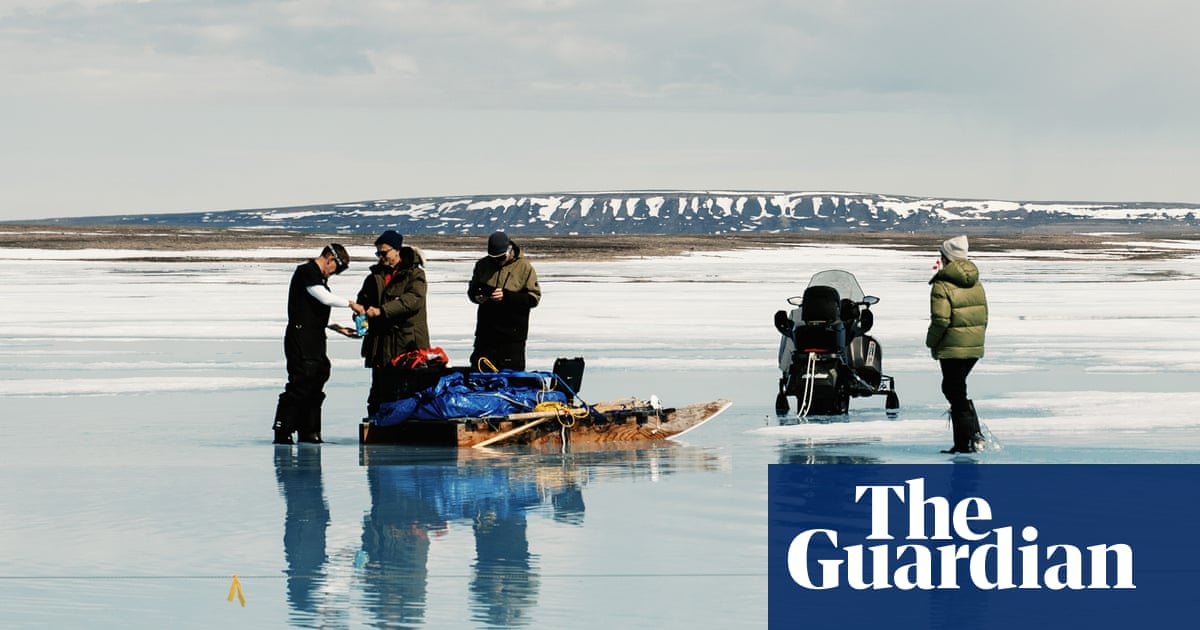
Andrea Ceccolini stands on a patch of stubbornly white ice just outside Cambridge Bay—known as Ikaluktutiak to the Inuit, or 'the place of good fishing'—where the summer sun has already turned much of the surrounding sea ice into shimmering blue meltwater ponds. Here, at the edge of the Arctic, a quiet experiment is defying the season’s thaw. Five months earlier, Ceccolini’s team from Real Ice drilled into the frozen bay and pumped 50,000 tonnes of seawater onto the surface, where it froze almost instantly. Now, the ice beneath their boots is 50cm thicker than before—resisting melt, reflecting sunlight, and offering a fragile hope that humans might, one day, help cool the planet they’ve warmed. This isn’t science fiction. It’s a real-world test of whether targeted geoengineering can slow the Arctic’s alarming decline. Summer sea ice has shrunk by 40% since the 1980s, accelerating a dangerous feedback loop: white ice reflects 70% of solar heat, but dark ocean water reflects only 7%, absorbing the rest and driving further melting. If summer ice vanishes by the 2030s, as some models predict, the consequences could be irreversible. That’s why Real Ice’s results matter. The treated area now stands out from space as a bright white island amid a blue sea of melt—a visual testament to what a small intervention can achieve. The team, led by Ceccolini, cofounded by Simon Woods and Cían Sherwin, braved -63°C wind chills to run pumps for 1,080 hours across January and February, icing a square area roughly 450 meters on each side. The pumps, using less power than a toaster, lifted water from just below the ice surface to the top, where it froze and transformed insulating snow into dense ice. This allowed Arctic cold to penetrate deeper, boosting natural ice growth from below. Unexpectedly, the new ice also proved brighter than the surrounding ice—likely due to trapped air bubbles from rapid freezing—increasing its reflectivity and cooling effect. Independent scientists from the University of Washington, including Prof Roger Marchand and Melinda Webster, are now measuring its albedo and salinity to verify the results. While the 50cm gain may seem modest, it’s enough to extend the ice’s lifespan by 7 to 10 days and support the weight of a pickup truck. For a region where ice is vanishing faster than predicted, every centimeter and every day count. The team plans to refine their method—pumping later in winter and in multiple rounds—to maximize impact. This isn’t a fix for climate change, Ceccolini stresses, but a potential tool to buy time. 'At first, the idea does sound crazy,' he says. 'But here we are—standing on ice we made.'
← News
Science Breakthroughs Science Breakthroughs Knowledge
‘At first, the idea does sound crazy’: meet the scientists trying to refreeze the Arctic
50 cm Ice thickening achieved
50,000 tonnes Water pumped onto ice
1,080 Pumping hours
450 × 450 Area treated
50,000 Tonnes water pumped
50cm ice thickened
40% sea ice lost since 1979