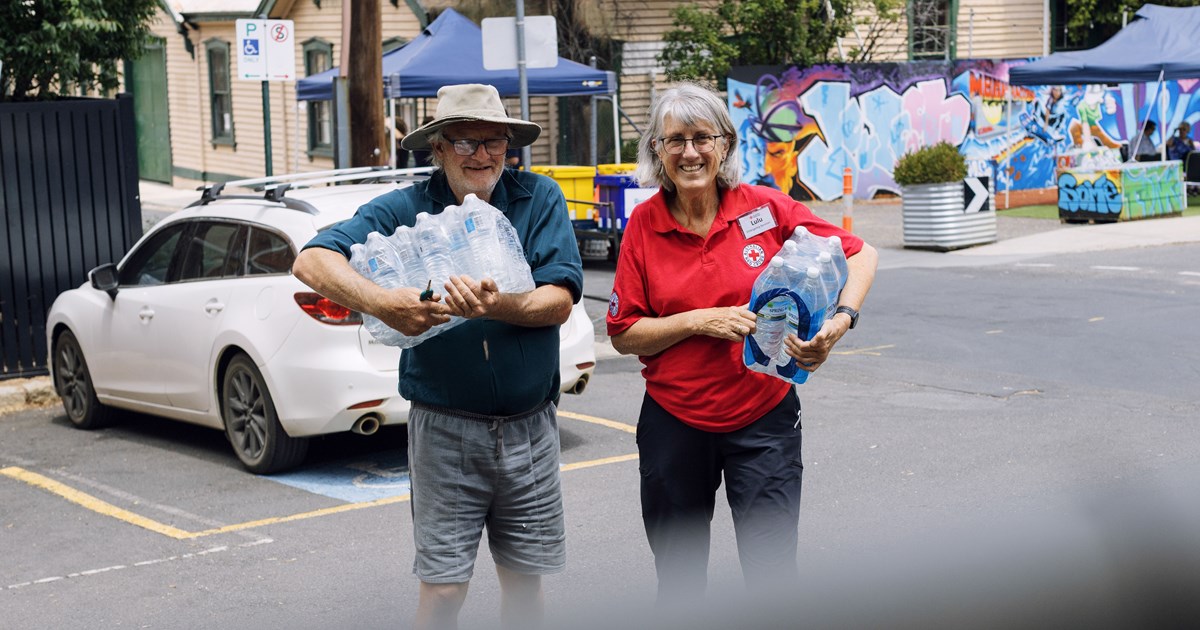
Across rural Victoria, coastal South Australia, and disaster zones all over the country, 17,000 Australian Red Cross volunteers are quietly showing up for their communities—visiting isolated seniors, sorting donated clothing, and sitting with families who've lost everything to bushfires. These are the people who answer the phone at 3 a.m. when a disaster strikes, and who remember that an older person living alone matters deeply.
The scale of this volunteer force reveals something essential about how Australia cares for its most vulnerable. During National Volunteer Week 2026 (May 18–24), the Australian Red Cross is celebrating these unsung backbone members under this year's theme: "Your Year to Volunteer." It's both a thank-you and an invitation. The need for help is growing across Australia, and so is the opportunity to make a tangible difference.
Consider Jessica, an Emergency Services volunteer based in rural Victoria. She has spent years in bushfire-affected areas—most recently supporting communities in places like Ruffy after the devastating fires of January 2026. Her work isn't about swooping in with solutions. Instead, she focuses on helping communities lead their own recovery. "Encouraging and supporting a community-led approach to recovery is key," Jessica explains. "It's very important the community stays strong and can set its own goals and its own direction. It knows best what it needs to recover, and by walking alongside communities, Australian Red Cross is there to help that process evolve." That philosophy—walking alongside rather than taking over—shapes how Australian Red Cross volunteers understand their role in human crisis.
Then there's the Aged Care Visiting Scheme, where people like Willy and Yuly—a young Colombian couple who relocated to Mount Gambier, South Australia, in 2023—spend regular time with nursing home residents. Willy and Yuly were paired with the Coopers, a married couple living in a nearby facility. What began as a way to give back has become something deeper. "It's important for us to connect with and visit older people, because sometimes they feel lonely and they feel like, in my opinion, people don't care about them," Willy says. "And the reality is, they're important people in our lives. They give so much. They were our teachers, and the people who have a lot of wisdom. And it's important to let them know that they matter, and we can take care of them."
This volunteer work changes both directions. Those who give their time gain new skills, meaningful connections, and a sense of purpose that money can't buy. But the people they serve gain something equally vital: proof that they're not forgotten, that their needs matter, that their community has their back.
The Australian Red Cross is clear about what drives this movement: volunteers are not incidental to their work. They are the heartbeat of it. Without these 17,000 people donating their time and skills, the work simply wouldn't happen. That's not hyperbole. It's the reality of how communities show up for one another, and why this year's message—"Your Year to Volunteer"—resonates beyond May.