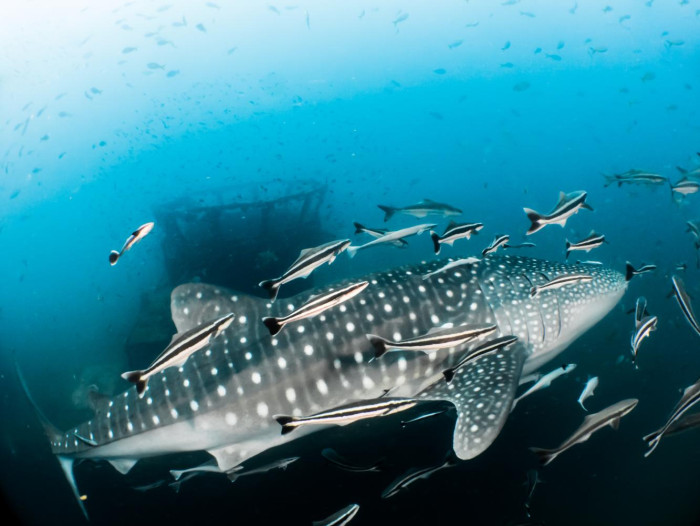
Nittakan Hemin's hands trembled as she watched the whale shark glide through the waters off Koh Tao, its spotted silhouette a ghostly grace against the blue. For this marine researcher, the moment was what Olympic athletes dream of—vindication, proof, a living answer to every doubt she'd carried through a decade of restoration work in waters that had been bleached white and lifeless by rising temperatures.
The coral reefs around Koh Tao in Surat Thani had been devastated. In 2011, when temperatures in nearby Chumphon surged above 30.5°C, the bleaching spread like a silent catastrophe, turning the reefs ghostly and leaving fish homeless and fishing families desperate. Scientists faced an impossible problem: the reefs were fragile, yet the diving tourism that sustained local communities kept pulling people to those same wounded ecosystems. Recovery seemed impossible—until someone asked a different question: what if we built elsewhere, so nature could heal here?
With support from PTT Exploration and Production Plc, Thailand's petroleum company, conservationists began an experiment that would reshape how people think about restoration. They sank shipwrecks and built artificial structures into the sea, not to replace what was lost, but to redirect pressure away from it. Slowly, barnacles and corals colonized these new surfaces. Small fish arrived, then larger ones. An ecosystem that had seemed finished began, quietly, to breathe again.
When Hemin returned to the restoration sites more than a decade later, she found more than 60 species of fish thriving at the shipwreck site alone. But it was the whale sharks—highly migratory animals so sensitive to environmental change that scientists treat them as living report cards of ocean health—that told her the food chain itself had recovered. "It was like seeing old friends come home," she said.
Koh Tao, already one of Thailand's busiest diving destinations, is now the site of an even bolder vision. Working with the Department of Marine and Coastal Resources, PTTEP has launched the "Ocean for Life" project, an underwater sculpture park that marries art with ecosystem restoration. Nine large sculptures shaped like marine animals—whale sharks, manta rays, sea turtles, each standing about 2.5 metres tall—now sit on the seafloor alongside more than 90 coral balls and dome structures across a 10,000-square-metre training site called Buoyancy World, positioned about 100 metres off the coast.
The sculptures serve a double purpose: they're attractions that draw tourists away from natural reefs, while simultaneously becoming homes for fish, corals, and sea creatures rebuilding biodiversity in waters stressed by both tourism and climate change. PTTEP and the Department of Marine and Coastal Resources will monitor the site every three years, tracking how marine life returns and ecosystems adapt.
The ambition doesn't stop there. In the second half of 2026, PTTEP plans to begin converting decommissioned petroleum platforms in the Gulf of Thailand into artificial reefs, starting in Pattani province. Old infrastructure will become new habitats—a literal turning of industrial tools toward healing.
For Koh Tao's diving community and for Nittakan Hemin, these sculptures and structures represent something larger: proof that conservation can be creative and practical, that nature responds when given space, and that even waters once given up for dead can teach us to hope again.