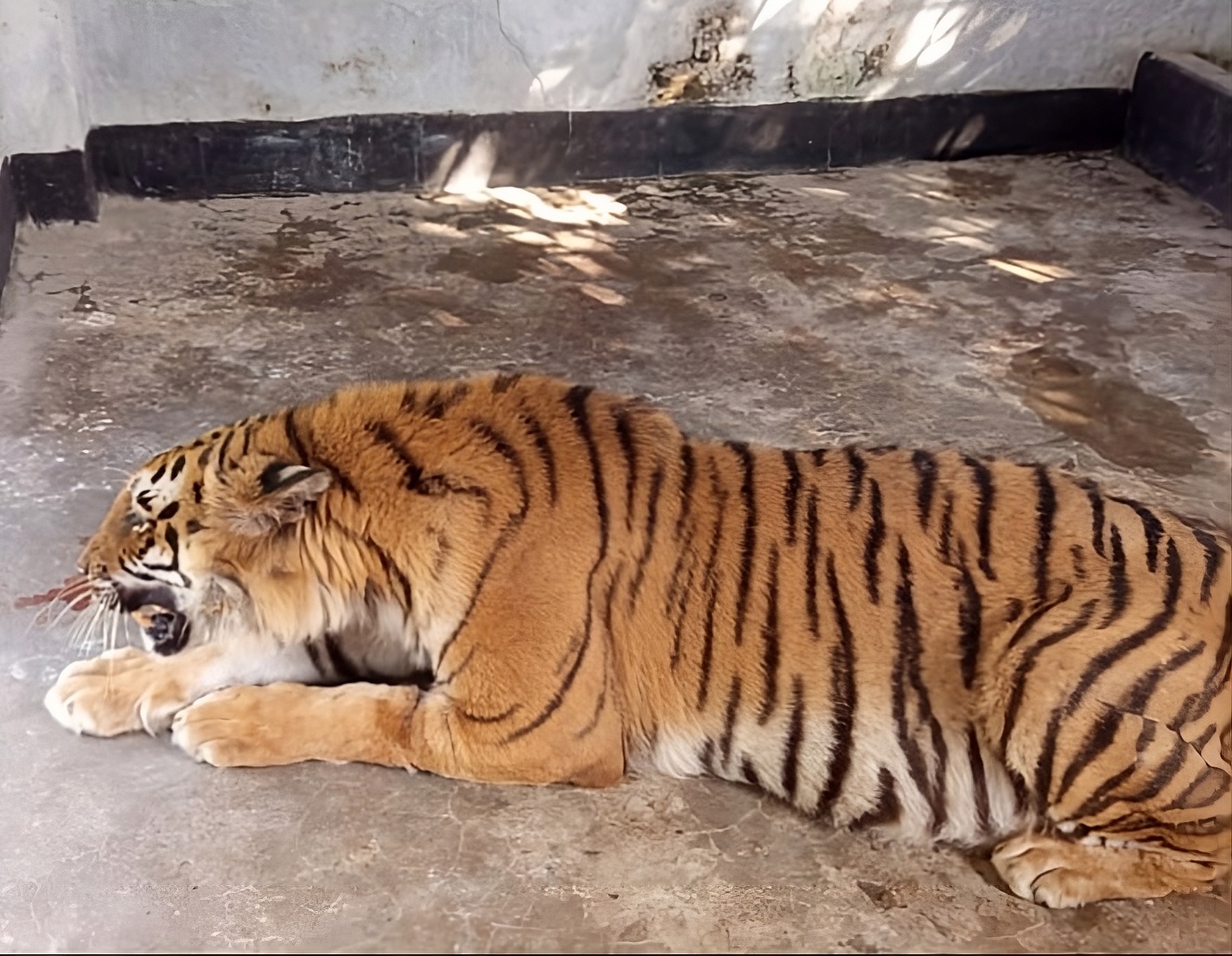
A tiger cub found herself caught in a cruel trap meant for deer. Now, Bangladesh is getting ready to send her back home — and it could make history.
In January 2024, the Bangladesh Forest Department rescued an adult female Bengal tiger from the Sundarbans, the world's largest mangrove forest. She had been trapped in a metal snare — a hunter's loop set on the forest floor — that was actually intended to catch deer. Her left front leg was badly hurt. Workers took her to the Khulna Wildlife Rescue and Rehabilitation Center, where she received months of care. Today, she is healthy enough to return to the wild — and she is estimated to be about 10 years old.
This will be Bangladesh's very first release of a rescued tiger back into the Sundarbans. "We rescued the tiger from a snare set for deer poaching. After receiving adequate care, the tiger is now ready to return to the wild. We are planning to release her in a few days," said Md Rezaul Karim Chowdhury, a senior forest official with the Sundarbans East division.
The Sundarbans is a vast maze of tidal waterways, mudflats, and mangrove trees that stretches across Bangladesh and India. Around 125 Bengal tigers still live in the Bangladeshi portion of this forest, according to the most recent tiger count, done in 2024. The Chandpai and Sarankhola area, where this tiger was found, holds the highest number of tigers — which also means it has plenty of deer and wild boar for the big cats to hunt. Unfortunately, it also attracts poachers. The rescued tiger is a result of stronger enforcement: over the past year, the Forest Department has cracked down on deer hunters, conducting raids and seizing nets and traps.
Now comes a tricky question: how do you make sure a tiger, separated from her home range for six months, survives after being released? Experts disagree. Professor Mohammad Abdul Aziz from Jahangirnagar University argues for fitting her with a satellite collar — a GPS device worn around the neck that tracks her every move. "Since the tiger has been out of her territory for the past six months, she may have lost it during that time," he said. "If she is fitted with a GPS tag, we can monitor her movements and alert local residents if she tries to return to a nearby settlement."
But not everyone agrees. Hatem Sazzat Md Julkarnine, a wildlife vet who treated the tiger at Gazipur Safari Park, worries the collar could do more harm than good. "We rescued the tiger in critical condition. Her left foreleg was severely injured by the metal snare. Although she has recovered, she has already lost strength and reflexes," he said. "If we send her back with extra weight, it will be difficult for her to survive."
If the collar can't be ready in time, authorities plan to use camera traps scattered across a 20-square-kilometer area instead. Either way, this tiger's journey back to the wild is being watched closely — and her survival could guide how Bangladesh handles future rescues.