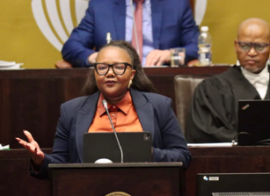
On Tuesday, South Africa's Education Minister Siviwe Gwarube stood before Parliament with a stark comparison: over 90% of South African children are "Nelsons"—kids who never attended a well-resourced early childhood development centre—while the privileged few are "Lindiwes," stepping into school already enriched by quality ECD programs. The gap, she warned, represents "the education injustice of our time," one that begins long before children reach high school and compounds year after year.
The problem runs deep. South Africa's education system continues to fail the majority of children before they reach upper grades, a reality that prompted Gwarube to unveil an ambitious slate of reforms centred on what she calls "Strong Foundations for Strong Futures." The shift reflects a hard truth: inequality doesn't start at matric—it starts at age three.
The government's most concrete victory so far comes in early childhood development. Gwarube announced that the department has exceeded its annual target for ECD centre registration, registering more than 13,300 centres instead of the planned 10,000. The results speak for themselves: ECD registration has surged 200% between 2021 and 2026, putting over 1.2 million children now in registered programmes. To address a related crisis—the fact that 7% of South Africa's children are stunted due to malnutrition—the government launched the ECD Nutrition Pilot in the Eastern Cape, finally responding to data from the Thrive by Five initiative.
The department is also moving strategically on screens and artificial intelligence. Gwarube announced plans for national screen-time guidelines for children aged two to six, addressing growing concerns about excessive digital exposure in early learning. Meanwhile, the government is updating education policy on AI in classrooms with a clear principle: "The machine may assist, but the teacher must decide, the learner must think and the system must protect trust."
But ambition has collided with reality. Making Grade R compulsory would cost approximately R10 billion over the medium term—money the National Treasury simply hasn't allocated. The department was forced to redirect R800 million from the ECD Grant to handle immediate Grade R pressures, a compromise Gwarube defended bluntly: "This is not ideal, but doing nothing would be worse."
To strengthen foundational literacy and numeracy, the government committed to training 10,000 foundation phase teachers during the current financial year. Gwarube also pledged to ease the administrative burden crushing teachers, promising that provinces would receive directives to drastically reduce reporting tools.
The minister's candour about provincial finances was equally sobering. Several provinces—KwaZulu-Natal, the Free State, and the Northern Cape—face serious budget shortfalls that will soon translate into empty classrooms and unpaid teachers. "When provincial education finances fail, learners suffer first," she said, announcing a Multi-disciplinary Recovery Technical Support Team to help provinces stabilize their budgets.
Throughout the speech, Gwarube hammered home one message: Norms and Standards payments to schools are not optional gestures but the lifeblood of teaching and learning itself. In a system stretched to breaking point, she insisted, every rand counts and every child deserves the same chance as Lindiwe to begin their journey ahead.