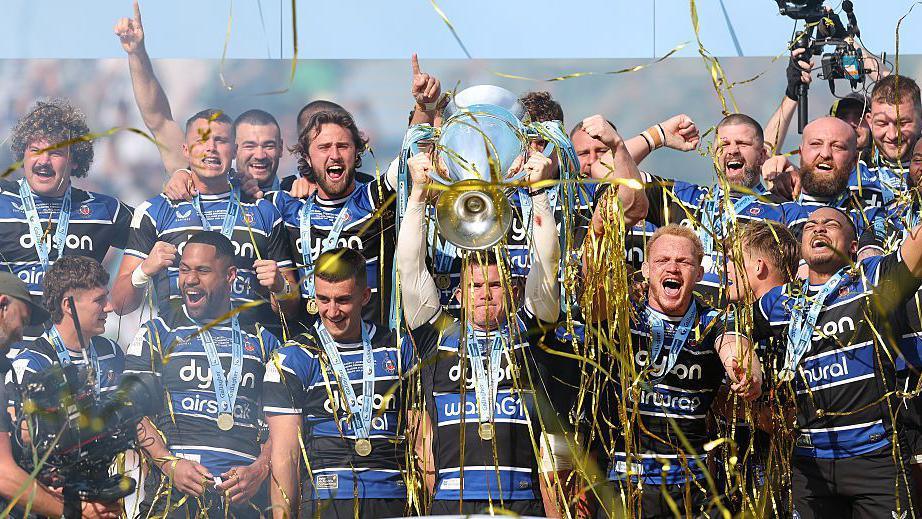
Bath Rugby opened 2024-25 with their wallets wider than any other English Premiership club, yet the sport's salary cap system still kept competition fierce enough for them to claim something remarkable: a treble of titles. The Somerset side won their first league championship since 1996, the Premiership Rugby Cup, and the European Challenge Cup in the same season — a feat that speaks to both their spending power and the carefully calibrated financial rules that prevent any single club from running away with English rugby.
The salary cap has become the sport's great equaliser. Set at £6.4 million on squad spending, with additional "credits" for home-grown talent and other factors pushing the realistic ceiling to £7.8 million, the system creates a tension between investment and limitation that has shaped the Premiership's competitive landscape. Bath's spending ambitions reflect that upper boundary, yet the existence of the cap means even the biggest spenders must make strategic choices about where their money goes. Position by position, priorities emerge: fly-halves command the highest average salary at £260,000, while wings — the sport's least expensive position — earn an average of £132,000.
The gap between the highest and lowest paid positions reveals how rugby clubs value their squad architecture. Back row players sit firmly in the second tier at £192,000 on average, while props come in at £144,000. But the real money lies elsewhere. The Premiership's highest-paid players — those like Bath's Finn Russell, Sale's George Ford, Harlequins' Marcus Smith, and Saracens' Maro Itoje — sit outside the salary cap entirely, their contracts grandfathered in at an average of £533,000 each. These marquee names represent the last generation of players signed before the cap tightened, preserving investment in household names while newer talent operates within the regulated system.
The numbers tell a story of deliberate competitive design. Newcastle, anchored at the bottom of the 2024-25 table, spent the least of all 10 clubs and failed to reach £4 million overall — yet they remain part of the same competition, theoretically capable of assembling a winning team within their means. That possibility has materialised across six seasons: six different champions in six years, a statistic that underscores how the cap works.
"The cap continues to be supported by all and it is central to driving the competitiveness of the Prem," said Premiership Rugby chief executive Simon Massie-Taylor. "With six different winners in as many years, we should all be proud of our system that ensures that any club, on any given day, can compete for the biggest prize in English rugby."
Bath's treble — league title, domestic cup, and European Challenge Cup — proves both the value of ambitious spending and the resilience of the system that constrains it. The club did not win the Premiership because they alone were allowed to spend freely; they won because, within carefully policed financial boundaries, they invested wisely and executed superbly. For a sport anxious about sustainability and competitive balance, that outcome offers genuine hope.