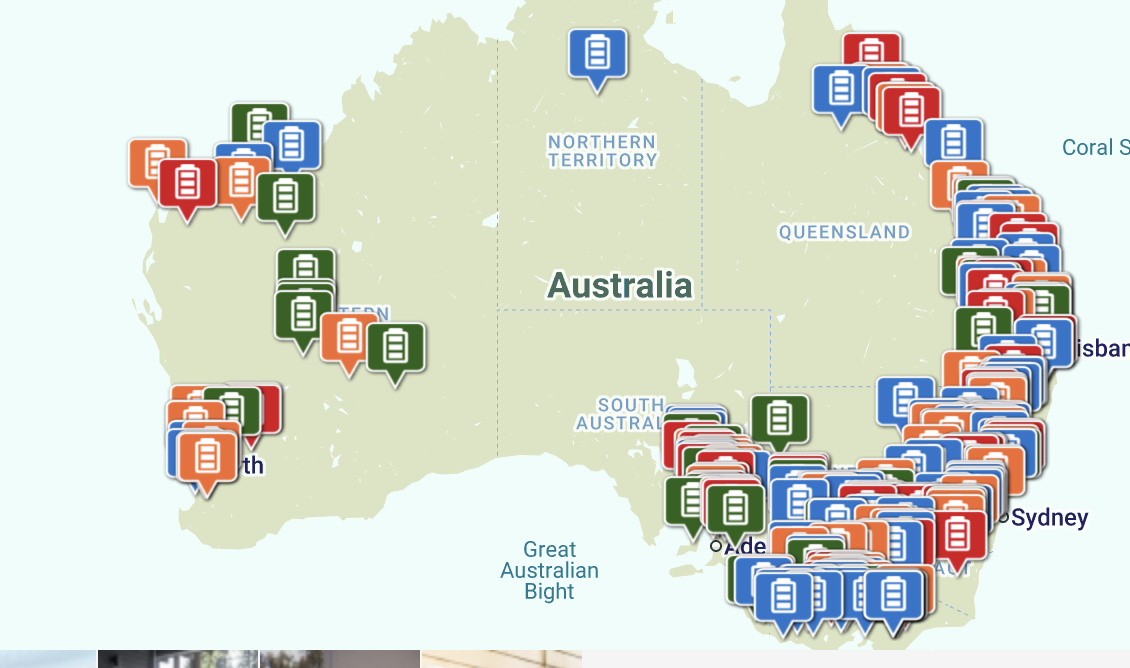
When the sun sets across Australia, batteries are increasingly doing the work that natural gas power plants used to own. With more than 415,000 residential storage systems added in the past year alone — roughly one battery for every 25 houses — Australia is engineering a quiet revolution in how its grid meets evening demand, and the result is straightforward: lower electricity bills for millions of people.
The expansion of battery energy storage across Australia, paired with growing solar and wind capacity, has fundamentally reshaped the economics of electricity. According to Clare Savage, who heads the Australian Energy Regulator, the influx of batteries has reduced system volatility and dampened prices across the day. "Batteries have been displacing more expensive gas and hydro in the evenings, and we've just seen flatter prices through the whole day. That's really translated to lower forward electricity contract prices," she told The Guardian. The outcome: households and small business owners are looking at roughly 10 percent savings on their electricity costs in the coming year.
The numbers reveal why this matters. Australia now ranks fourth globally in battery energy storage installations, surpassing nations with far larger populations. In 2025, the world added 112 gigawatts of battery storage—the first year global additions crossed the 100 GW mark—and Australia's share has surged nearly sixfold from 2024. That acceleration stems from favorable power market conditions and a new government subsidy scheme specifically designed to encourage residential battery uptake.
What makes this shift economically decisive is simple arithmetic: batteries are becoming cheaper than gas peakers. When demand peaks in the evening, batteries now surge into the market at 6 p.m., undercutting the cost of gas-powered generation. Tennant Reed, climate change and energy director for the Australian Industry Group, put it bluntly: "The role of gas used to be in the evening to meet the evening peak and that came at a cost, because gas is not a cheap fuel. But more and more every day, it is batteries that are surging into the market at 6 pm." Gas will persist as a backup source, but its role is shrinking as electricity demand rises and batteries handle an ever-larger share of the load.
This represents a vindication of an argument long made by renewable energy advocates. Solar panels and wind turbines don't generate electricity on schedule—critics argued this was a fatal flaw. But what those critics overlooked is that when the sun shines and wind blows, these sources generate far more electricity than needed, and batteries store the surplus for later use. This "time shifting" is still relatively novel in industrial power systems, but Australia is proving it works at scale.
The global trajectory reinforces the pattern. BloombergNEF predicts that by 2026, the world will install 158 GW of new battery storage, nearly 50 percent more than 2025. Within a decade, annual additions are expected to exceed 300 GW. Meanwhile, in a recent South Australian auction for "firm power" to the grid—dispatchable electricity delivered on demand—all the winning bids came from battery storage operators. Not a single low bid came from thermal generation sources.
For a nation of 27 million people, Australia has positioned itself at the frontier of a technological and economic transformation. Lower electricity costs are only the beginning.