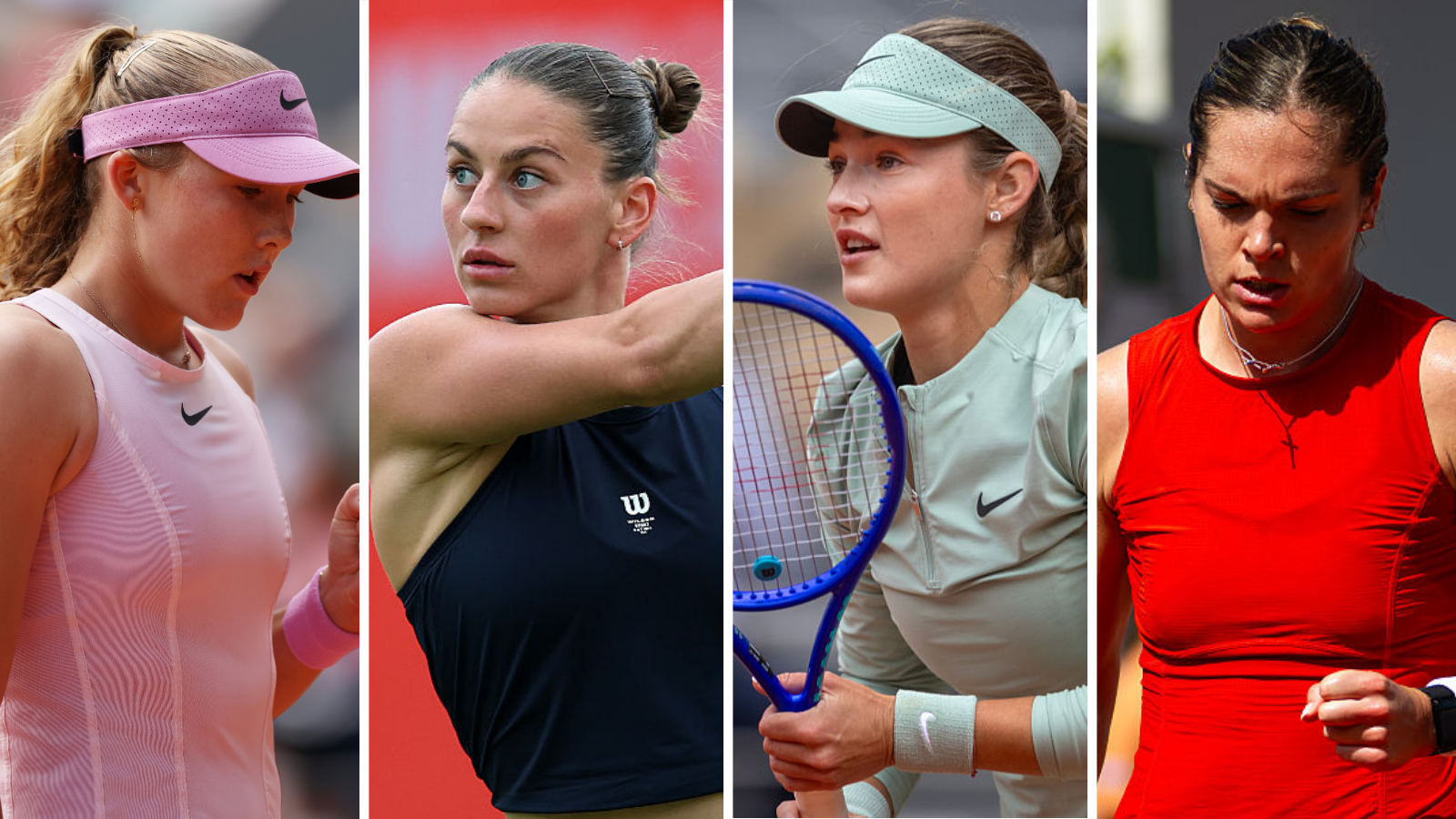
When Mirra Andreeva lifted the French Open trophy at Roland Garros last month, she became the first female- coached Grand Slam champion since Garbine Muguruza won Wimbledon in 2017. It was a milestone that flew under the radar for many fans, but for those tracking the slow transformation of tennis coaching, it marked something significant: the numbers are finally moving.
In 2017, women made up just 6% of registered coaches on the WTA Tour. That figure has more than tripled since, rising to 19% in 2026 — a quiet revolution unfolding in the coaching box. Only four players currently inside the world's top 50 are coached primarily by a woman, yet the trajectory is unmistakably upward.
For Andreeva, 19, the choice of coach was not incidental. She was guided to victory by Conchita Martinez, a former Wimbledon champion who understands the pressures of elite competition in ways that transcend strategy. "She understands me more than anyone could," Andreeva said a year before her triumph. "She's been through this. She's also a woman. She's played so many matches on tour, she's so experienced. She's a Grand Slam champion."
Sandra Zaniewska, who coaches world number 13 Marta Kostyuk, has watched the landscape evolve from inside the box. She acknowledges that family commitments, relentless travel, and the demands of the tour still pull many women away from coaching careers — but she sees space opening. "Women, when they finish playing, usually think of starting a family and travelling less," said Zaniewska, who has been working with Kostyuk since 2023. "It's why I don't think it's ever going to be 50-50 — but there is space and the landscape is changing."
The visibility of role models matters enormously. When Andy Murray hired Amélie Mauresmo in 2014, the sexist backlash shocked him — yet that partnership proved the doubters wrong, and something similar is happening now on the women's side. Young players see Andreeva winning with Martinez, Kostyuk advancing to the French Open semi-finals with Zaniewska, and something that once seemed impossible starts to look achievable.
"If you can't see it, you can't be it," Zaniewska said. "Players are so used to having male coaches, and I think it's mostly the players that don't consider having a female coach is a possibility. You don't even think there could be something else."
That "something else" is becoming harder to ignore. The coaching box — once almost exclusively male territory — is slowly, steadily filling with women who bring not just technical expertise, but a particular kind of understanding that only comes from having walked the same court. The dream is not parity tomorrow, but something more durable: a game where a young player growing up today can naturally imagine herself in either seat — player or coach — without remarking on it at all.