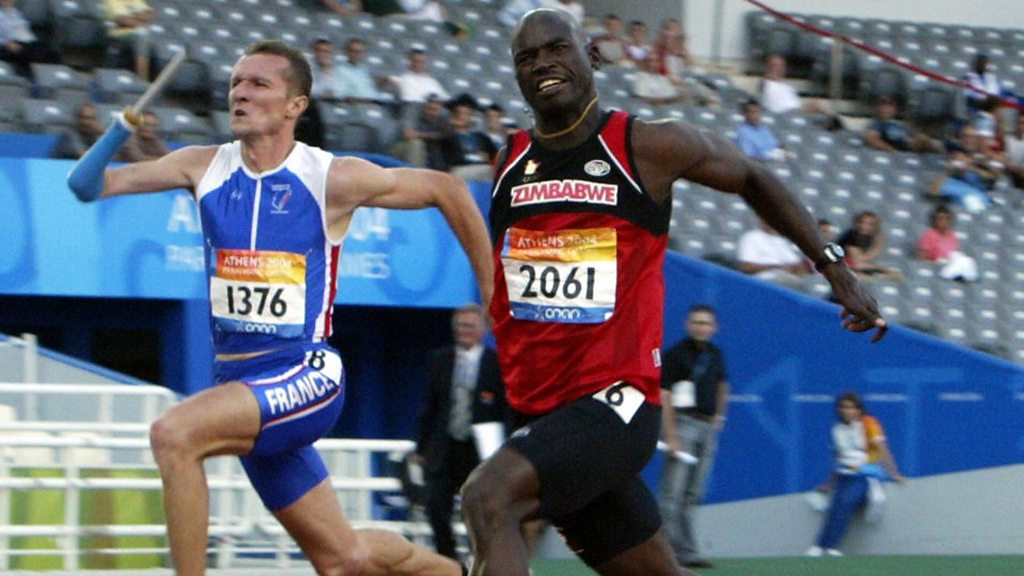
Elliot Mujaji was a teenage sprinting star with a bright future. Then a part-time job as an electrician changed everything. While working, he suffered severe burns so terrible that doctors had to amputate his right arm. For most people, that might have been the end of the dream. For Mujaji, it was only the beginning of a longer, harder race.
In the year 2000, at the Paralympic Games in Sydney, Australia, the Zimbabwean sprinter lined up for the final of the 100 metres. When he crossed the finish line first, he made history: he had just won his country's very first Paralympic gold medal. It was a moment that put Zimbabwe on the map of the world's biggest sporting stage for athletes with disabilities — and a moment that nearly never happened.
The journey to Sydney was gruelling. Back home in Zimbabwe, there was almost no support for Paralympic athletes. Sponsorship was nearly impossible to find, and Mujaji had to fight a tough battle just to get the money and help he needed to train and compete. He had already been a promising runner as a teenager, but after his accident he had to rebuild his body and his confidence from scratch. Without proper funding, equipment, or coaching, most people would have given up. Mujaji refused.
His victory in Sydney was more than a personal triumph. It sent a powerful message that athletes with disabilities deserve the same chances, respect, and support as anyone else — a message that resonates far beyond the running track. In a country where disability sport had been almost invisible, Mujaji's gold medal showed that excellence does not disappear just because the world overlooks you.
Mujaji later competed again at the 2004 Paralympics, where a photograph of him was captured by Getty Images — proof that his story continued to inspire long after that first golden sprint. He spoke to broadcaster Ashley Byrne in a programme produced by Made-In-Manchester Productions, sharing the details of his remarkable come-back.
Today, Elliot Mujaji stands as a pioneer. He opened a door that had been locked for generations of Zimbabwean athletes, and his courage reminds us that the biggest obstacle is often not the injury — but the lack of belief. His story is a call to action: when we invest in Paralympic athletes, we are not just funding sport. We are funding hope, dignity, and the chance for every person to run their own race, no matter the starting line.