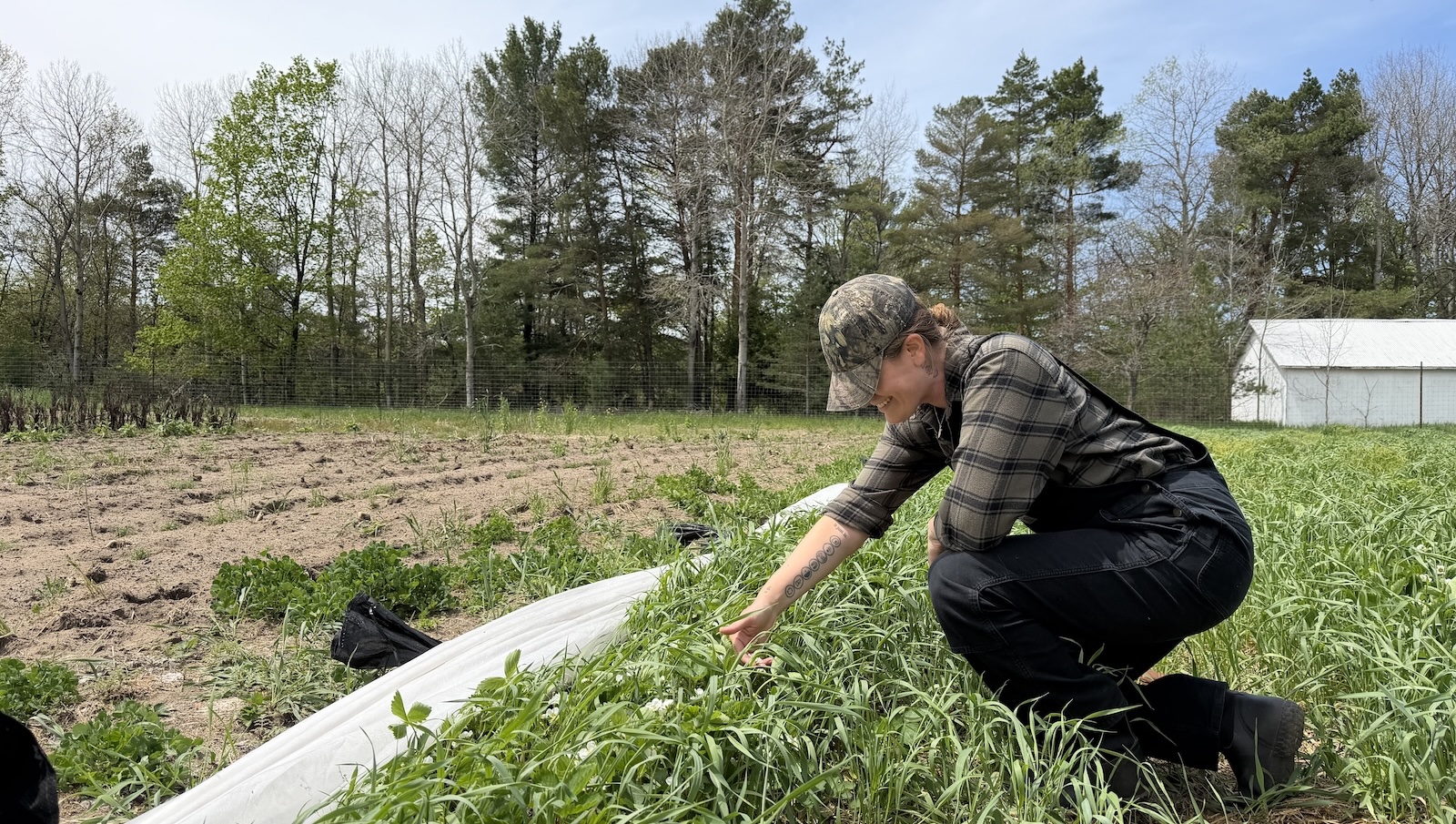
Rachel Greenberg drove north from Indianapolis to a seven-month crash course in becoming a farmer, joining two other aspiring growers at the Great Lakes Incubator Farm tucked into the farmland south of Traverse City, Michigan. She arrived knowing what the research confirms: that getting into farming feels nearly impossible for newcomers. Land prices have soared as developers compete with farmers for acreage, pushing more than 50,000 acres of farmland out of production over the last two decades. Farm bankruptcies surged 46 percent last year alone. Yet Greenberg and her cohort-mates are learning to grow food anyway, drawn by a simple human question: where does my food actually come from?
The Great Lakes Incubator Farm exists precisely because that question is becoming harder to answer. As the U.S. farmer population ages and younger generations face barriers that seem insurmountable—prohibitive startup costs, limited land access, climate volatility—communities are scrambling to cultivate the next wave of growers. This program, run by the Grand Traverse Conservation District and now in its second year, removes one major pressure: profit. The vegetables and fruits students grow are presold to local residents who've committed to buying the season's harvest, with any surplus donated to food-rescue operations. It's an incubator model borrowed from the startup world, adapted for agriculture.
Over seven months, the three-person cohort learns pest management, tractor operation, and farm business planning. But the curriculum's deeper focus is regenerative agriculture—farming methods that prioritize soil health and reduce atmospheric carbon emissions. Troy Saruna, 28, came to the program from years working in conservation across the country, with no farming experience at all. He sees it as a way to understand his own impact on the planet at a moment when climate change is making weather more severe and unpredictable. Shanaya Holmes, 49, already runs a small four-acre farm in Alabama, but she came north to learn how to grow food in a different climate and—crucially—to finally master the bookkeeping that never stops nagging at her. The challenge, she said, is switching that button off to come inside and do paperwork when the outdoor work calls so loudly.
Adam Brown, the farm's manager and instructor, brings a personal story to the role. He studied ecology and likely would never have become a farmer if a similar training program on the West Coast fifteen years ago hadn't shown him the path. Now he mentors the next cohort, paying forward what he learned. "I can pay it forward, my lessons, and all the wisdom that I learned throughout my years of farming, and be a mentor to these other people," Brown said. The program, he emphasizes, is designed as a stepping stone—not just for aspiring farmers but for anyone wanting to work anywhere in the food system, whether managing a farm, starting a business, or stepping onto any rung of that ladder.
The Great Lakes Incubator Farm is one of the only programs of its kind in northern Michigan, though roughly 100 similar training farms operate across the country, according to a national network coordinator at Tufts University. The farm runs on a nearly $700,000 federal grant from the U.S. Department of Agriculture. For Greenberg and her peers, the program represents something larger: proof that a pathway into farming can exist, even when the broader system seems stacked against it.