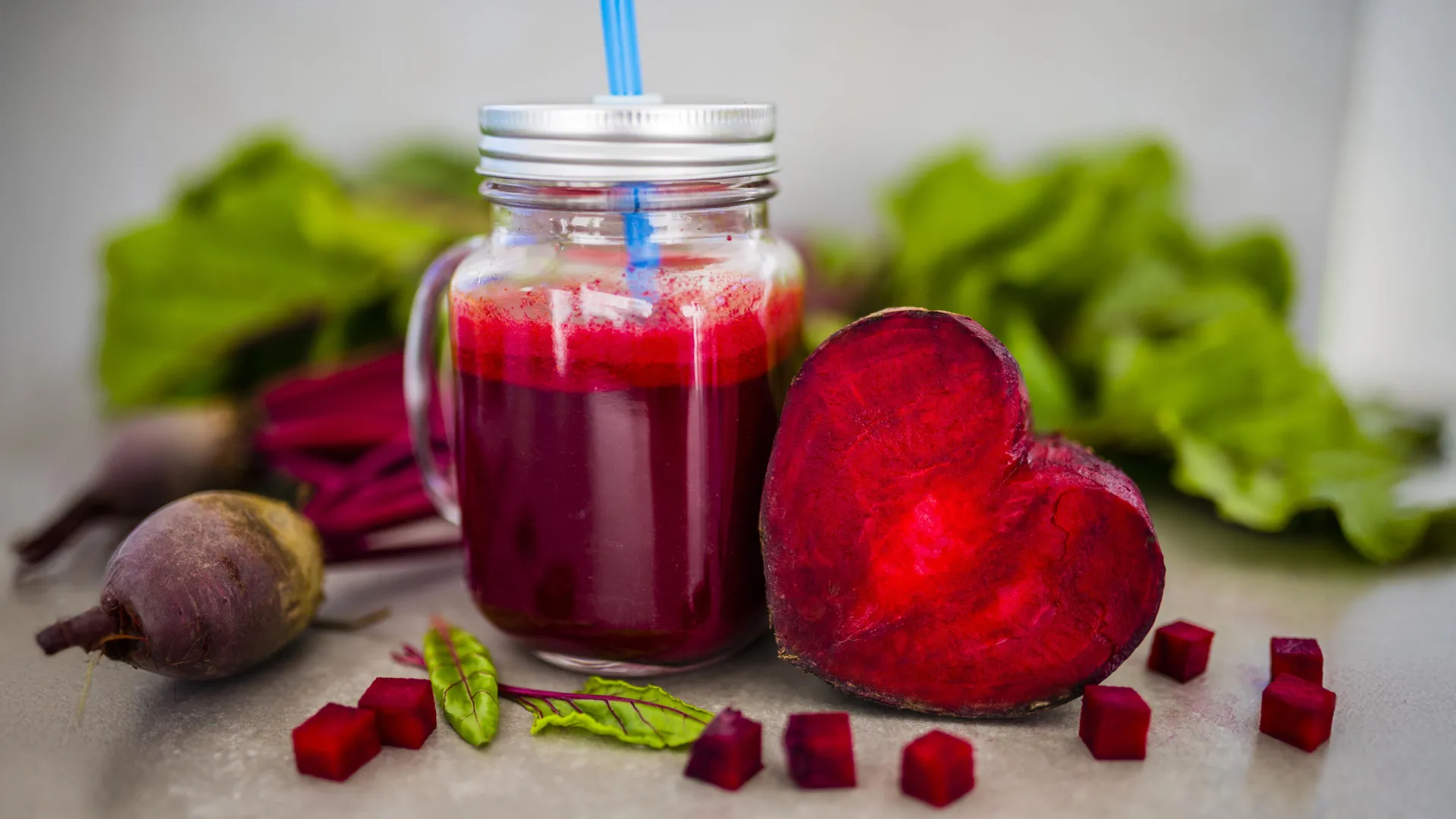
Researchers at the University of Exeter have discovered that older adults who drank nitrate-rich beetroot juice twice daily for just two weeks experienced measurable drops in blood pressure—a simple dietary shift that may help unlock one of the more mysterious links in healthy aging: the bacteria living in your mouth.
The finding matters because high blood pressure in older adults is a major risk factor for heart attack and stroke, yet the mechanism behind why beetroot juice helps remains surprising. It turns out that the story isn't just about nutrients flowing into the bloodstream. Instead, it's about a microscopic ecosystem in the mouth that acts as a gatekeeper, converting dietary nitrates into compounds that eventually support nitric oxide production. Nitric oxide helps blood vessels relax and function properly—and older adults produce less of it naturally as they age.
In the study, published in Free Radical Biology and Medicine, 39 younger adults under age 30 and 36 older adults in their 60s and 70s completed two separate two-week phases. During one phase, participants drank nitrate-rich beetroot juice; during the other, a placebo version with the nitrate removed. Using bacterial gene sequencing, the Exeter team analyzed which microbes were present in participants' mouths before and after each condition.
The results diverged sharply by age group. Both younger and older adults showed changes in their oral microbiome after drinking the real beetroot juice. But only the older adults experienced significant blood pressure reduction. More telling still, the older group's oral bacteria shifted in ways that appeared to support the nitrate-to-nitric-oxide pathway: levels of Prevotella, a potentially harmful bacterium in this context, dropped noticeably, while health-associated bacteria like Neisseria became more abundant.
The younger adults, by contrast, experienced the same bacterial changes but saw no blood pressure benefit—suggesting that age itself, and the body's diminished nitric oxide production later in life, plays a crucial role in determining whether the intervention works.
"We know that a nitrate-rich diet has health benefits, and older people produce less of their own nitric oxide as they age," said Professor Anni Vanhatalo, study author and researcher at the University of Exeter. "Encouraging older adults to consume more nitrate-rich vegetables could have significant long term health benefits." For those who dislike beetroot, Vanhatalo noted that spinach, arugula, fennel, celery, and kale offer similarly rich sources of dietary nitrate.
The findings suggest that beetroot juice may work through a pathway that extends beyond simple nutrient delivery. By shifting the balance of the oral microbiome, it appears to unlock the body's own ability to produce nitric oxide—a process that becomes increasingly important as we age and our natural production declines.
Follow-up research has continued to strengthen this picture. A 2025 randomized, placebo-controlled study of 15 older adults with treated high blood pressure found that four weeks of beetroot juice selectively changed the oral microbiome in predictable ways, though the blood pressure response varied depending on participants' baseline health and medications. The consistency of the oral microbiome changes across these studies points to something more universal: that the mouth, long overlooked in discussions of cardiovascular health, may be fundamental to how the body processes one of nature's simplest nutritional interventions.