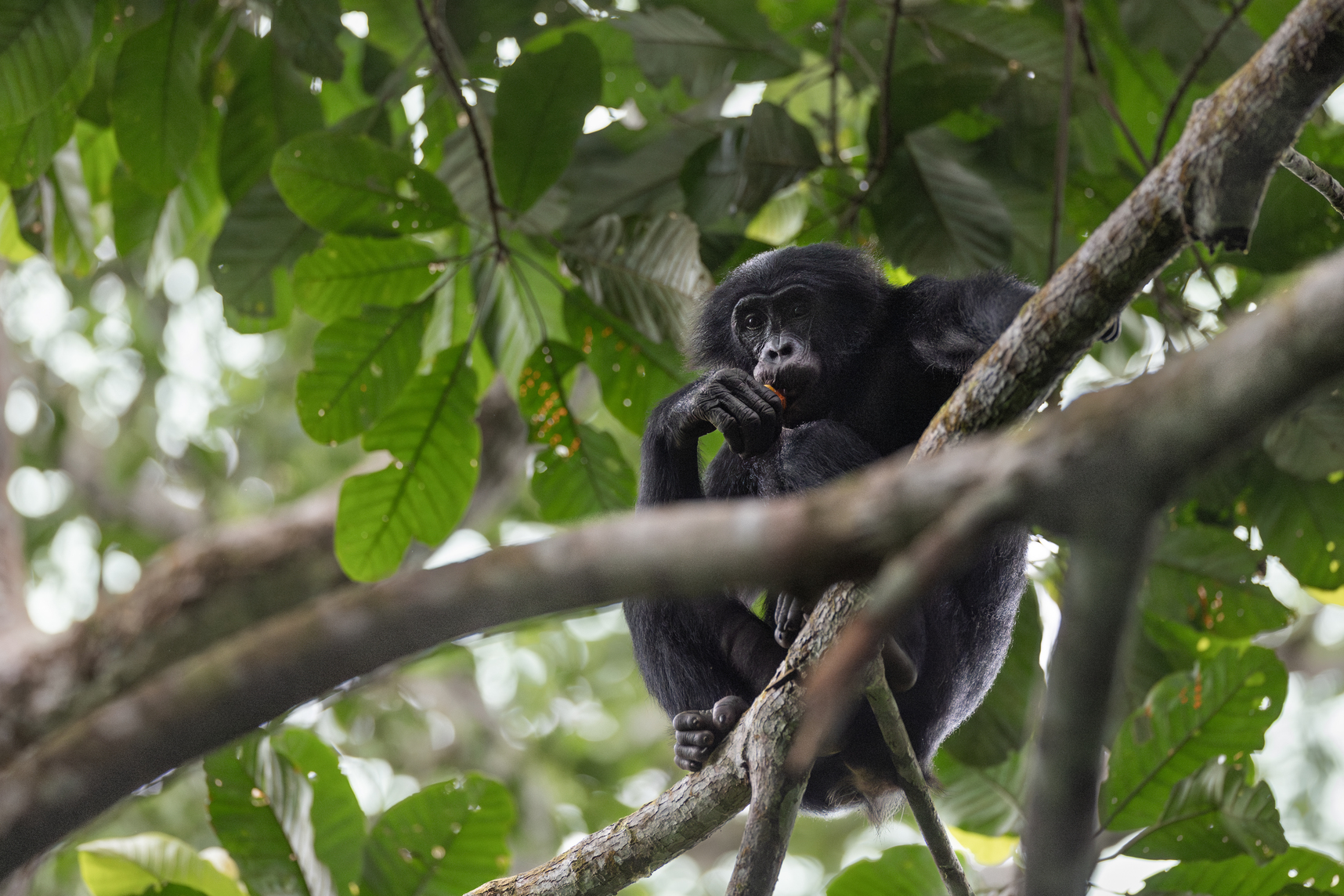
At 3 a.m., when most of us are asleep, the trackers in Salonga National Park are already moving through the dark forest. Their mission: reach the previous night's bonobo nesting site before the apes wake up. Then they follow the group all day until the bonobos build new nests in the evening, repeating this ritual day after day, year after year. This is what it takes to earn the trust of one of Earth's most endangered great apes.
In the heart of the Democratic Republic of Congo, researchers and local trackers are engaged in the painstaking work of habituating a group of roughly 60 bonobos (Pan paniscus) to limited human presence. The goal is twofold: enable scientific research and, eventually, carefully managed eco-tourism that could provide sustainable income for the region. But as assistant researcher Felix Bofeko told Mongabay's David Akana, the process demands consistency above all else.
"The whole idea of habituation is that you meet the group every day in a very friendly, non-interactive way so they accept you as part of the forest," Bofeko said.
When the project began, the bonobos fled at the mere sight of people. Now, after months of patient work, researchers can sometimes remain with them for two or three hours. The apes will tolerate two human visitors. Three or four, however, still push too far. Progress is measured in minutes and bodies — and it matters enormously.
Habituated bonobos open doors that observation alone cannot. Researchers can collect fecal and urine samples for genetic analysis, pathogen monitoring, and diet studies. Salonga is part of the Bonobo Diversity Project, which gathers standardized data across the DRC to build a clearer picture of bonobo populations and their needs. The park is also introducing camera traps and acoustic monitoring, with hopes that real-time systems could eventually detect gunshots and guide anti-poaching patrols more effectively.
Health management is woven into every interaction. Bonobos are highly vulnerable to human-borne diseases, including respiratory infections. Staff follow strict screening and hygiene protocols, wear masks near the apes, and maintain safe distances. The closer conservation gets to wildlife, the more it depends on discipline.
The project's impact extends beyond the forest edge. Salonga's managers have hired more than 10 local people, including former hunters whose deep knowledge of the terrain makes them exceptional trackers. For many residents who once associated the park with restrictions and arrests, this represents a quiet shift: knowledge that once supported hunting is now being channeled toward protection. Park staff have also installed internet hubs and complaint channels in nearby communities, giving residents a more regular line of communication with management.
Bonobo tourism remains a prospect for the future. But the foundation being built today — in early mornings, in careful routines, in newly forged relationships between former adversaries — may one day allow a visitor to sit quietly in the Salonga forest and watch bonobos go about their lives, unafraid.