The biggest, thirstiest trucks on American highways could be about to get a lot greener — without having to buy a single new vehicle.
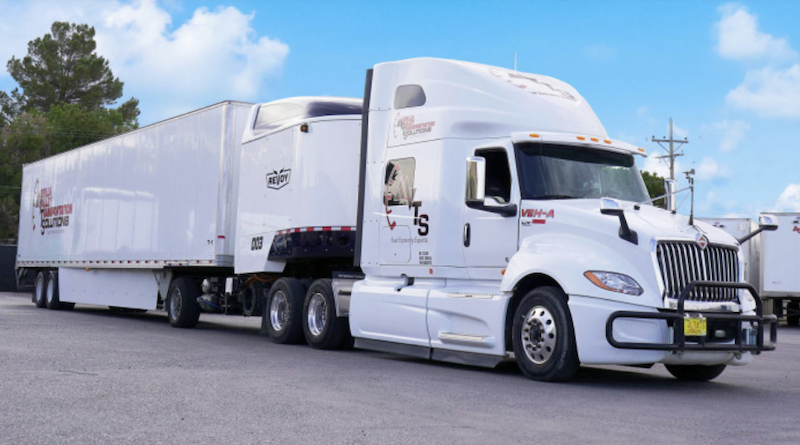
Revoy, a startup based in California, has built a battery pack that clips onto existing Class 8 diesel trucks, the massive 18-wheelers that haul most of the country's goods. The battery sits between the cab and the trailer, powers its own axle, and can be swapped out in minutes at special stations when it runs low — kind of like swapping propane tanks on a grill.
The company just raised $27 million in new funding, bringing its total raised to more than $41 million. And the numbers behind the technology are striking. On flat ground, independent testers found that fleet trucks using the Revoy battery cut their diesel fuel use by more than 90 percent. That's a huge deal for an industry that burns through billions of gallons of fuel every year.
The battery can carry a fully loaded 36-tonne truck more than 200 miles on a single charge. Independent testers at Mesilla Valley Transportation Solutions — a respected, third-party firm that runs real-world truck tests in New Mexico — found that the battery could actually go 250 miles on a typical highway route with stops and starts. That means a 500-mile trip could be completed with just one quick battery swap midway through.
The company says the system cuts emissions by up to 85 percent. It also uses regenerative braking — a feature that captures energy while slowing down — which has a handy side effect: stopping distance shrinks by as much as 30 percent. For safety-conscious truckers, that's no small thing.
Unlike full electric truck replacements, which can cost hundreds of thousands of dollars, the Revoy system lets truckers keep their existing rigs. Revoy owns the batteries and plans to offer swapping stations where drivers can exchange a depleted pack for a fresh one, much like how some electric scooter services work. Fleet operators could also set up their own exchange points at depots.
The idea of battery swapping for passenger cars has been tried in the US before — Tesla even experimented with it back in 2015 — but the concept never caught on for everyday drivers. Trucking may be the application that finally makes it work. With fuel costs eating up a huge chunk of trucking budgets, a system that can slash diesel use by 65 to 95 percent depending on terrain could pay for itself quickly.
Independent testing confirmed that even on hilly interstate routes in New Mexico — not ideal conditions — the Revoy system still delivered savings of more than 65 percent. That's a real-world number, on real roads, with real trucks.
As more freight moves across the country and pressure grows to cut transportation emissions, innovations like Revoy's could offer a practical bridge — letting the existing truck fleet run cleaner without waiting for a full nationwide fleet replacement.