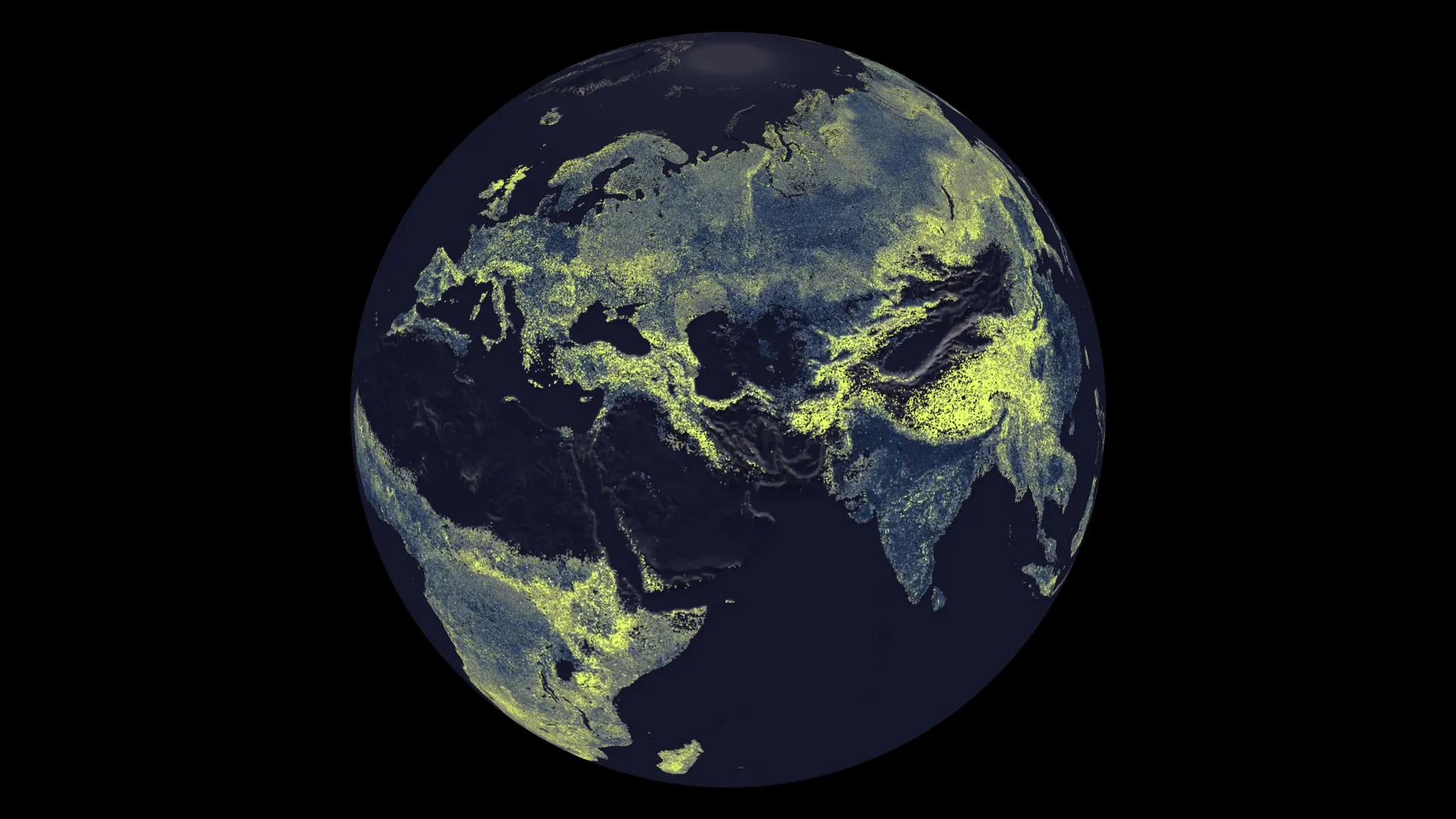
Beneath a single teaspoon of healthy soil, there could be up to 10 meters of living fungal highway—a hidden infrastructure that stretches across continents and,呼吸 the planet's climate in ways scientists are only beginning to understand.
Researchers have now mapped this vast underground network for the first time, and the numbers are staggering. A new study published in Science reveals that Earth's soils contain approximately 110 quadrillion kilometers of arbuscular mycorrhizal fungi—enough to travel to the Sun and back almost a billion times over. These thread-like fungal networks, called hyphae, form partnerships with roughly 70 percent of plant species worldwide, trading carbon from photosynthesis for nutrients and water.
"There could be up to 10 meters of mycorrhizal network in just a teaspoon of soil," said lead author Dr. Justin Stewart of the Society for the Protection of Underground Networks (SPUN). "It is hard to overstate the importance and enormity of these fungi."
To build the maps, researchers compiled measurements from more than 16,000 soil cores collected globally and trained machine-learning models on ecosystems from deserts to tundra. Working with the Physics of Behavior group at the AMOLF research institute in the Netherlands, the team also used robotic imaging to analyze over 300,000 living fungal hyphae in laboratory conditions. The result: the most detailed global view yet of what scientists call Earth's underground circulatory system.
The findings carry significant implications for climate regulation. The researchers estimate that these fungal networks move roughly 4 billion metric tons of carbon dioxide equivalent into soils every year—about 11 percent of all human-related emissions. The networks can expand a plant root's effective foraging area by up to 100 times and provide more than 80 percent of a plant's phosphorus needs, reducing dependence on synthetic fertilizers.
Grasslands emerged as fungal superhighways, containing roughly 40 percent of Earth's total mycorrhizal infrastructure. The most densely networked regions include the flooded grasslands of South Sudan, Florida's Everglades, and the Tibetan plateau—wetlands and prairie ecosystems where plants and fungi have co-evolved over millennia.
Yet the maps also reveal a troubling vulnerability. Agricultural croplands show roughly 50 percent lower fungal network density than natural ecosystems. Degraded fungal networks mean less carbon storage, fewer nutrients cycling through the soil, and reduced resilience to drought and disease.
"With the emergence of new technologies in high-resolution imaging, machine-learning and robotics, we are starting to reveal what has long been hidden under our feet," said co-lead author Dr. Corentin Bisot, a biophysicist at AMOLF. "We are learning how the complex bodies of network-forming fungi help regulate the climate."
The team collaborated with data visualization designer Moritz Stefaner to create an interactive Mycorrhizal Infrastructure Map, making the data publicly available for governments and conservation groups. The hope is that policymakers can use these maps to identify biodiversity hotspots worth protecting—and areas where restoring fungal networks could pull more carbon from the atmosphere while rebuilding soil health for generations to come.