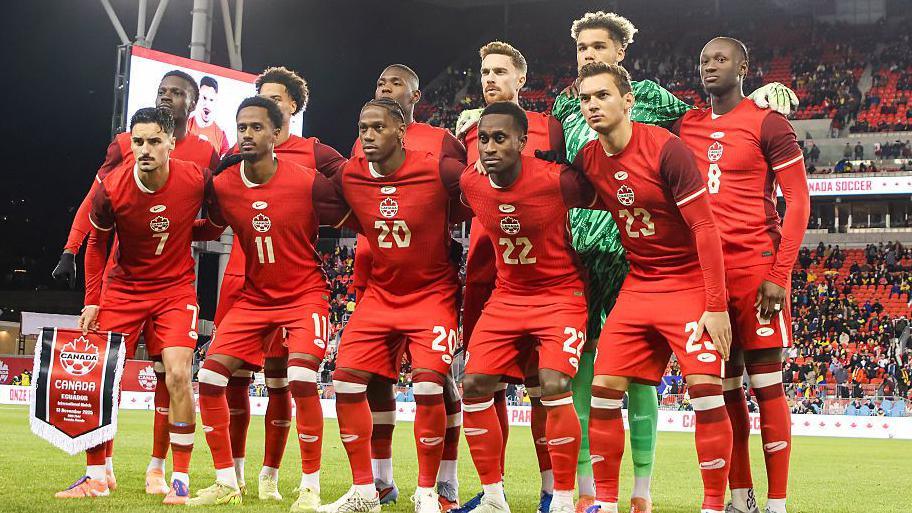
Alphonso Davies will miss Canada's opening match against Bosnia-Herzegovina this Friday, but his absence only underscores what the country's football community believes: they have finally assembled their best-ever men's team, and hosting the 2026 World Cup is their moment to prove it.
Canada arrives as the tournament's quietest co-host. While the United States and Mexico dominate headlines and controversy, the Canadian men's football team is focused on what happens on the pitch—and, quietly, the country is brimming with confidence. This will be Canada's third World Cup appearance, following 1986 and 2022, but the difference this time is substantial. Four years ago, they arrived at Qatar as dark horses with high expectations after an impressive qualifying campaign, only to lose all six games in a tough group alongside Belgium, Croatia, and Morocco. Now, with more top-level international experience, more players embedded in Europe's elite leagues, and the momentum of a home crowd, the narrative has shifted.
The numbers tell part of the story. Canada's 2022 record was bleak: six games, six losses, just two goals scored and twelve conceded. But the squad that takes the pitch in 2026 looks fundamentally different. Davies, now 25 and Canada's captain, is the talisman—a left-back for Bayern Munich who became the first Canadian man to score a World Cup goal in Qatar, despite missing a penalty in their opener. He is joined by Juventus striker Jonathan David and Villarreal midfielder Tajon Buchanan, forming what Canadian journalist Har Johal calls "this great generation, the best Canadian team we have ever had." Their group this time is notably more winnable: Switzerland, Qatar, and Bosnia-Herzegovina. Italy, historically a benchmark for European strength, failed to qualify after losing on penalties to Bosnia-Herzegovina in the play-offs—a fact that has not escaped Canada's attention.
Yet tempered expectations coexist with optimism. Canada's recent form has been mixed. They crashed out of the Concacaf Gold Cup to minnows Guatemala on penalties in the quarter-finals. Goals have been scarce, with the team failing to score in four of their last nine games. Davies himself has been plagued by injury, missing 15 games for Bayern Munich this season with a hamstring strain and the opening World Cup match. Manager Jesse Marsch has work to do.
Off the pitch, Canada has navigated some challenges more smoothly than its co-hosts. Both Vancouver and Toronto, the Canadian host cities, have downtown stadiums, avoiding the local travel controversies that have dogged certain American venues. But accommodation costs have surged dramatically. Downtown Vancouver hotels now command rates exceeding $1,000 per night during the World Cup, some topping $2,000 on match days—a staggering increase from the $359 average during the 2010 Winter Olympics, representing a jump of over 300 percent in some cases.
Jonathan Osorio, a midfielder for Toronto FC, credits the country's growing football culture for the team's rise. "The exposure to other leagues around the world being shown on TV here was a factor," he said. "I think this team represents Canada more than any other national team in any sport. We really show how diverse Canada is." For a nation long defined by hockey dominance, this moment carries particular weight. Success, by Canada's own measure, means topping their group or at minimum getting out of it. With their best generation ready and their stadium waiting, they are finally ready to be seen.