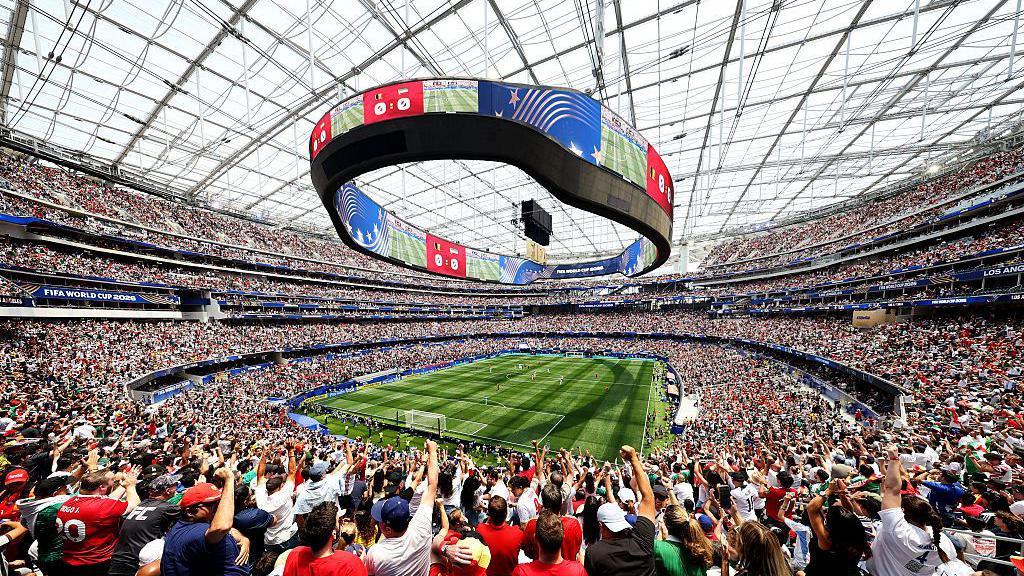
When Gary Rose walked into Seattle's Lumen Field for the 2026 World Cup, he expected a good venue. What he found was something closer to magic. The stadium sits in the heart of downtown, with Seattle's glass skyscrapers on one side and the snow-capped peak of Mount Rainier rising behind the other. But the real revelation came when the crowd started cheering. The curved roof on the long sides of the stadium acts as an amplifier, sending sound bouncing back toward the pitch. According to Rose, the stadium can physically shake with the noise. "It just has to be experienced to be believed," he wrote. Of the venues across North America, Rose called it the one that "ticks the most boxes as the perfect stadium experience."
Sixteen cities across three nations are hosting this World Cup, and the scale alone is unprecedented. From Mexico's storied Azteca Stadium to New York New Jersey's gleaming new MetLife venue, players and fans have been treated to a remarkable variety of settings. The Azteca, where the opening match between Mexico and South Africa unfolded under a cascade of sombreros, carries football history in its walls. Diego Maradona danced here in 1986. Carlos Alberto scored the famous fourth Brazilian goal in the 1970 final. The pitch still shimmers, the fans still roar, and the atmosphere remains irreplaceable.
But it's not just the grand stages winning praise. Philadelphia has surprised visitors with its spirit of welcome. Hundreds of fans from around the world have gathered at the Rocky statue outside the Museum of Art, and inside the stadium, something remarkable happened when Brazil played Haiti: Haitian fans, delighted to see their team on the World Cup stage, danced alongside Brazilian supporters. Philadelphia is also one of the few venues where tailgating is permitted, a tradition where fans gather in parking lots to cook, eat, and build anticipation together before the match. The energy was palpable, a reminder that football's power lies as much in togetherness as in competition.
Dallas Stadium has drawn praise for its practical excellence—air-conditioned interiors keeping players and fans cool, wide concourses allowing easy movement, and a transport network that actually works. "A great experience," wrote Phil McNulty, BBC Sport's chief football writer. Boston's venue, home to the New England Patriots, impressed with its steep stands and the way the giant bowl holds in atmosphere, though journalists noted the signage could use improvement. By most accounts, the stadiums have not disappointed.
On July 19, the final will be held at New York New Jersey Stadium, a venue with a capacity approaching 80,000. But if this tournament has shown anything so far, it is that the best stadiums are not just about size or spectacle. They are about what happens inside them—when strangers from different nations share a moment of pure joy, and the roof shakes with the sound of something bigger than the game itself.