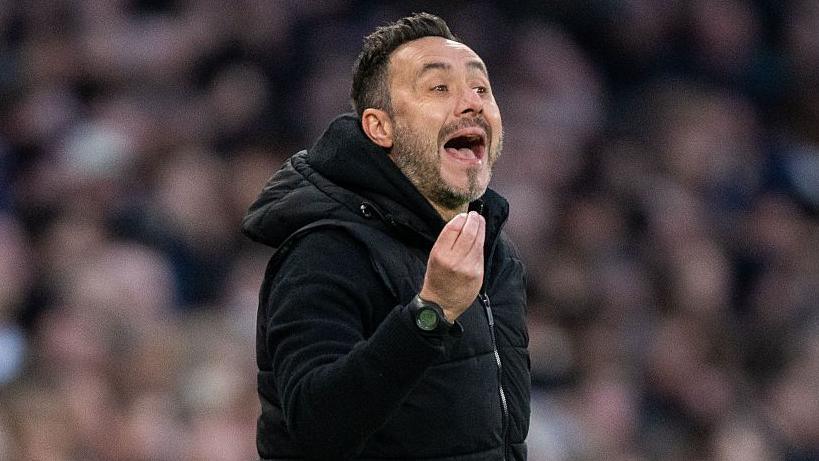
At Stamford Bridge this Tuesday, Tottenham will face Chelsea with their Premier League survival hanging in the balance—and Roberto de Zerbi wants his players to embrace the animosity as fuel. The Italian manager has reframed the very real jeers from rival supporters into something unexpected: motivation.
Spurs sit precariously close to the drop zone, sitting just two points above West Ham United, who occupy the final relegation place. The gap sounds slim until you consider Tottenham's goal difference of minus 9 compared to West Ham's minus 22, a cushion built from playing one fewer game. Mathematically, a single point from either of their last two fixtures—Tuesday's trip to Chelsea or the following match against Everton at the Tottenham Stadium—would almost certainly secure their top-flight status, barring "a set of freak results," as de Zerbi put it.
The stakes are high, and the rivalry makes them higher still. Chelsea's supporters will arrive at Stamford Bridge eager to compound Spurs' misery, adding another layer of pressure to an already tense moment. But de Zerbi has decided to flip the script entirely. When he stood before the cameras at his news conference, he framed the hostile environment and the silent wishes for Tottenham's relegation not as a burden but as a gift.
"If everyone wants Tottenham relegated, it's a big motivation for me and I hope for my players as well," he said, then added a note of defiance: "It's good to imagine ourselves celebrating the win in their stadium. It's the reason football is like this, no?" His words captured something fundamental about sport—that rivalry, for all its sting, is also what makes competition meaningful.
De Zerbi emphasized that his squad must treat external pressure as a sharpening stone rather than a weight. "It's a motivation, it's a challenge. If a challenge is tougher, it's better for us to find new motivation and to be focused on staying together from the beginning to the end of the game," he explained. He spoke of pride as the most powerful motivator available—not the pride of a vast institution, but the daily pride of individual players, individual fans, and everyone working inside the club.
Yet for all his philosophical framing, de Zerbi was clear-eyed about one thing: his team cannot play for a draw. Even though a point would likely be enough, the manager warned his players not to approach the match with that defensive mindset. "We can't start the game thinking to draw," he insisted. "We have to start the game and we prepare the game and we speak in the meeting to win the game." The distinction matters. Playing defensively in a survival battle can backfire; playing to win, even when a draw suffices, keeps a side sharp and aggressive.
In de Zerbi's view, the journey from this moment forward belongs entirely to Tottenham's control. "Everybody wants to stay up, everyone wants to achieve this goal and then we can speak about everything," he said. It's a reminder that whatever Chelsea's supporters might be hoping, and however close to the edge Spurs might be standing, the next 180 minutes of football belong to the players on the pitch.