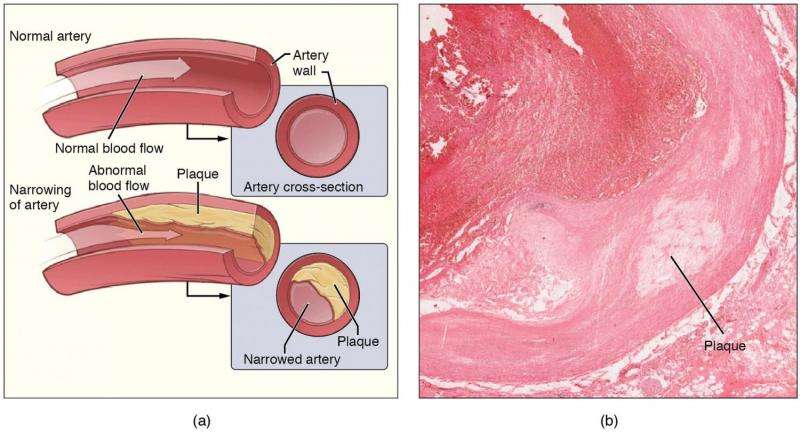
When the carotid arteries of mice were exposed to turbulent blood flow, their endothelial cells didn’t just endure the stress—they fought back by ramping up DNA repair, a discovery that could reshape how we treat heart disease. At Baylor College of Medicine, Dr. Yuqing Huo and postdoctoral researcher Dr. Qian Ma uncovered a hidden self-defense mechanism in blood vessels: under the strain of disturbed flow, endothelial cells boost purine synthesis to fuel DNA repair, protecting themselves from damage that leads to atherosclerosis. This condition, responsible for countless heart attacks and strokes worldwide, begins when fatty deposits build up in arteries, narrowing them and restricting blood flow. While cholesterol-lowering drugs remain a cornerstone of treatment, they don’t address all the drivers of vascular injury—especially the mechanical stress caused by irregular blood flow in certain arterial regions.
The team focused on disturbed flow (d-flow), a known catalyst for DNA damage and endothelial dysfunction, particularly in areas where arteries branch or curve. Using mouse models and living tissue, they found that d-flow triggers endothelial cells to activate genes involved in purine synthesis—essential building blocks for DNA repair. When the researchers deleted the Atic gene, which encodes a key enzyme in purine production, the endothelial barrier broke down, cell death increased, and atherosclerosis accelerated. Remarkably, supplementing purines reversed these harmful effects, proving the protective role of this metabolic adaptation.
This discovery is more than a biological curiosity—it opens a new frontier in vascular medicine. For the first time, it shows that endothelial cells are not passive victims of mechanical stress but active defenders of their own integrity. As Dr. Huo explains, "Our findings reveal that while d-flow damages endothelial cells, they are not passive bystanders, they attempt to protect themselves by engaging DNA repair pathways that can preserve endothelial barrier function and slow down atherosclerosis progression." This insight could lead to therapies that enhance endothelial resilience, complementing existing treatments and reducing cardiovascular risk in high-pressure vascular zones.
But the implications extend beyond heart disease. Several emerging cancer therapies aim to block purine synthesis to starve rapidly dividing tumor cells. This study raises a cautionary flag: such drugs might also impair the endothelium’s ability to repair DNA, potentially compromising blood vessel integrity and increasing cardiovascular risk. As these treatments move through clinical trials, the findings urge a closer look at their vascular side effects.
With heart disease still the leading cause of death globally, this research offers a hopeful shift—away from merely managing risk factors and toward empowering the body’s own defenses. By supporting the endothelium’s innate repair systems, future treatments could help blood vessels withstand the wear and tear of circulation, turning a new page in the fight against atherosclerosis.