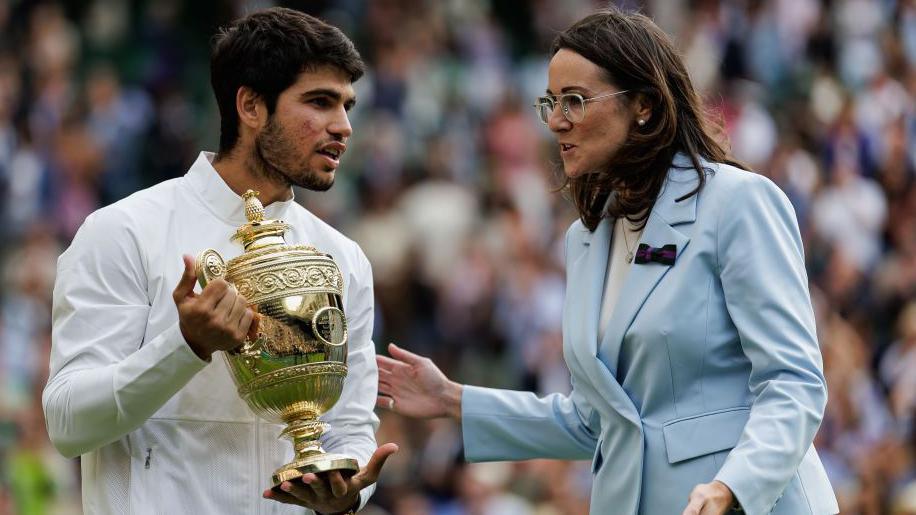
Sally Bolton will step down as chief executive of the All England Lawn Tennis Club after Wimbledon, ending a six-year tenure that transformed Britain's most iconic sporting institution and brought it through one of the most uncertain periods in its long history.
Bolton's departure, announced as the club prepares for this year's Championships (28 June to 12 July), marks the end of a groundbreaking leadership chapter. When she was appointed in December 2019, she became the first female chief executive of the All England Club, replacing Richard Lewis. Her timing proved consequential: just months into the role, the global pandemic struck, forcing the unthinkable decision to cancel Wimbledon in 2020 for the first time since 1945.
The AELTC faced a profound moment of uncertainty. A tournament older than the sport itself suddenly went dark. Grounds lay silent. Yet Bolton's steady stewardship during that interruption—and the meticulous planning required to bring Wimbledon back—established the foundation for her wider legacy. In 2022, under her watch, the championship made a historic structural change, expanding from 13 days to 14 days and introducing play on the traditionally dark middle Sunday. This wasn't merely a scheduling tweak; it represented a recalibration of how the world's most prestigious grass-court tournament could grow and adapt.
Beyond these tangible shifts, Bolton guided the AELTC through substantial institutional change. The club backed an ambitious plan to expand its site, positioning Wimbledon not just as a living monument to tennis history but as an evolving venue capable of meeting modern demands. She shaped, in her own words, "a clear path for the future"—concrete and purposeful—at an organization where tradition and change must coexist in careful balance.
Deborah Jevans, the chair of the All England Club, acknowledged Bolton's navigation of that delicate equilibrium. "I'd like to thank Sally for her hard work and dedication over that time and commend her for guiding the organisation through a period of significant change," Jevans said. The compliment captures something essential: Bolton didn't simply manage Wimbledon; she moved it forward.
Her departure, while significant, suggests institutional confidence rather than crisis. Richard Atkinson, the club's financial director, will take up the role on an interim basis while a new chief executive is sought. Bolton herself expressed optimism about the club's trajectory, saying: "I am proud of what we have achieved together—particularly bringing the Championships back following the pandemic and in shaping a clear path for the future. The All England Club is a very special institution, and I look forward to seeing it continue to flourish in the years ahead."
That measured confidence—pride in what's been done, faith in what comes next—reflects the steady hand that guided Wimbledon through disruption. Bolton leaves the club not diminished by the pandemic, but strengthened by it, with expanded scope, fresh traditions, and a clearer vision of how a 150-year-old institution can remain vital and relevant. As Wimbledon prepares for another summer on the grass courts of SW19, Bolton's successor will inherit not a struggling institution, but one that has learned resilience and embraced evolution.