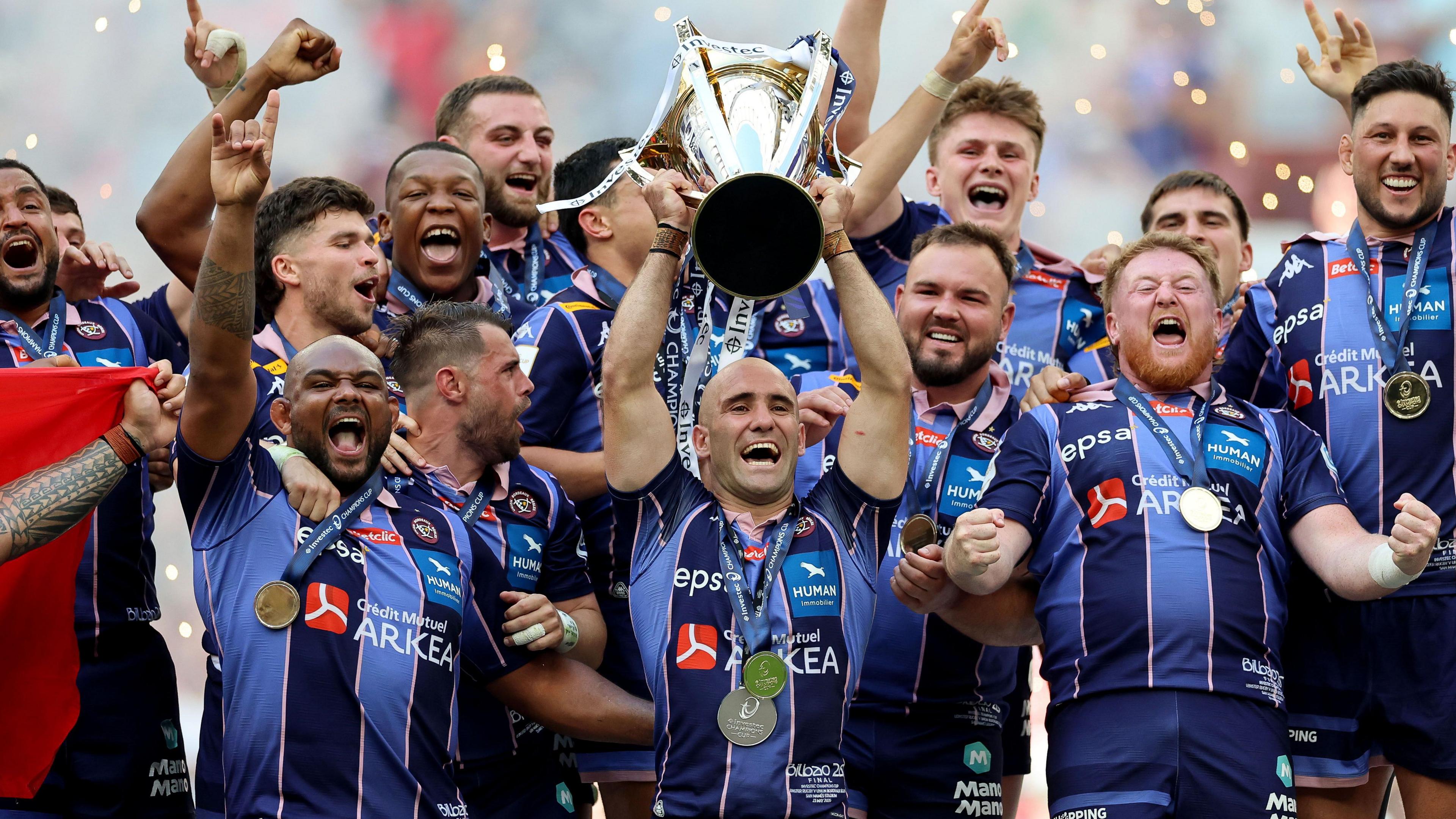
At the San Mames Stadium in Bilbao, Bordeaux delivered a demolition that reverberated across European rugby: a 41-19 victory over Leinster that completed not just a trophy win, but a clean sweep of continental glory for French teams. The performance was so overwhelming—five tries scored in a ruthless first half that made the outcome inevitable with 40 minutes still to play—that it announced something larger: Bordeaux have arrived as the dominant force in European rugby, becoming only the sixth side ever to retain the Champions Cup.
The scale of France's rugby ascendancy became apparent when you step back and see the full picture. Just 24 hours before Bordeaux's demolition, Montpellier had similarly dispatched Ulster in the Challenge Cup final. Earlier in the year, France itself had retained the Six Nations title. For a rugby nation to sweep all three continental competitions is a statement of systemic excellence—but it's also a reminder that Ireland, despite producing world-class teams season after season, finds itself locked out of the elite conversation.
What makes Bordeaux's rise particularly striking is both how recent and how relentless it is. The club was formed only in 2006 from a merger of two clubs, yet they've now won 16 consecutive Champions Cup matches across two campaigns. To claim the title this year, they had to navigate a gauntlet: they dispatched Top 14 champions Toulouse in the quarter-finals, then beat reigning English Premiership champions Bath in the semi-finals, before overwhelmingly conquering United Rugby Championship holders Leinster in the final.
The secret to this dominance, according to Bordeaux's Irish attack coach Noel McNamara, traces back to an unlikely source of inspiration: Rory McIlroy's historic second Masters victory in April. McIlroy, from Northern Ireland himself, had won the green jacket once before; this time, he came back to prove one major championship wasn't enough. "We spoke about Rory McIlroy in the lead-up to the quarter-final against Toulouse," McNamara told the BBC's Rugby Union Weekly podcast. "There's a beautiful ad that said good players want one Green Jacket and really good players want two, and we've got fantastic players." The parallel was simple but potent: excellence demands the hunger to repeat, not rest on laurels.
That mentality runs through Bordeaux's star-studded lineup. Louis Bielle-Biarrey, the tournament's player of the tournament, combines an almost otherworldly ability to conjure magic from nothing. In scrum-half Maxime Lucu, they arguably have the best player in his position in world rugby—a reality that gains weight when Antoine Dupont, France's national captain, plays in the same country. Fly-half Mathieu Jalibert orchestrates play with world-class precision, and his partnership with Lucu, forged during France's Six Nations campaign when Dupont was sidelined with a knee injury, has become something symbiotic.
McNamara attributes much of Bordeaux's culture to a deceptively simple philosophy: a "very straightforward mindset" where the team celebrates the player who wins a crucial collision or turnover with the same intensity as the try scorer. It's a habit deliberately built, not accidentally inherited. As Bordeaux now sets its sights on matching Toulon's three consecutive Champions Cups from 2013-2015, the question facing Irish rugby and the wider European game is no longer whether Bordeaux can be beaten—it's whether any team can sustain the relentless excellence required to dethrone them.