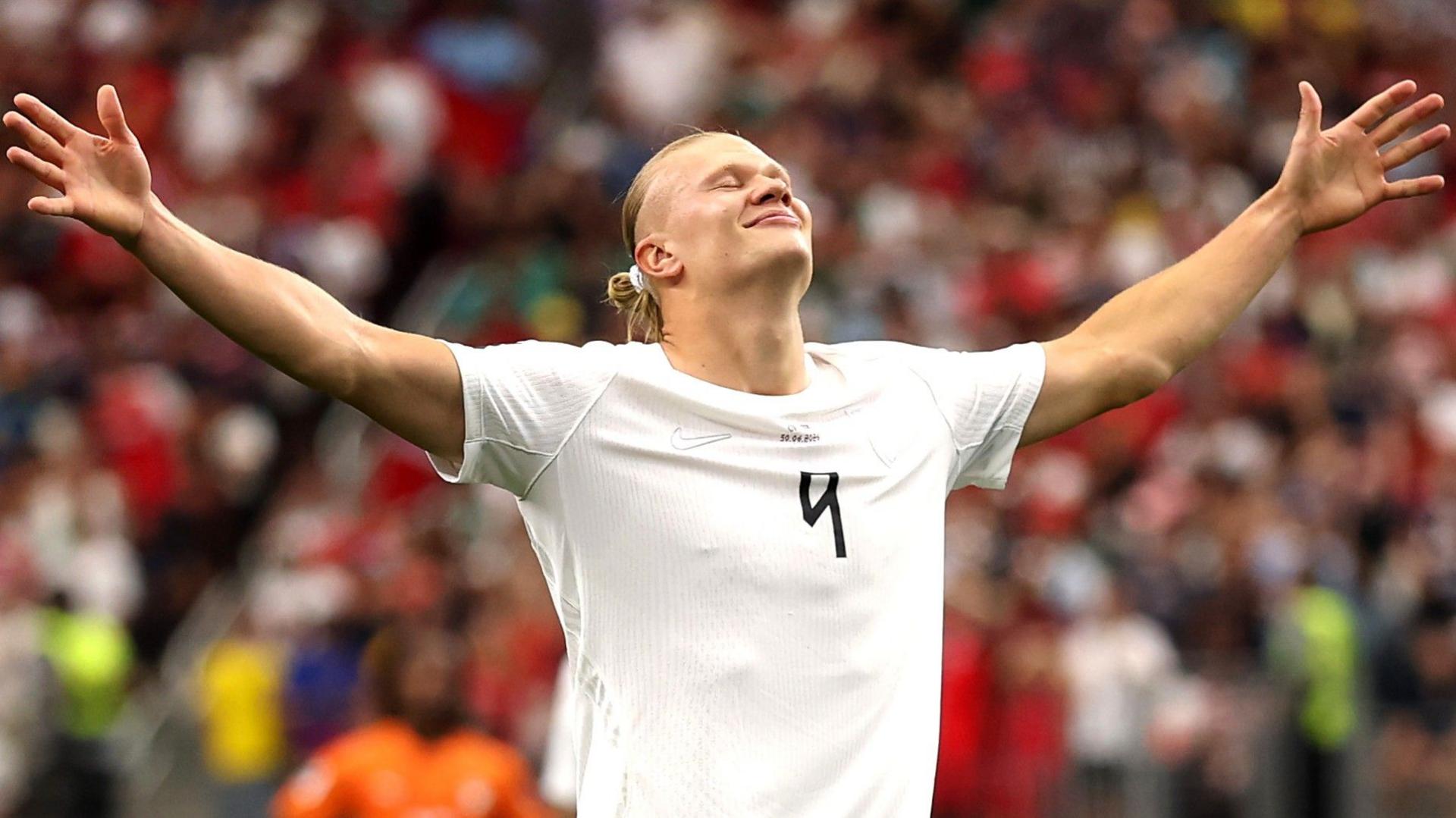
When Erling Haaland was born in Leeds, England in 2000, Norway had just finished playing at their last World Cup. He was barely a year old when the qualifying campaign for the next tournament ended. The math is simple and striking: in 26 years of Norway's World Cup absence, Haaland went from a baby in Yorkshire to the most feared striker in club football, back to the same tournament Norway had vanished from all that time.
Now, after helping Norway reach the quarter-finals for the first time since 1998, Haaland faces a twist of fate: England, the country of his birth, stand between his nation and a place in the semi-finals. The match will take place in Miami on Saturday.
For a country of just 5.5 million people, the stakes feel enormous. Norway has never been a football powerhouse. Before this run, qualifying for a World Cup was rare. Winning one seemed impossible. Haaland has changed the math.
He scored 16 goals across eight matches during qualifying, then seven more in four games at the tournament itself. His brace against five-time World Cup winners Brazil in the last 16 announced Norway's arrival on the biggest stage. But his teammates deserve credit too. Captain Martin Odegaard arrived from winning the Premier League with Arsenal and has contributed three assists. Alexander Sorloth, Jorgen Strand Larsen, and Oscar Bobb are established top-level players, while Patrick Berg, Sander Berge, and Antonio Nusa have emerged as unexpected stars. This is not a one-man team, despite what the numbers might suggest.
Born in Leeds while his father Alf-Inge was still playing for Leeds United, Haaland moved to Bryne, Norway at age three. His talent was spotted early, and he rose quickly through Bryne's youth ranks before joining Molde in 2017, where Ole Gunnar Solskjaer helped shape him into the attacking force he is today. Solskjaer later said he wished he could have signed Haaland at Manchester United.
Haaland chose Norway over England, even though eligibility meant playing for England was always an option. Former England manager Gareth Southgate said in 2020 that Haaland always made clear where his allegiance lay.
He remains deeply connected to his roots. Norwegian football journalist Andreas Korssund told BBC Sport that Haaland frequently returns to his hometown in Rogaland and owns several properties across Norway. He has spoken about wanting to run a farm there someday after retiring. On the back of his national team shirt, he wears his full name, Braut Haaland, a Norwegian tradition combining his mother's maiden name with his father's surname.
After beating Brazil, Haaland led his teammates in a Viking Row celebration, embracing the heritage that shaped him.
"He has become an unprecedented superstar in the world's biggest sport," Korssund said. "For a nation of just over 5.5 million people to produce one of the absolute greatest footballers on the planet is immense."