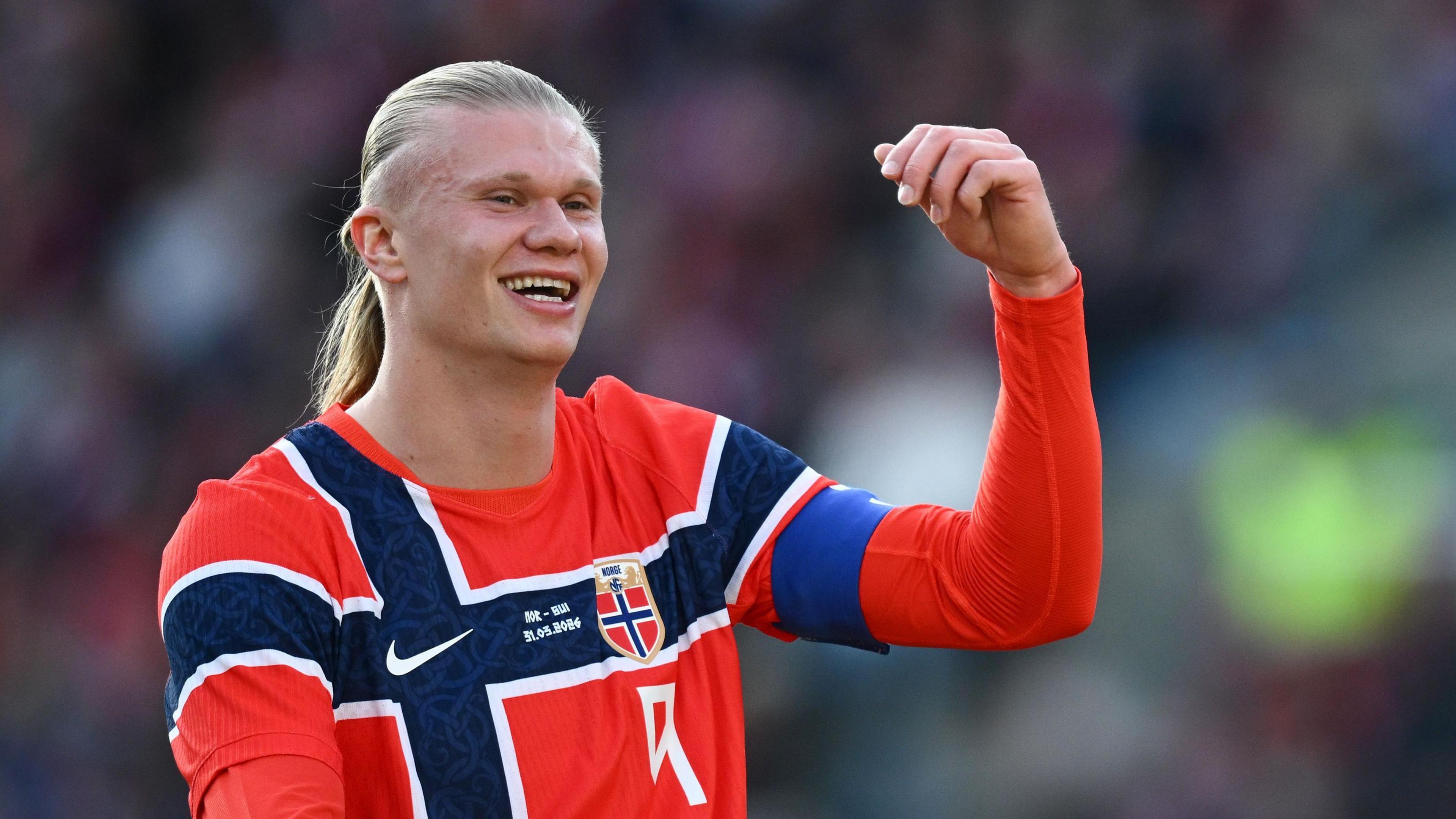
Erling Haaland was born in Leeds in 2000, the same year his father Alf-Inge was leaving Manchester City on the injured list. Three years later, the family relocated to Bryne, Norway, a small town in Rogaland that most of the world had never heard of. Yet from that modest Norwegian base, a 25-year-old striker would become the catalyst for his nation's return to the World Cup after 28 years of agonizing absence.
When Norway last appeared at a World Cup in 1998, Haaland did not exist. Now, after scoring 16 goals across eight qualifying matches in a dominant campaign, he has delivered something far larger than personal statistics. He has ended a national drought and given 5.5 million Norwegians a chance to compete on football's biggest stage.
The path to this moment began when scouts at Bryne spotted his talent early and fast-tracked him through their youth academy. His progression through Molde—where he played under Ole Gunnar Solskjaer—Red Bull Salzburg, and Borussia Dortmund refined him into the global force he is today. His 2022 move to Manchester City felt inevitable, given his father's history with the club and his own love of English football. Since then, he has won everything a club player can win.
Yet even amid his superstar status, Haaland has remained fiercely rooted to Norway. He owns several properties across the country, frequently strolls around Oslo where he maintains an apartment, and speaks openly about his dream to run a farm in his homeland when he retires. He wears his mother's maiden name, Braut, on his national team shirt—combining it with his father's surname, a cherished Norwegian tradition. "Despite Haaland's global superstar status, he remains the exact same guy," Norwegian football journalist Andreas Korssund told BBC Sport. "He knows exactly where he comes from and regularly visits his small hometown in Rogaland."
The decision to represent Norway came with real risk. Born in Yorkshire, Haaland was eligible to play for England. When Gareth Southgate was asked in 2020 if there was ever a possibility of that happening, he dismissed it quickly. "With players like him, they're quite clear where they want to play," Southgate said. "He feels that allegiance to the country that he's playing for now and you're always very respectful of that." Haaland chose the smaller stage, the longer odds, and the deeper call of home.
What he has given Norway in return is immeasurable. For a nation of just over 5.5 million people to produce one of the absolute greatest footballers on the planet is, as Korssund puts it, "immense." While Haaland's goal haul might suggest a one-man operation, this current Norwegian squad is genuinely stacked. Midfielder Martin Odegaard arrives fresh from winning the Premier League with Arsenal. Kristoffer Ajer, Jørgen Strand Larsen, and Oscar Bobb are all established top-flight players. Yet none of them transcend the sport the way Haaland does.
Norway's return to the World Cup belongs to a broader team effort and a golden generation of players. But without the striker born in Leeds who chose Bryne over everything else, this moment would have remained unreachable—a 28-year drought extending into eternity.