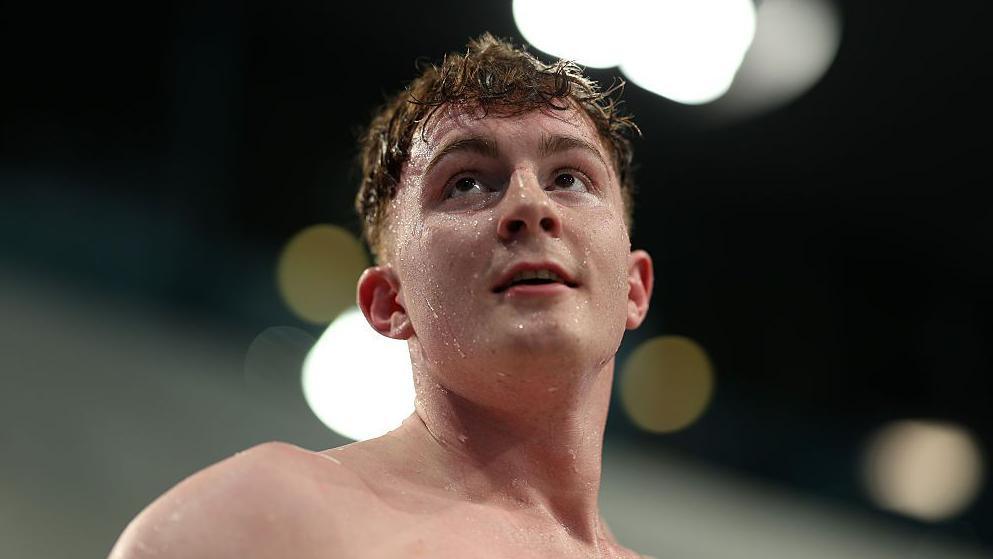
Archie Goodburn stands at the edge of the pool, goggles in hand, already feeling the roar of a Glasgow crowd that hasn’t yet gathered. At 24, he’s chasing a medal in the 50m breaststroke at the 2026 Commonwealth Games — not just as Scotland’s best hope in the event, but as a man defying a terminal diagnosis. Diagnosed with inoperable brain tumours in 2024, Goodburn was told his life expectancy could be as short as 12 to 18 months. But today, the tumours’ growth has slowed thanks to a newly approved drug that wasn’t even licensed when he first pleaded for access in a heartfelt BBC interview a year ago. Now, he’s not only back in the water — he’s swimming faster than ever. “A personal best post-diagnosis is something that I actually would have struggled to believe if you’d told me in that consulting room back in May 2024,” he says, voice steady but eyes glistening. “I’m in the best shape of my life heading into these Games.”
His times? Fast enough to have won a medal at every previous Commonwealth Games. And while Glasgow 2026 promises to be one of the fastest yet, Goodburn isn’t just aiming to compete — he’s aiming to stand on the podium, heart pounding, as the noise from the stands vibrates through his chest. That sensation — the physical pulse of a crowd’s energy — is something he last felt walking behind Adam Peaty in Birmingham. “You can actually feel the sound waves moving through your body,” he recalls. “I hope that gives us the edge to make those little hundredths of a second.”
Beyond the pool, Goodburn’s impact is already profound. His advocacy helped accelerate the UK government’s approval of a life-extending drug, a victory not just for him but for thousands facing the same diagnosis. He’s also just graduated from university with a first-class degree in chemical engineering — a testament to the resilience that defines him. Yet his fight extends beyond personal milestones. As part of a brain cancer advocacy group, he’s calling for a national brain cancer lead to fast-track treatments, knowing that for patients, “a month is a significant portion of their time remaining.”
No one can predict how much time Goodburn has, but he’s making every second count — in the pool, in policy, and in the hearts of those watching. When he steps onto the podium in Glasgow, whether draped in medal or memory, he’ll carry with him the quiet revolution he’s helped ignite: that hope, when backed by action, can change outcomes. And for others facing the same battle, that change could mean more than just a longer life — it could mean more moments worth living for.