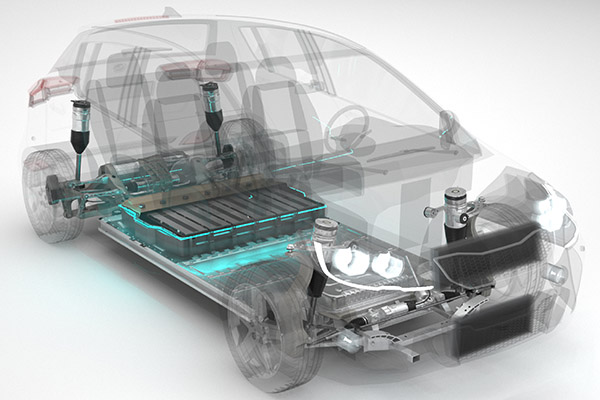
From insulin pumps keeping people alive to the hidden power banks that steady renewable energy grids, batteries are the quiet infrastructure of modern life—and they're about to get a lot smarter. The Department of Energy is spotlighting a revolution in battery technology that goes far beyond the lithium-ion cells powering your phone right now. As the nation races to transition to a clean, renewables-powered electric grid, the batteries we rely on need to evolve to handle dramatically increased demand while becoming safer, longer-lasting, and more sustainable.
Today's lithium-ion batteries are marvels of engineering: they've made electric vehicles practical, kept laptops running for hours, and enabled the portability revolution we take for granted. But they have limits. They require critical materials like lithium, they can be prone to leakage from damage, and they swell dangerously in hot temperatures. Next-generation batteries—particularly solid-state and flow batteries—are poised to overcome these constraints while opening new possibilities for everything from grid storage to wearable medical devices.
Solid-state batteries replace the liquid electrolyte found in traditional lithium-ion cells with a solid electrolyte solution. This single change has cascading benefits: because a solid electrolyte doesn't need a separate component to keep the electrodes apart, the battery becomes inherently safer. It's less vulnerable to dangerous leakage and won't swell when temperatures spike. The result is a more durable, more secure power source—especially critical for applications where failure could be catastrophic.
Flow batteries operate on an entirely different principle. Rather than storing energy in the battery's chemical structure, they harness reduction-oxidation (redox) reactions, passing two different liquid electrolytes back and forth through a porous membrane to shuttle ions and protons. The beauty of this design is that they can store energy proportional to the size of their electrolyte cells—meaning you can scale them up significantly. Equally important, flow batteries avoid flammable or polluting materials altogether, making them far cleaner for large-scale grid storage where environmental impact and safety are paramount concerns.
The applications emerging from these advances span nearly every sector of modern life. Portable electronics—phones, laptops, power tools, wearable sensors, and augmented reality devices—will run longer and charge faster. Transportation is being transformed: electric vehicles, e-bikes, scooters, drones, boats, and ferries are all benefiting. But perhaps most significantly for the clean energy transition, stationary storage—the ability to bank renewable energy at grid scale, balance supply and demand, and provide backup power when the sun isn't shining and the wind isn't blowing—depends on breakthrough battery chemistry.
The stakes extend to healthcare too. Implantable medical devices like pacemakers and hearing aids, as well as portable technologies like insulin pumps, can be made smaller and more reliable with next-generation batteries. Industry gains uninterrupted power supply during critical equipment operations.
As the Department of Energy continues developing these technologies, the path forward is clear: batteries are becoming smarter, safer, and more sustainable. They're enabling the renewable energy transition while quietly powering the devices that define modern life. The next chapter of battery innovation isn't just about longer-lasting phone charges—it's about fundamentally reshaping how we power civilization itself.