Alan Jasanoff's team at MIT has engineered tiny sensor particles that can turn MRI signals on and off in response to specific molecules in the brain—a breakthrough that could finally allow doctors and scientists to watch neurotransmitters and other neurochemicals do their work in real time.
The problem MRI has faced for years is one of scale and sensitivity. While magnetic resonance imaging can beautifully capture detailed pictures of organs, bones, and blood flow, detecting small molecules like neurotransmitters has remained nearly impossible. These neurochemicals exist in vanishingly small amounts in the brain, and traditional approaches to MRI sensing require a one-to-one ratio: each contrast agent molecule needs its own target molecule to activate it. With concentrations so low, the signal change barely registers. "The signal change that you see in the imaging will be very modest," Jasanoff explains. "It won't let us detect physiological events."
The solution his team developed, published in May 2024 in Nature Biomedical Engineering, turns that limitation on its head. Working with postdoc Sayani Das and graduate student Jacob Cyert Simon, Jasanoff designed sensors called liposomal nanoparticle reporters, or LisNRs (pronounced "listeners"). Rather than requiring a one-to-one match, a single target molecule can now trigger changes in many contrast agent molecules at once, dramatically amplifying the signal.
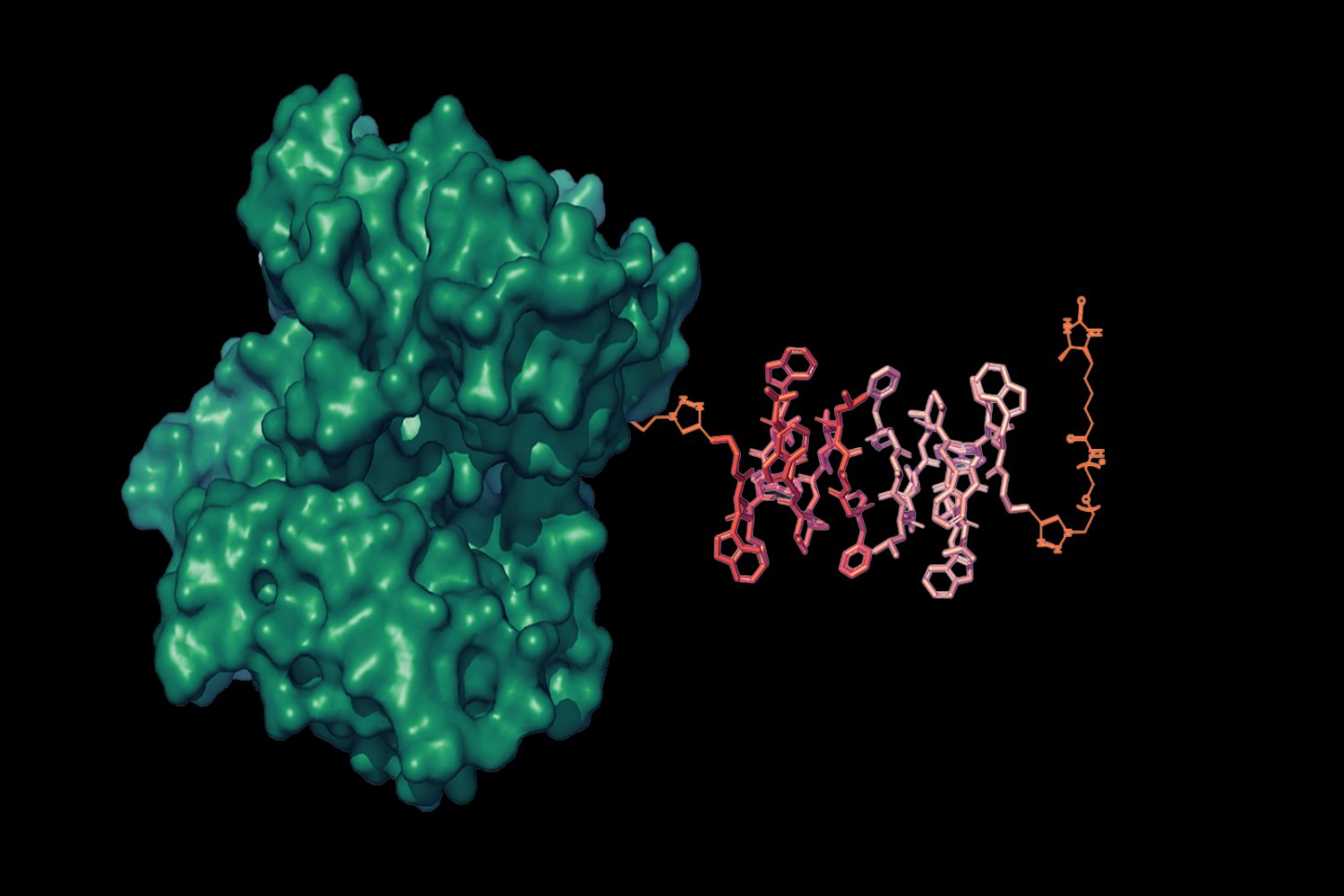
Here's how they work: Das and Simon packed thousands of gadolinium atoms—a magnetic material that brightens MRI signals—into tiny protective sacs called liposomal nanoparticles. Gadolinium normally has no effect on MRI signal while locked inside these containers. But the researchers engineered water channels into the nanoparticle walls that open and close based on what molecules are nearby. When water floods through open channels to reach the gadolinium, the MRI signal brightens. When channels close, blocking water, the signal dims. The magic is that a single target molecule can knock aside a protein blocker and trigger water to flow into a nanoparticle containing thousands of gadolinium atoms—multiplying the effect exponentially.
The team also engaged collaborators at the University of Tokyo, including Masayuki Inoue, to engineer the channels with higher potency, and MIT lab members Vinay Sharma, Samira Abozeid, and Gregory Thiabaud helped optimize these molecular interactions.
In living rat experiments led by postdoc Miranda Dawson, the researchers demonstrated the power of their approach. Using LisNRs designed to detect biotin, a common molecule, they achieved about tenfold greater sensitivity than conventional one-to-one sensing approaches. Jasanoff notes that his team's modeling suggests even greater sensitivity gains may be possible with further development.
Perhaps most excitingly, the sensors can be delivered throughout the body, spreading systemically to reach various organs and distributed across the entire brain. This opens the door to brain-wide imaging of the neurochemicals that orchestrate thought, mood, and behavior. "We want to be able to measure distinct chemical signals like neurotransmitters, neuropeptides, and metabolites as they fluctuate across the whole brain," Jasanoff says. "These chemicals are important ingredients in neural computations, and we want to use the types of probes that we developed to detect these signals dynamically."
The next frontier is engineering LisNRs that respond to specific neurochemicals—Jasanoff's team is eyeing roughly 100 different molecules in the brain they would love to detect. If they succeed, neuroscientists could finally watch the brain's chemical orchestra perform in real time, potentially unlocking new understanding of learning, memory, and neurological disease.