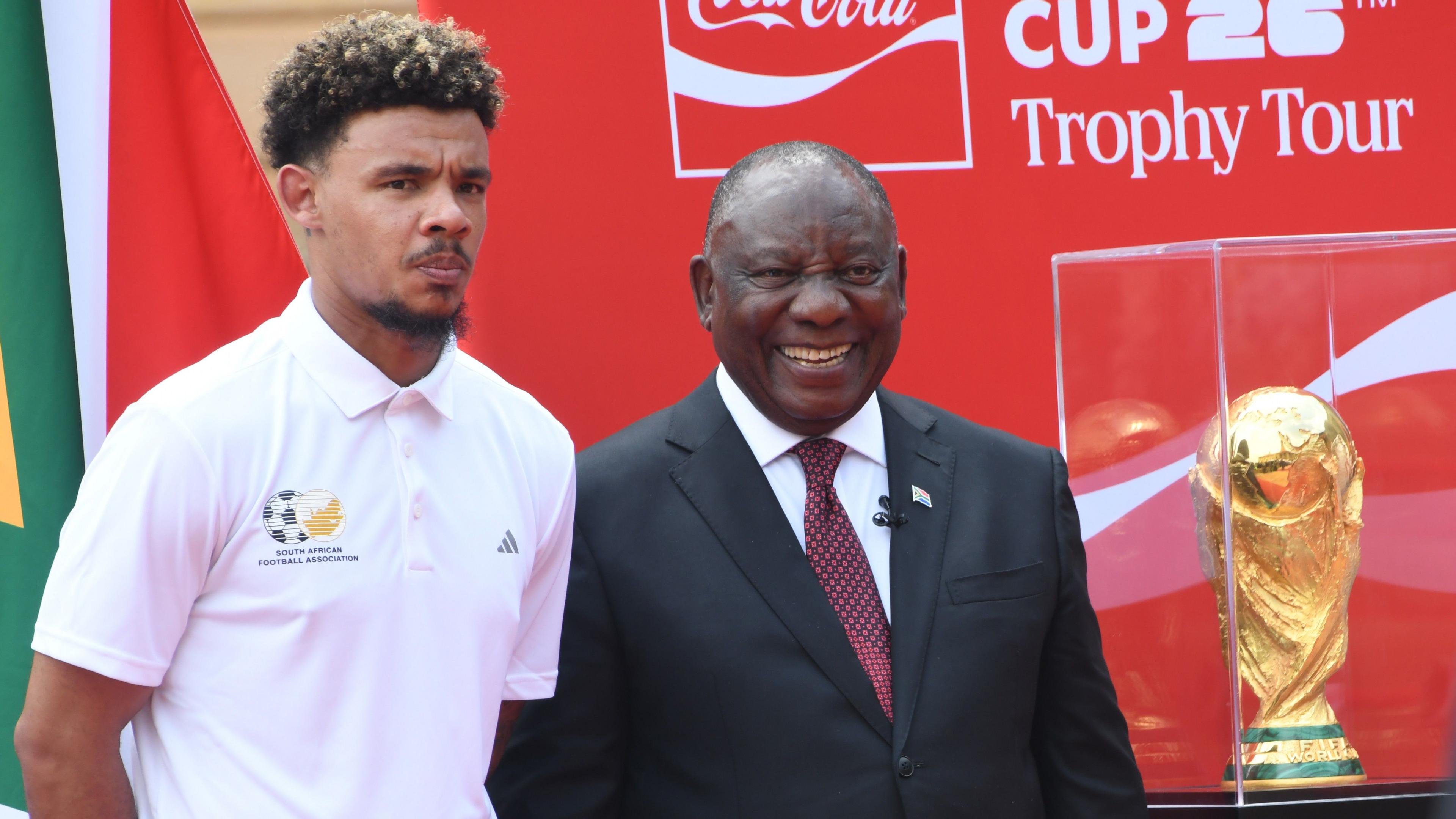
Ronwen Williams will captain South Africa into the 2026 FIFA World Cup's opening match against Mexico—the same fixture that opened the 2010 tournament on African soil, 16 years ago. For the Mamelodi Sundowns goalkeeper, the symmetry carries a weight that transcends sport: his older brother Marvin was killed in a car crash just two months before that 2010 World Cup began, when Ronwen was 18 and briefly considered abandoning football altogether.
The poignancy of leading Bafana Bafana out in Mexico City strikes deep. "I can't put it into words," Williams told the BBC World Service. "It gives me chills. Sometimes I find myself just laying at night thinking about it." His brother had held such high hopes for him, and now, at 34, Williams will carry those dreams onto one of football's greatest stages.
What makes this moment possible is the transformation Hugo Broos has wrought since taking over as South Africa's coach in 2021. The 74-year-old Belgian, who led Cameroon to the Africa Cup of Nations title in 2017, appointed Williams captain immediately and rebuilt a squad that had fallen into despair. The results have been undeniable: a third-place finish at the 2023 Afcon, a first-place finish in World Cup qualifying ahead of Nigeria, and a fourth World Cup appearance for the nation. Williams credits Broos with more than tactical acumen—he's brought "belief and love" back to a country that had stopped believing in its team. "Two, three years ago we were crying for the supporters to come out," Williams reflected. "When we started picking up the results, that's when the belief came back. Now people can't wait for Bafana Bafana to play."
In qualifying, South Africa won five of their 10 games, a solid foundation but nothing that dims the challenge ahead. Group A includes Mexico, Czech Republic, and South Korea—formidable opponents, especially with Mexico playing at home. Williams is refreshingly clear-eyed about the ambition: "I think we need to be realistic about our chances. The most important thing is to get out of the group." South Africa has never advanced beyond the group stage in four World Cup appearances, so even reaching the last 32 in the newly expanded tournament would represent genuine progress.
If Bafana Bafana makes it to the knockout rounds, Williams could become a centerpiece of South Africa's hopes in ways that extend beyond his usual role. His penalty-saving record is exceptional—he saved four of five spot-kicks against Cape Verde in the 2023 Afcon quarter-final, then two more in the third-place playoff against DR Congo. Those performances earned him the 2024 African Goalkeeper of the Year award and a nomination for the Yashin Award at the Ballon d'Or ceremony.
Yet Williams emphasizes that his impact as captain goes deeper than heroics in sudden-death moments. He describes his leadership style as one that brings "stability"—being "the glue" that holds the team together. Even as a goalkeeper, positioned away from the central action, he has made the captaincy work through presence and intelligence. "I think that I was made for it," he said simply. "I cherish the captaincy, the responsibility that comes with it."
As Williams prepares for Mexico City, he carries his brother's memory with him—not as a burden, but as fuel. That opening match in 2010, a 1-1 draw, was electrifying. This one, he hopes, will be the beginning of something greater still.