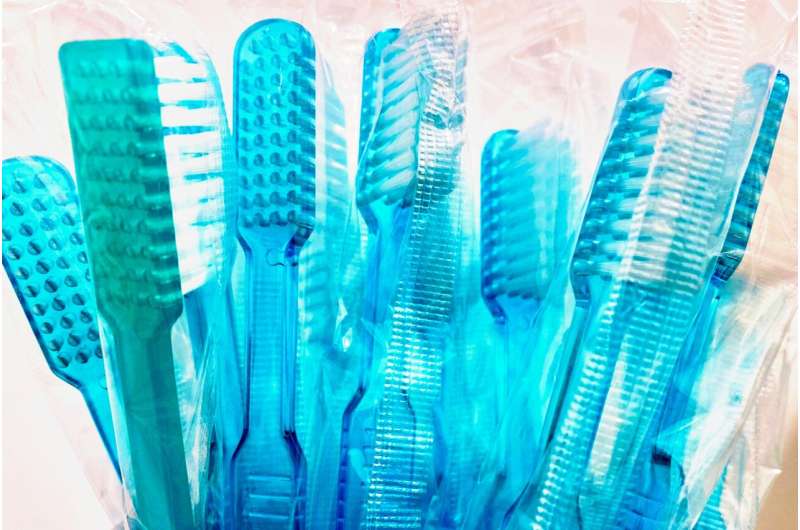
At three Australian hospitals, a small toothbrush printed with the words "Brush away pneumonia" became an unlikely shield against one of the most common hospital infections. Researchers working across those wards discovered that something as basic as daily tooth-brushing could cut the risk of acquiring pneumonia during a hospital stay by 60%—a finding that challenges how hospitals approach patient care and what patients themselves can do to protect their health.
Every year, around 50,000 Australian patients develop pneumonia in hospital, and approximately 1,900 of them die from it. Yet this infection remains remarkably under-discussed and under-monitored. When bacteria from the mouth and throat are inhaled into the lungs of patients who aren't on ventilators, pneumonia can take hold in ways that feel almost invisible to the health system—until the damage is done. Those who develop this type of infection, called non-ventilator hospital-acquired pneumonia, often stay in hospital 10 to 48 days longer and face roughly eight times the risk of death during their admission.
The breakthrough came from a carefully designed trial published in The Lancet Infectious Diseases. Researchers led by Brett Mitchell, Allen Cheng, Nicole White, Peta Ellen Tehan, and Philip Russo studied 8,870 patients across three Australian hospitals to test whether better oral care could make a difference. The intervention was deliberately unglamorous: patients received a toothbrush and toothpaste when admitted, received education about the importance of brushing, got reminders printed right on their toothbrush, and were assisted if they couldn't manage alone. Hospital staff received feedback on how well oral care was being delivered on their wards.
The effect was striking. Where only 16% of patients had been cleaning their teeth before the intervention, 62% did afterward. That shift in behavior translated directly to lives protected. On a typical ward of 30 patients, pneumonia infections dropped from eight per month to fewer than four—a 60% reduction in risk. This was the largest trial of its kind, and the first to succeed across multiple hospitals using a stepped-wedge design that rolled out the intervention gradually over 12 months at each site.
The science behind this simple fix lies in the mouth itself. Billions of bacteria live there naturally, but when people are unwell, medicated, or immobilized—common states in hospitals—oral hygiene deteriorates and bacteria accumulate on teeth, gums, and tongue. Daily brushing removes that buildup through straightforward mechanical action. When those bacteria are breathed into the lungs, even in tiny amounts, they can cause pneumonia. Prevention, it turns out, starts with a toothbrush.
What makes this finding particularly important is its empowering message for patients. Hospital staff bear responsibility, certainly, and nurses play a crucial role in supporting patient care. But the research shows that patients who are able to brush their own teeth can meaningfully reduce their own pneumonia risk—they aren't powerless in the face of hospital-acquired infection. For anyone entering a hospital or visiting a loved one there, the answer is simple: bring a toothbrush and toothpaste, use them daily, and remind staff about the importance of oral care.
In busy wards where staff juggle competing priorities, oral care has long been deprioritized and its importance underestimated. This trial suggests that overlooking something so basic carries a heavy cost. A toothbrush and a reminder may seem small, but across a hospital system, they represent a profound shift in how prevention works—not as an expensive intervention imposed from above, but as an accessible action patients and staff can take together.