Shanghai's Shanghai Metro sprawls across more than 800 kilometres of track and serves over 400 stations, each one woven into a vast nervous system of artificial intelligence and real-time data. This is not science fiction — it is urban life today, where driverless trains glide through tunnels monitored by algorithms that detect the faintest crack in concrete, the smallest seep of water, the slightest structural weakness before humans could ever see it coming.
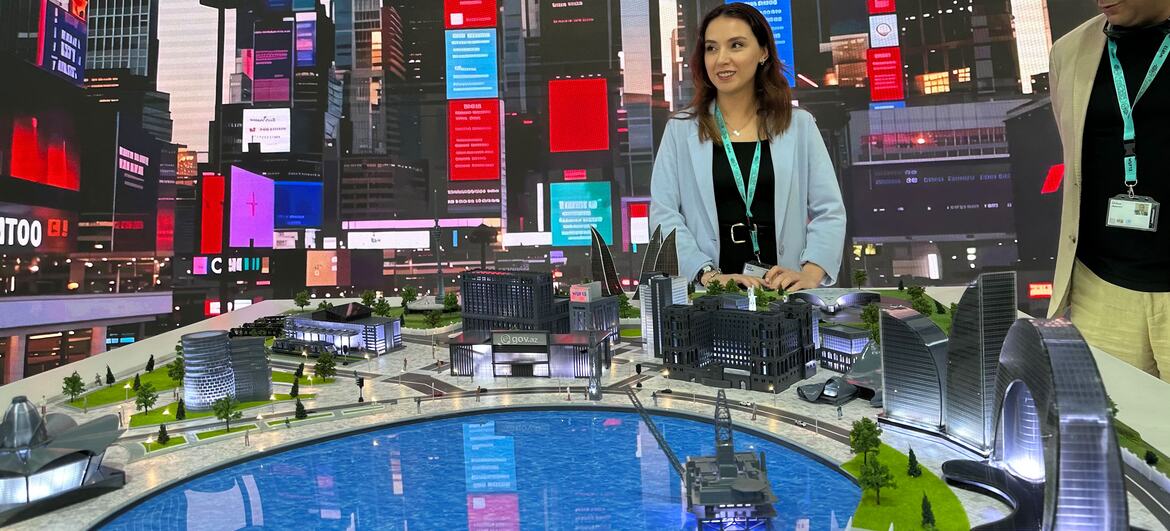
Around the world, cities are racing to deploy what governments call the "city of the future." At the World Urban Forum in Baku, officials from Shanghai and beyond showcased systems that bring together transportation, infrastructure, emergency response and public services into single unified platforms. The Shanghai Metro itself has become a laboratory for this ambition. Through 5G-enabled communications and predictive weather-control technologies, the system analyzes vast streams of passenger data in real time to prevent disruptions. Several lines already operate fully automated, carrying millions of people daily without a single human hand on the controls.
Yet as technology accelerates, crucial questions linger about who actually benefits. Anacláudia Rossbach, Executive Director of UN-Habitat, which hosted the forum alongside Azerbaijan, struck a note of caution. "The most important thing of our work is that smart cities really need to be people-centered," she said. She warned that during the COVID-19 pandemic, many residents of informal settlements were cut off from education, services and remote work entirely — not because the technology didn't exist, but because they lacked connectivity and digital access. Cities, she stressed, are confronting multiple crises simultaneously: housing shortages, informal settlements, climate shocks and rising inequality. Technology alone cannot solve these. Human rights, inclusion and equity must remain at the heart of digital transformation.
Shanghai itself has attempted to bridge this gap. Through its "One-stop Government Service" portal, residents can now access more than 3,500 public services online. The city's Lingang Starry Sky Sponge Park offers another vision of smart infrastructure in service of the public good. Covering 54 hectares with both cosmic-themed landscaping and advanced engineering, the park combines permeable pavements and underground filtration systems to absorb, clean and reuse up to 15,000 cubic metres of rainwater each day — addressing climate resilience while creating green space for residents.
But architect and urban researcher Gynna Millan from Colombia offered a sharper perspective. Technology, she warned, can either empower people or become "a tool for control." For many cities in the Global South — particularly informal settlements already lacking basic infrastructure and reliable internet — the question is not whether advanced technology exists, but whether it genuinely improves daily life. Moscow's digital-twin system, updated twice yearly with aerial photography and containing more than 9,000 analytical layers to model traffic and infrastructure, exemplifies the sophistication now being deployed. Yet sophistication alone does not guarantee equity.
As artificial intelligence moves rapidly from pilot projects into everyday urban governance, the stakes have never been higher. The technologies shaping cities — from autonomous digital agents to immersive virtual environments and virtual city replicas used to test scenarios in real time — hold genuine promise. But only if cities remain centred on the people they serve, ensuring that the benefits of the smart city are not reserved for the privileged few.