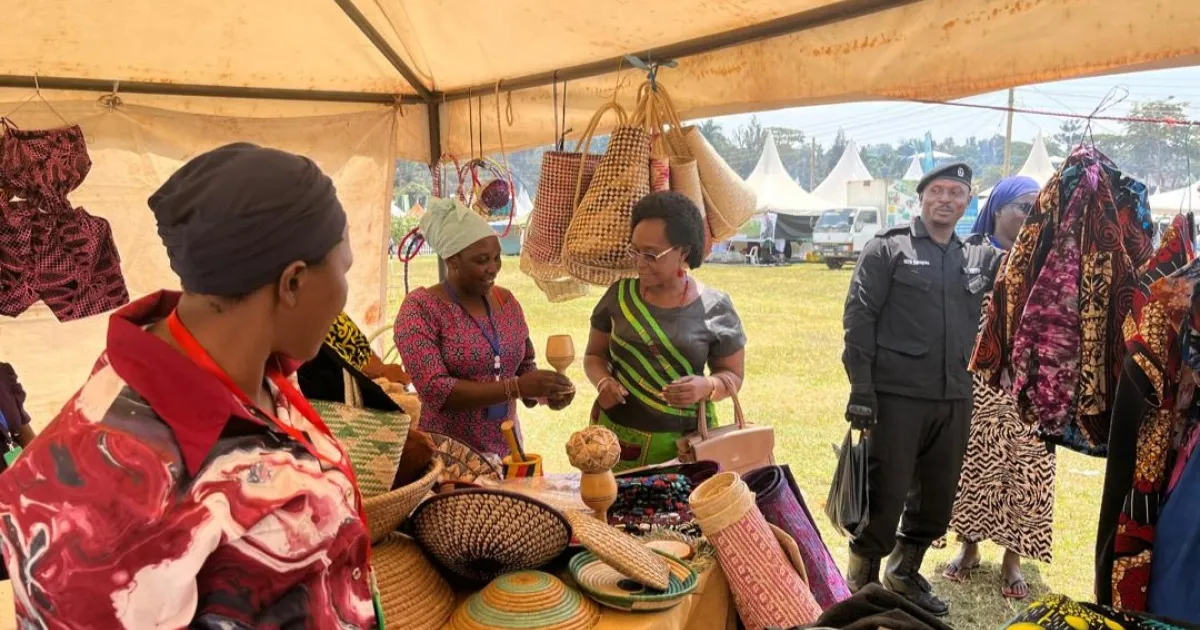
Nancy Akurut stocks her table with bundles of dried silver fish when a customer approaches, examines a package, and hands her cash. For Akurut, who traveled three days from Karamoja to reach the National Agricultural Trade Show in Jinja, this moment represents something bigger than a single sale. It is proof that women-led businesses, even from Uganda's most remote corners, can compete in national markets when given the right support.
Akurut was one of 26 women entrepreneurs from across Uganda's Eastern Region who participated in this year's trade show, backed by a program called Women Economic Empowerment for Green Transformation, or WEEG-UWEP. The initiative, funded by the European Union along with the governments of Germany and Norway, aims to help women who run small businesses break into markets they have long been excluded from.
The participating enterprises did not fit a single mold. Some grew coffee and cocoa using climate-smart methods. Others caught and processed fish, wove baskets from local fibers, or brewed traditional wines. A few sold solar panels and energy-efficient cookstoves that reduce deforestation in their communities. What they shared was a common challenge: knowing how to produce goods but lacking the connections and skills to sell them at scale.
Before arriving at the trade show, the women attended a Business Acceleration Clinic that taught practical skills like how to price products, package goods attractively, and pitch confidently to buyers. Experts from Uganda's business registration bureau, tax authority, and central bank joined to answer questions about formalizing businesses, understanding tax rules, and accessing bank accounts or loans.
The results exceeded expectations. Across three days in Jinja, the 26 enterprises generated 11.7 million Ugandan shillings in sales and made 715 new business contacts. Several women began the process of officially registering their businesses on the spot, a step that unlocks access to larger contracts and formal credit.
Program organizers say the experience confirmed an important lesson: market access alone does not guarantee success. Giving women a booth at a trade show helps, but only if they also receive coaching on how to negotiate, keep records, and build lasting customer relationships. One organizer put it simply — entrepreneurs need both the door opened and the map to navigate what lies beyond.
For women like Akurut, the trade show was not just an opportunity to sell dried fish. It was a chance to return home with new contacts, new confidence, and a clearer sense of what their businesses could become.