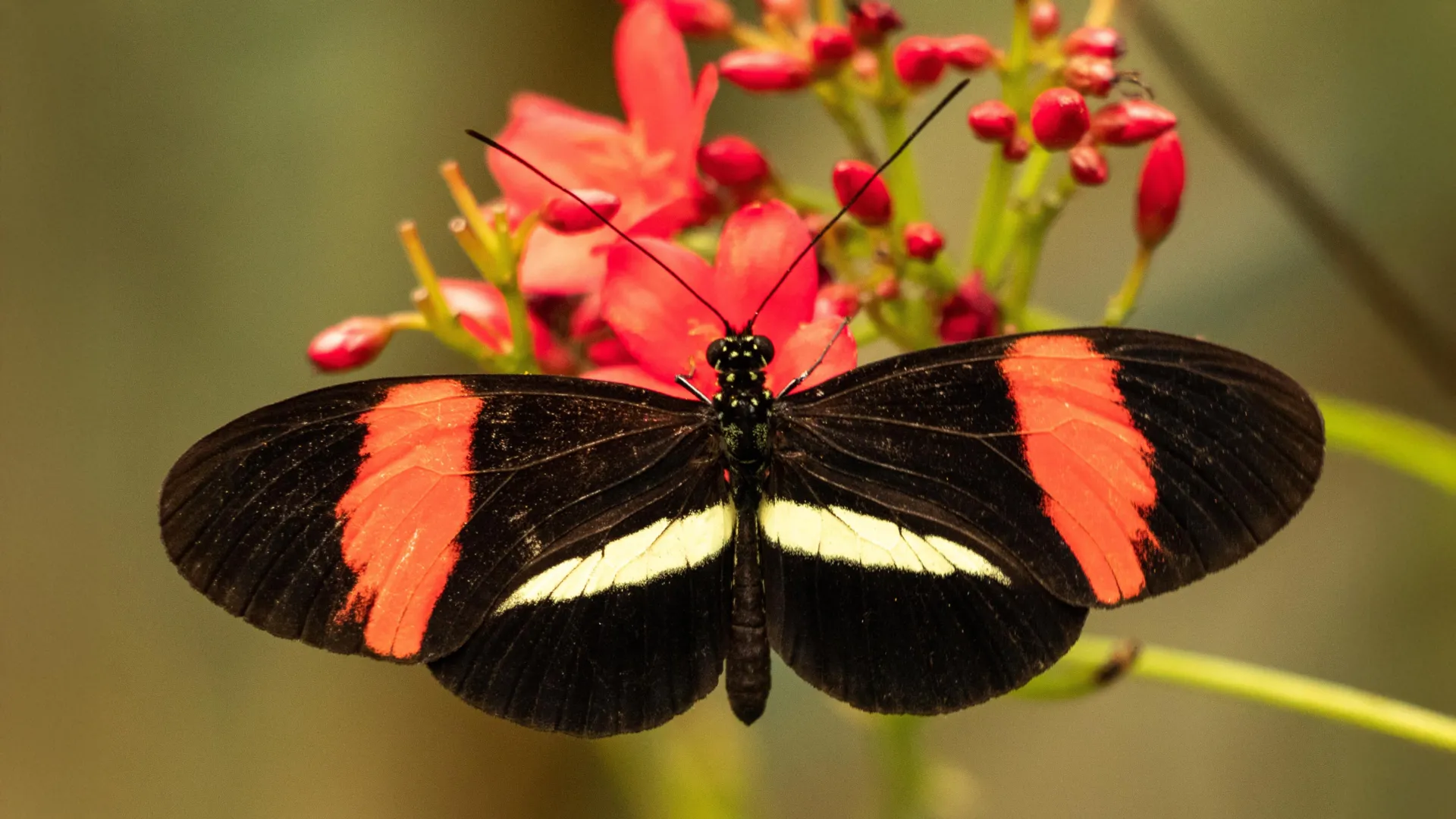
Heliconius hewitsoni lived for 348 days—nearly a full year—while its evolutionary cousin, Dione juno, survived just two weeks, a 25-fold difference that has stunned longevity researchers. In the dense rainforests of Central and South America, a group of butterflies is rewriting what we thought possible about aging. Most adult butterflies flutter through life for mere weeks, but Heliconius species, studied by a University of Bristol-led team, are breaking the mold with lifespans that stretch close to a year, making them among the longest-lived butterflies on record. What’s more, some show no visible signs of decline as they age—a rarity in the animal kingdom and a tantalizing clue for scientists probing the secrets of healthy longevity.
Published in Nature Communications on June 16, the study reveals that Heliconius butterflies don’t just live longer—they appear to age slower. At the Smithsonian Tropical Research Institute in Panama, researchers tested the grip strength of aging butterflies and found that older Heliconius hecale individuals held on just as tightly as their younger counterparts, with no measurable deterioration. In contrast, the related Dryas iulia, which lives a shorter life, showed clear physical decline with age. This suggests Heliconius may have evolved a way to sidestep the typical frailty of old age—a phenomenon rarely seen outside of certain social insects like ants and termites.
The team combined data from butterfly houses, field recapture studies, and controlled insectary experiments to compare aging across the Heliconiini tribe. They found that Heliconius species consistently outlive their relatives, with lower baseline mortality and slower aging rates. One long-standing theory attributes their longevity to their unusual habit of feeding on pollen as adults—a rare trait among butterflies. While pollen provides essential amino acids, the study delivered a surprise: even when denied pollen, H. hecale still lived significantly longer than D. iulia. This indicates that while nutrition helps, evolutionary adaptations—genetic or physiological—are likely the primary drivers of their extended healthspan.
Dr. Jessica Foley, lead author from the University of Bristol, emphasizes the broader significance: “Heliconius butterflies are among the longest-lived butterflies, but what makes them particularly remarkable is that they appear to have evolved not only longer lifespans, but also slower aging.” With maximum lifespans varying by up to 5,000-fold across insects—far exceeding the 100-fold range in mammals—these butterflies offer a powerful natural experiment. By comparing Heliconius to their short-lived relatives, scientists may uncover the biological levers that extend life without sacrificing function. As climate and ecosystems shift, understanding how species evolve resilience could inform not only conservation but also human health. In a tiny winged insect, we may be glimpsing a future where living longer also means staying stronger, longer.