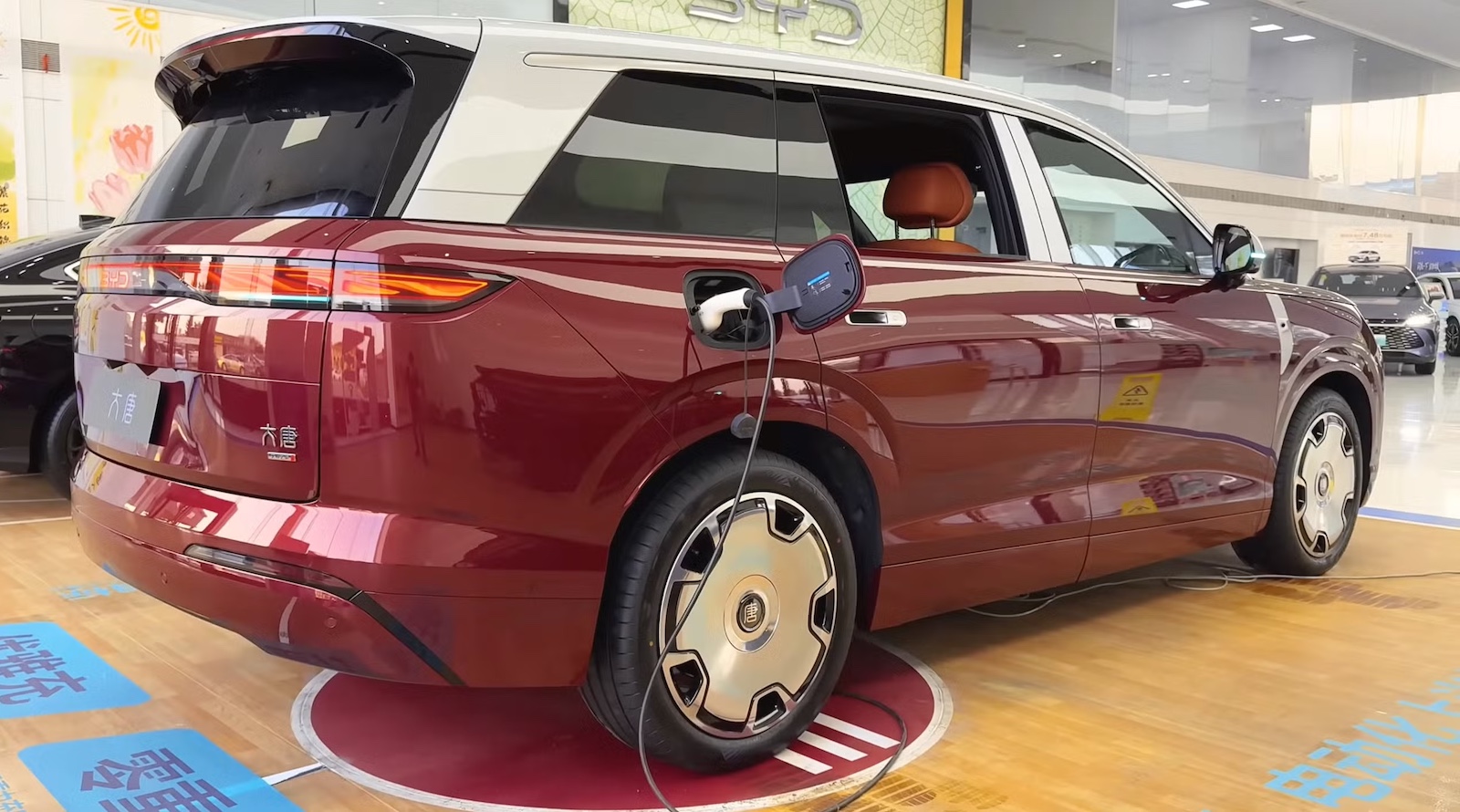
When Chen Liwei reserved a spot for BYD’s new Great Tang SUV back in March, he didn’t even know the price—just that he wanted in. By the time the final specs dropped, more than 150,000 others had done the same, making it the most pre-ordered vehicle in BYD’s history. Then came the shock: a starting price of just $35,500 in China for a seven-seat electric SUV with up to 590 miles of range and the ability to charge from 10% to 70% in five minutes. For families, tech lovers, and climate-conscious drivers, the Great Tang isn’t just a car—it’s a statement that high-performance, long-range EVs no longer need to cost a fortune.
This isn’t incremental progress. The base model’s 105.8 kWh battery already dwarfs most competitors, and the top trim’s 130.15 kWh pack pushes the WLTP-rated range to 590 miles—enough to drive from Beijing to Shanghai on a single charge. But it’s the charging speed that truly redefines expectations. With BYD’s new Flash Charging technology and the upgraded Blade battery, the Great Tang hits 10% to 100% in just nine minutes, obliterating range anxiety and setting a new benchmark for what consumers can expect from electric vehicles.
Performance is no afterthought. Even the rear-wheel-drive base trim delivers 496 horsepower, while the dual-motor version unleashes 784 horsepower, rocketing the large SUV from 0 to 60 mph in 3.9 seconds. Inside, luxury meets innovation: zero-gravity captain’s chairs, massage seats, three dashboard screens, a massive entertainment display, and even a built-in cooler make it a rolling lounge. At over 198 inches long, it’s larger than the Hyundai IONIQ 9, positioning it as a top pick for families across Asia and, soon, Europe.
The ripple effects are already visible. In China, where EV adoption continues to surge, the Great Tang is expected to dominate monthly sales charts. While it won’t launch in the U.S. due to 100% tariffs on Chinese EVs, its success puts pressure on automakers worldwide to deliver more value, faster charging, and longer range at lower prices. BYD isn’t just leading the Chinese market—it’s reshaping global expectations.
As more drivers in Asia and Europe get behind the wheel, the message is clear: the future of mobility is electric, accessible, and arriving faster than we thought.