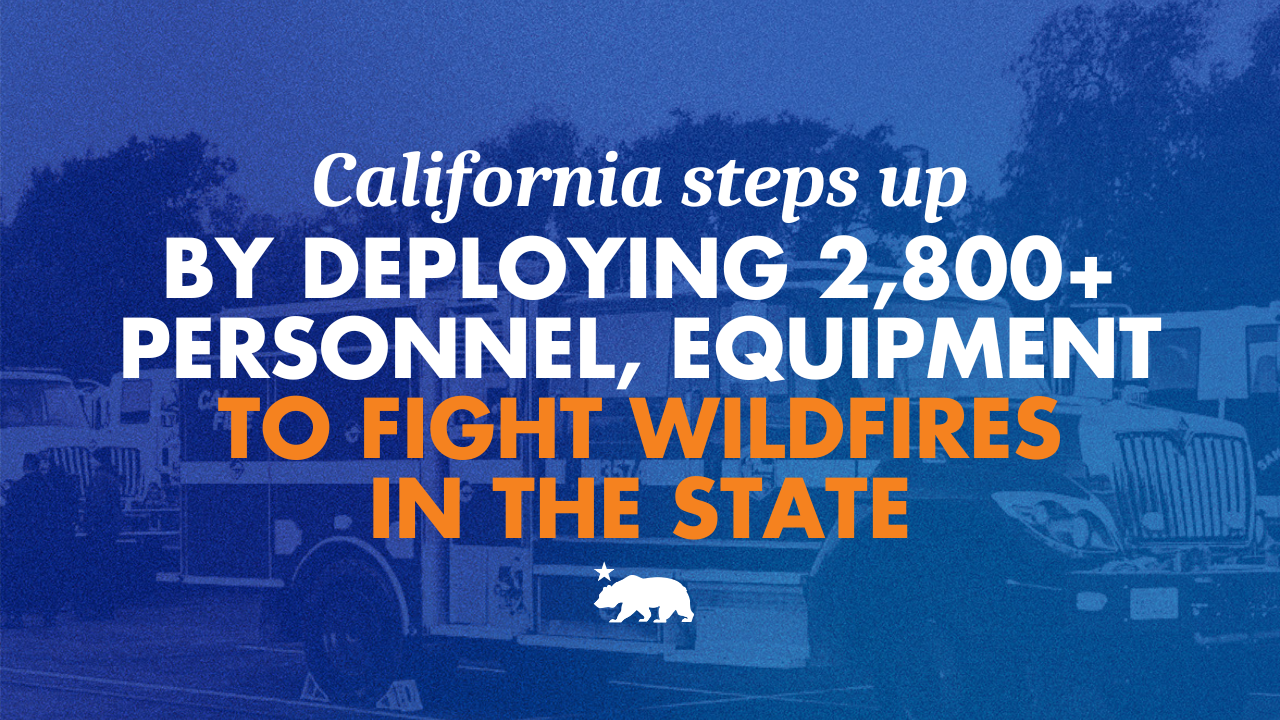
On a morning when California's fire alarm was already sounding, Governor Gavin Newsom announced that more than 2,800 firefighting and emergency personnel have been deployed across the state to confront an early, aggressive wildfire season. The scale of this mobilization underscores both the immediacy of the threat and the state's determination to protect its communities before the season reaches its peak.
California faces a critical window. More than 28,000 acres have already burned statewide, with the Santa Rosa Island Fire alone consuming more than 18,000 acres of federal land. Over 15,000 structures stand threatened, and the human toll is already visible: an estimated 45,000 people are under evacuation orders, with an additional 36,000 under evacuation warnings. These numbers capture the real stakes—entire neighborhoods held in suspension, families packing what matters most and leaving their homes behind.
The response is orchestrated across multiple layers. The California Fire and Rescue Mutual Aid System—the state's "world-leading" network for mutual assistance—has mobilized 290 fire engines, 1,455 firefighters and personnel, 16 water tenders, and 13 bulldozers from departments across the state. The California Department of Forestry and Fire Protection (CAL FIRE) has contributed an additional 58 fire engines, 826 firefighters, 28 water tenders, 10 bulldozers, and 7 helicopters. The Governor's Office of Emergency Services (Cal OES) is coordinating the state's response through the State Operations Center, and has prepositioned 15 fire engines, two water tenders, two helicopters, and more than 90 personnel to high-risk counties including Los Angeles, Santa Barbara, San Joaquin, and Glenn.
Intelligence gathering is equally critical. Cal OES has activated 15 FIRIS intelligence flights providing real-time information to incident commanders, while the California Wildfire Threat Integrated Intelligence Center (WFTIIC) serves as the state's integration hub for forecasting and threat analysis. This layering of technology and personnel reflects a shift in how California fights fire—not just reactively, but with advance warning and positioning.
The young men and women of the California Conservation Corps have stepped forward as well, with nine crews comprising 126 personnel deployed to four fires statewide, and an additional 11 teams and 150 personnel activated to respond to emerging incidents. This pipeline of early-career emergency responders represents both immediate capacity and long-term investment in the state's firefighting future.
Three specific fires illustrate the current battle lines. The Sandy Fire in Ventura County has burned 2,141 acres and is 40 percent contained. The Bain Fire in Riverside County stands at 1,497 acres with 67 percent containment. The River Fire in Kern County, the largest of the three, has scorched 3,535 acres and is 98 percent contained—a reminder that containment is possible, though the effort required remains immense.
Governor Newsom secured federal assistance to fund emergency response efforts for both the Sandy and Bain fires, signaling that this battle extends beyond state borders. The broader context matters too: since 2021, California has invested billions in wildfire prevention and forest resilience, streamlined approval of forest management projects, and forged unprecedented partnerships with federal, tribal, and local governments.
The message to residents is clear: stay vigilant, sign up for local emergency alerts, prepare evacuation routes, and pack a go-bag. For the 45,000 already evacuated and the thousands more who may need to leave, California's response team is racing against both fire and time.