When President Trump issued a blanket ban on new offshore wind leases earlier this year, he may have expected the industry to wither on the vine. Instead, he managed to ignite a firestorm of legal challenges—and California is now stepping into the fray with both fists swinging.
On June 23, California Attorney General Rob Bonta and California Energy Commission Chair David Hochschild issued a formal Notice of Intent to Sue the Trump administration over what they allege is an illegal agreement to buy back offshore wind lease rights. At the center of the dispute is Golden State Wind, a joint venture between Spain's Offshore Wind and the UK-based Reventus Power, which had been planning a 2-gigawatt wind farm off Morro Bay on California's central coast.
California's legal team is arguing that the $120 million payment to Golden State Wind—which fully reimbursed the company for its 2022 lease acquisition—amounts to an unlawful use of taxpayer funds aimed at killing clean energy development. The state is also demanding answers from Invenergy, a Chicago-based firm that received $765 million to abandon its Morro Bay lease along with areas in New York and Maine.
"Nationwide, this brings the total amount of taxpayer funds spent by the Trump Administration on offshore wind buyouts to nearly $2.6 billion—all to get power companies not to produce clean energy," California officials charged.
What's making California's legal team optimistic, however, is the string of court victories that have already stacked up in their favor. Federal judges have consistently ruled that projects holding valid permits and leases cannot be suspended indefinitely without cause. Earlier this year, courts cleared the way for five deep-in-construction projects along the Atlantic Coast to resume work—projects that collectively represent roughly 8 gigawatts of new clean generating capacity.
The Trump administration's lease suspension order is itself time-limited, expiring in roughly 2.5 years when a new administration will take office. California's leadership is betting that whoever occupies the Oval Office next will be more interested in the thousands of jobs, lower electricity costs, and grid resilience that offshore wind promises to deliver.
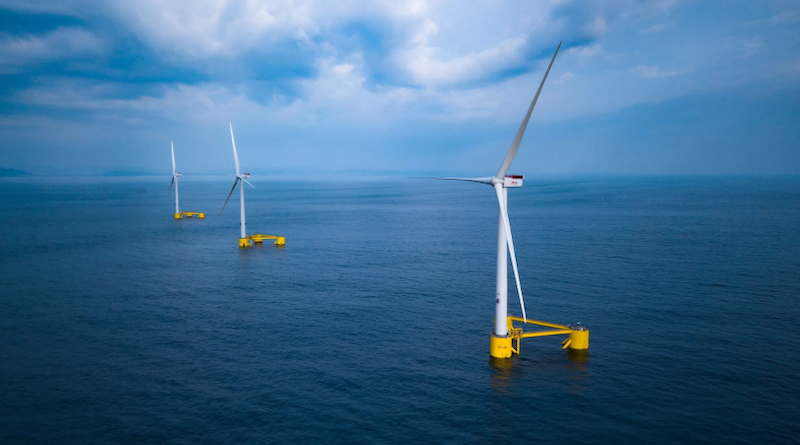
For now, California is pressing forward with its own investigative efforts, having served an administrative subpoena in May aimed at uncovering the details of the Golden State Wind deal. The state's message is clear: the future of floating offshore wind turbines anchored in Pacific waters is too important—and too economically vital—to surrender without a fight.