On June 2nd, California voters will cast ballots in a primary that will ripple far beyond the state's borders. The state's next governor will shape policy for the world's fourth largest economy—one that now ranks ahead of Japan, India, and the UK, and sits only a step behind Germany, China, and the entire United States. That economic weight means California's climate and clean energy decisions influence the pace of the global energy transition itself.
The race has crystallized into a stark choice about who will lead the state forward. In California's "jungle primary" system, the top two candidates of any party advance to November's general election. Recent polling shows three candidates leading: Xavier Becerra, Tom Steyer, and Republican Steve Hilton. The outcome will determine not just who runs in the fall, but what vision—clean energy champion or corporate-backed candidate—dominates the debate.
Tom Steyer has built a career investing time and capital into clean energy and progressive causes. After leaving the hedge fund industry over a decade ago, he has backed ballot initiatives and campaigns that advanced climate action and public health, often prevailing against well-funded fossil fuel, tobacco, and utility industry lobbyists. Steyer is a billionaire who breaks with his peer group on one crucial point: he is calling for higher taxes on billionaires. His track record on policy wins in clean energy, climate action, public education, and environmental justice spans years of sustained commitment.
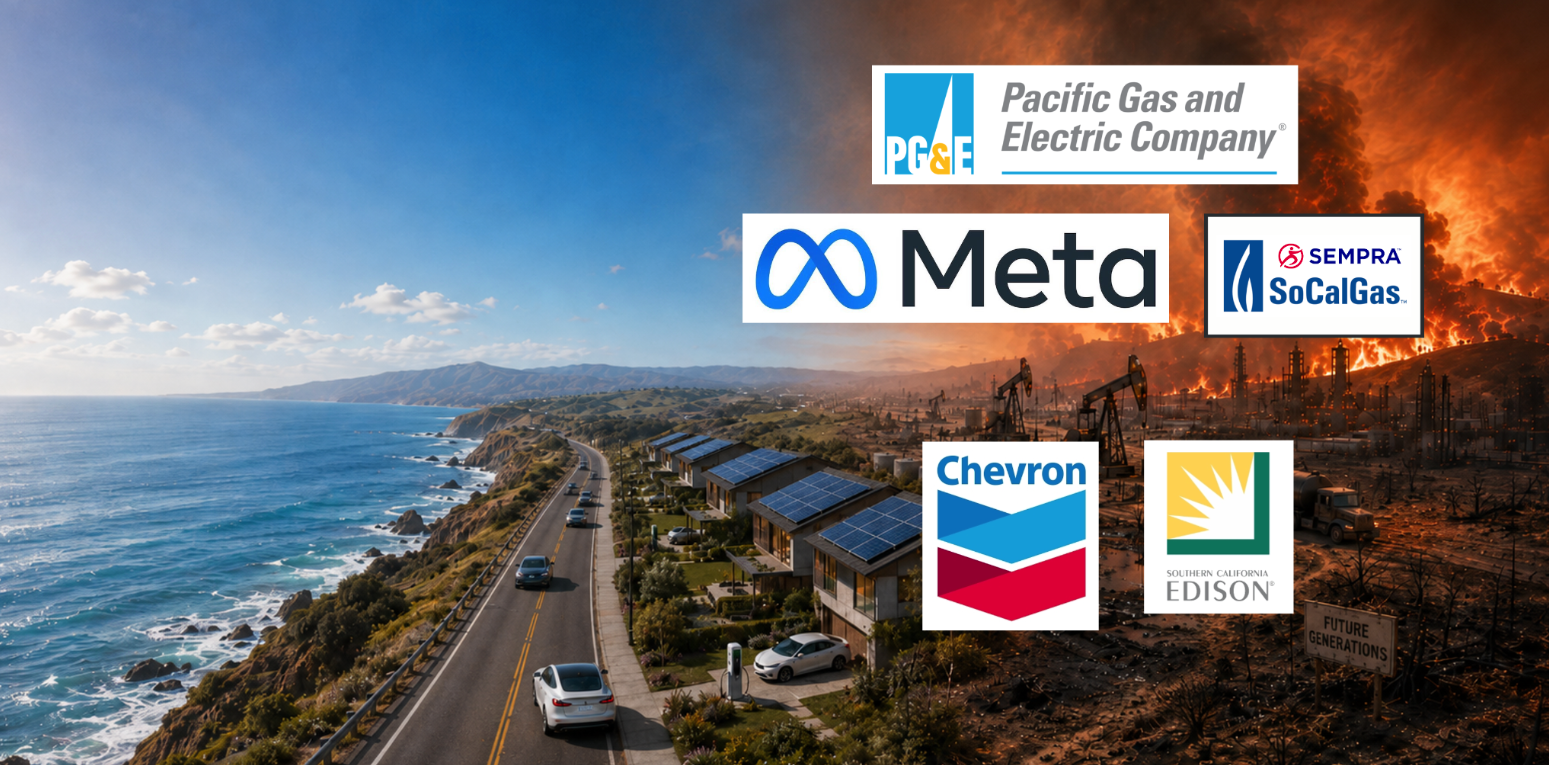
Xavier Becerra's campaign, by contrast, has drawn substantial support from corporations with track records of resisting climate action and regulatory accountability. Chevron—an oil giant—has backed Becerra, with the attorney general publicly stating that Chevron is "not the bad guy." PG&E, the utility that sparked the 2017 Tubbs Fire that devastated communities in Northern California, has donated to his campaign. Meta, the social media conglomerate at the center of AI scaling, has contributed. So have Sempra, Southern California Gas, Southern California Edison, and California Resources Corp, an onshore and offshore drilling company. Drug companies and the profit-driven health care industry have also backed his bid.
The contrast raises a straightforward question about incentives and priorities. Companies like Chevron, PG&E, and Meta invest millions in political campaigns not out of charity, but to shape policy in their favor. They support candidates who will, in their view, protect their business models from regulation and accountability. A candidate backed by the world's largest social media conglomerate and major fossil fuel producers sends a signal about whose interests will shape his administration's decisions.
For voters concerned primarily about affordability, climate action, public health, education, and social justice, the choice narrows considerably. Other candidates polling in single digits—including Democrat Katie Porter and Democrat Matt Mahan—face an arithmetic problem in a two-slot primary. A vote for them on June 2nd, strategists argue, amounts to a wasted ballot in a system where only two candidates advance.
California's next governor will inherit a state facing compounding crises: wildfire, drought, housing costs, and the accelerating climate crisis. The June 2nd primary will determine whether that leader is accountable to corporations seeking to slow climate progress, or to voters demanding a rapid clean energy transition. For a state whose economy and climate policy shape the world, that choice matters enormously.