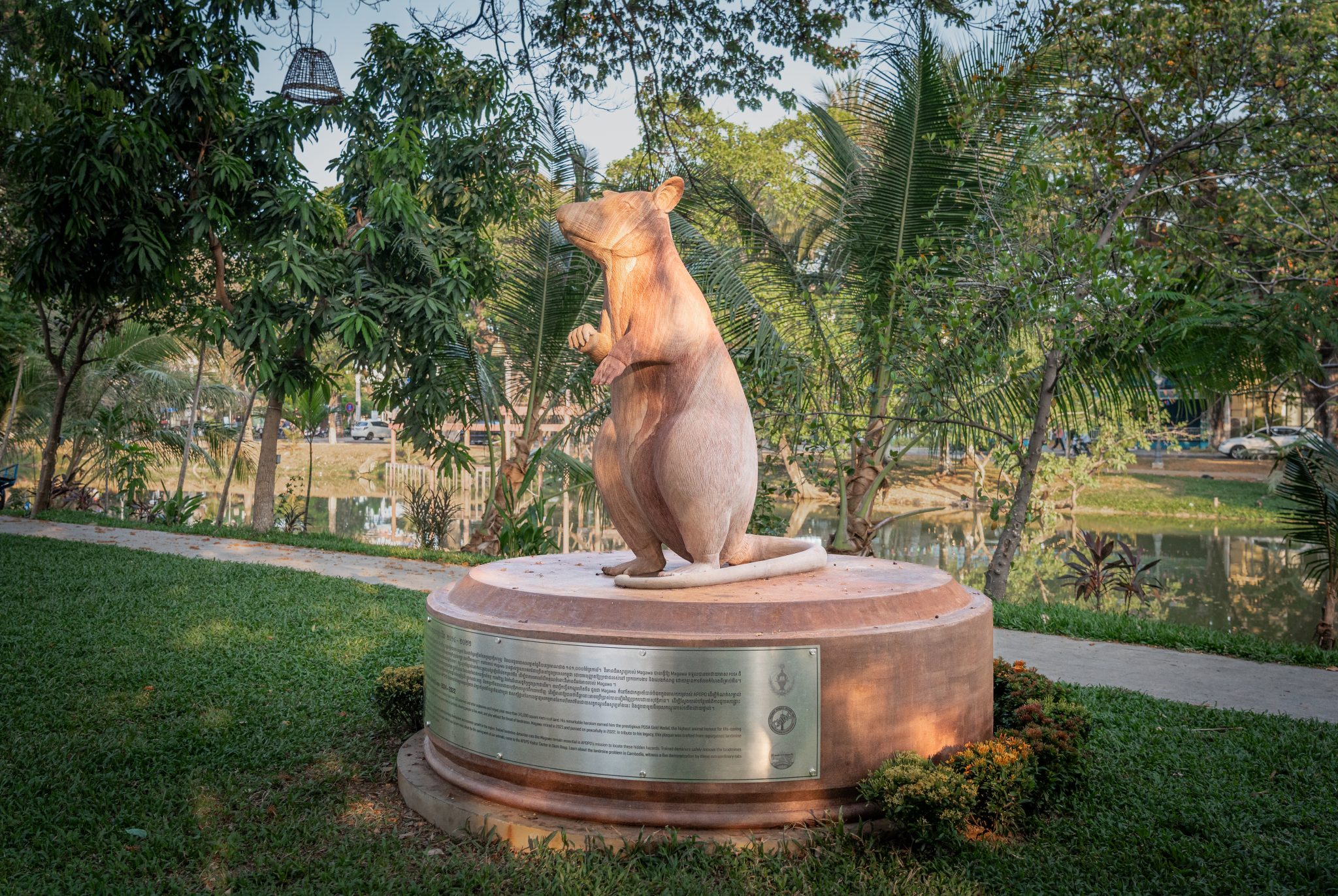
In Cambodia, where decades of conflict left the earth studded with hidden explosives, one small rat named Magawa became an unlikely hero — and now stands in stone to prove it. A life-sized bronze statue of the African giant pouched rat was unveiled in Cambodia ahead of the International Day for Mine Awareness, the world's first monument dedicated to a landmine-detecting rat. The tribute arrives years after Magawa's quiet retirement and death, but his impact on the ground — and on the lives of Cambodians — endures in the land he helped make safe.
For nearly five years, Magawa worked the dusty fields of Cambodia, trained by the Belgian charity Apopo as part of its HeroRATS program. Arriving in 2016, he developed a record no rat before him had matched: he detected 100 landmines and cleared 1,517,711 square feet of land — roughly 35 acres — returning it to safe use for communities who had lived too long in the shadow of what lay beneath. His method was deceptively simple. Swiping across a field the size of a tennis court took him just 20 minutes. A person with a metal detector would need several days for the same stretch. His small frame and light weight let him walk where heavier equipment or bigger animals could not go without triggering the very devices he was trained to find. He worked with a nose that could sniff out explosives compounds most sensors struggle to detect, and a temperament that let him return to the same methodical search again and again.
In 2020, the United Kingdom's People's Dispensary for Sick Animals awarded Magawa its Gold Medal — one of the highest honors an animal can receive — citing his "life-saving devotion to duty." He was the first rat ever to receive it. He retired in 2022 and passed away that same year, but his work was far from finished.
More than one million people in Cambodia still live and work on land contaminated with mines and unexploded ordnance, according to the United Nations. The crisis outlasts any single hero, and Apopo's program continues in Cambodia and several other countries, deploying rats trained in the same tradition Magawa helped define. "A symbol of hope and resilience," the organization wrote at the statue's unveiling, "the monument makes visible the ongoing impact of landmines and the quiet work of HeroRATS saving lives every day." The bronze rat in Cambodia is both a memorial and a reminder: the ground that still needs sweeping is vast, but so is the ingenuity being applied to sweep it.