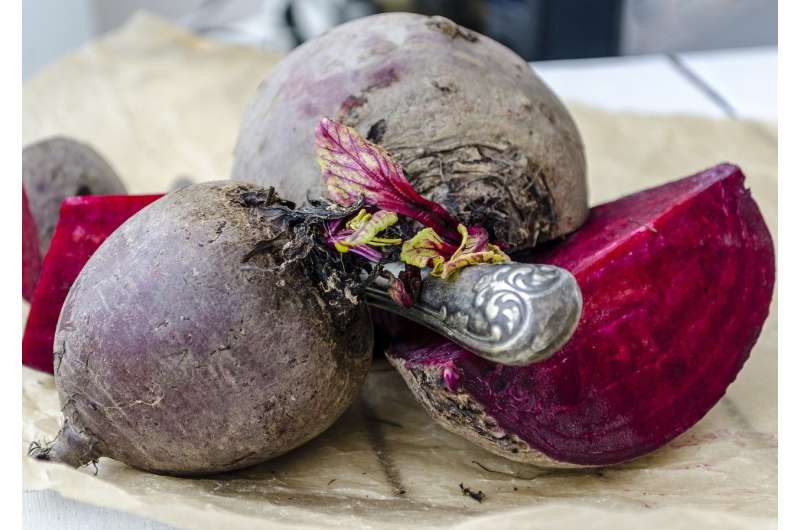
What if a glass of deep purple juice could help you run faster, jump higher, or last longer in the final minutes of a big game? A major new study suggests it might.
Researchers combined and analyzed results from 33 separate studies involving more than 500 professional and recreational athletes. Their meta-analysis — a study of studies — provides the clearest evidence yet that beetroot juice really can boost exercise performance.
The secret ingredient is dietary nitrate, a natural compound found in beetroot and leafy green vegetables. When you drink beetroot juice, your body converts this nitrate into nitric oxide, a molecule that makes blood vessels relax and widen. Wider blood vessels mean more blood — and more oxygen — can reach your muscles when you're working hard. Scientists already use nitric oxide in medicine to treat patients with breathing problems.
The study found that timing matters a lot. Athletes got the best results when they drank the juice about two hours before exercising. The ideal amount was 70 to 140 milliliters of concentrated beetroot juice (roughly a small shot glass to half a cup) or 250 to 500 milliliters of standard juice (about one to two cups). Drinking it too early — say, three hours before a workout — didn't work as well.
So what kind of improvements did athletes see? The researchers found small to moderate gains in explosive strength, sprint speed, and how efficiently the body uses oxygen. Both short, intense efforts (like a 100-meter dash or a football play) and longer endurance activities (like running or cycling) showed benefits.
For sports requiring repeated high-intensity bursts, like soccer or basketball, beetroot juice gave athletes an edge in maintaining power output. The extra nitric oxide appeared to help muscles contract with greater force while fighting off fatigue. In close competitions, even a small delay in exhaustion can make the difference between winning and losing.
Interestingly, recreational athletes saw bigger benefits than elite competitors. That's probably because top-level athletes are already so well-trained that there's less room for improvement.
One practical note: reaching the same nitrate doses through eating whole vegetables alone would require eating fairly large amounts. Most clinical trials use concentrated beetroot juice shots to deliver a reliable dose every time.
Beyond the playing field, researchers are also studying whether beetroot juice could help people managing chronic health conditions that affect breathing — an area that could expand the drink's reach far beyond athletics.