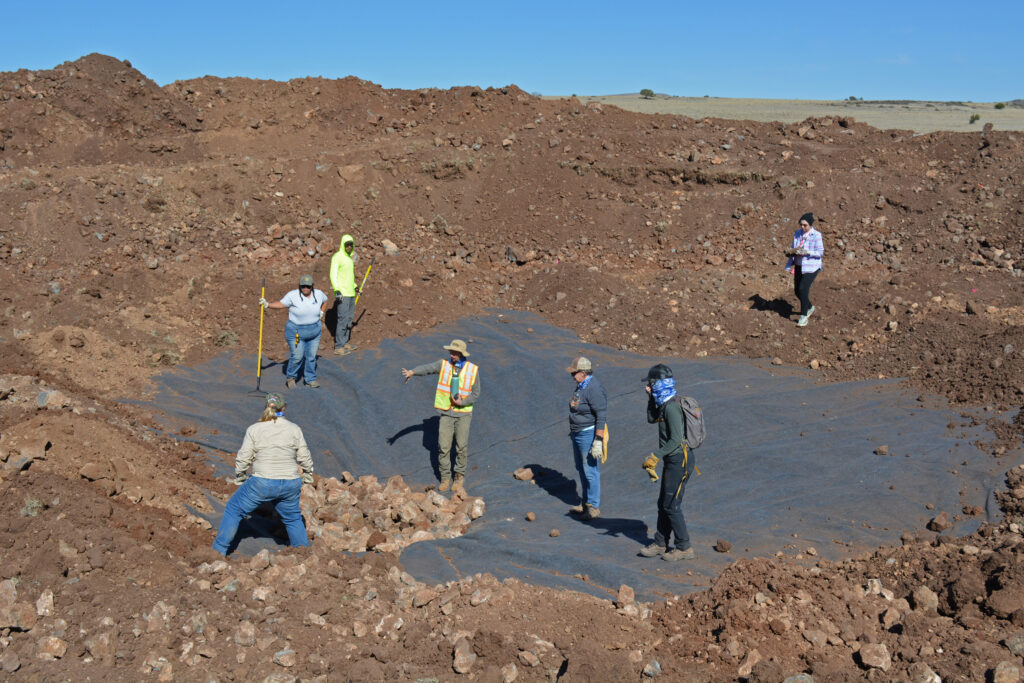
In a sun-scorched corner of Arizona, a team of engineers and volunteers is doing something that sounds almost magical: making water appear in the desert.
The target is the Chiricahua leopard frog, a dark green, stocky amphibian with raised charcoal-colored spots that once announced itself across streams and wetlands in Arizona, New Mexico, and Mexico with a snore-like croak. Today, fewer than 80 sites still host the frogs, and they are listed as threatened under the Endangered Species Act.
Thomas Biebighauser has spent decades learning how to create water where there is none. The wetlands engineer, who spent much of his career with the U.S. Forest Service, has designed more than 10,000 wetland projects and supervised the construction of over 3,600 wetlands and streams worldwide. Standing at the White Mountain Grasslands Wildlife Area, he watched volunteers prepare to build a new pond. "Wherever you live on Earth, you're going to get rain sometime," he said. "Arizona is becoming drier and drier... so we have now developed the techniques for making water in the desert."
The project transforms dried-out cattle tanks into lined ponds designed to trap and hold rainwater. Over two weeks, staff from the Amphibian and Reptile Conservancy, the Arizona Game and Fish Department, and volunteers from across Arizona — plus at least one Canadian — worked at the site. They rolled and placed a 70-by-70-foot black liner, covered it with fabric, soil, and rock, then shaped it into a basin where rain can collect instead of running off and vanishing.
The wildlife area spans just over 3,000 acres and currently hosts only one Chiricahua leopard frog population. That is dangerously fragile. If that single pond dries up or a fungal disease strikes, the entire group could disappear. The new ponds create what scientists call a metapopulation — a network of sites where frogs can move between ponds if one fails. "Any additional surface water permanence on the landscape is going to be beneficial across the board," said Becca Cozad, the conservancy's Southwest program manager, who grew up catching frogs in Houston and now wears frog earrings to work.
The Chiricahua leopard frog faces a perfect storm of threats. Drought is drying out habitats. Wildfire ash smothers others. Invasive bullfrogs and crayfish devour the frogs' food. A deadly fungal disease called chytridiomycosis is wiping out amphibians worldwide, hitting high-elevation cold sites especially hard. The project was originally planned for 2024 but had to be delayed when wildfires swept through the area.
Since the frog was listed as threatened in 2002, habitat sites have tripled — a real win, though the changing climate keeps creating new setbacks. Six new ponds are now under construction at the wildlife area. When rain finally fills them, the frogs will have new places to breed, feed, and survive.
"We like frogs," Cozad said, surveying the dusty landscape. "But any additional surface water permanence on the landscape is going to be beneficial across the board."