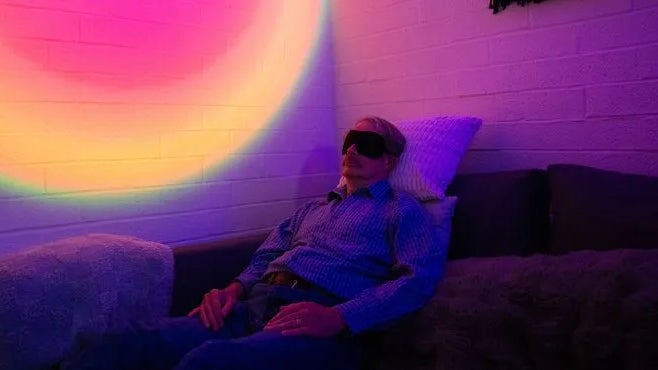
Tyler Toueg, 68, sat in a softly lit room at UC Berkeley, eyes closed, breathing steadily as the psilocybin took hold—part of a pioneering trial probing whether psychedelics can help aging brains stay supple and vibrant. He wasn’t battling depression or dementia; he was one of 20 healthy adults aged 60 to 85 enrolled in PLASTICITY, the first study of its kind to explore how psilocybin affects brain plasticity, emotion, and cognition in healthy older adults. At a time when most psychedelic research focuses on treating illness, this trial asks a bolder question: Can we not just treat decline, but actively enhance healthy aging?
The stakes are high. As we age, the brain’s ability to rewire itself—known as neuroplasticity—naturally declines. Neural connections stiffen, memory slows, and emotional resilience can wane. But early evidence suggests psilocybin, the psychoactive compound in magic mushrooms, may temporarily reset the brain to a more youthful, malleable state. At UC Berkeley’s Center for the Science of Psychedelics, researchers are using fMRI scans before and after dosing to track changes in brain connectivity, particularly in the hippocampus, a region vital for learning and memory. Participants also complete psychological assessments and in-depth surveys measuring shifts in emotional awareness, social connection, and even awe—a sense of wonder long thought beyond the reach of clinical study.
“What really excites me is that we’re focused on healthy older adults,” said Toueg, who co-led the study’s design. “Most clinical trials with older adults are focused on people who already have a diagnosis. We’re asking whether we can actually promote positive outcomes in older adults who are healthy.” That shift—from repair to enhancement—is what makes PLASTICITY groundbreaking. In animal studies, psilocybin has reopened critical learning windows in mice, increased sensitivity to oxytocin, and spurred structural growth in neurons. Now, scientists want to know if those changes translate to humans.
The trial arrives at a pivotal moment. After decades of restriction, psychedelic research is resurging. In 2023, a landmark placebo-controlled trial showed a single dose of psilocybin, combined with therapy, significantly reduced depression. Oregon now permits supervised psilocybin treatment, and Australia became the first country to approve it for depression and PTSD. Two recent late-stage trials reported robust results in treatment-resistant depression, inching the therapy closer to FDA approval. Yet, despite this momentum, we still don’t fully understand how psilocybin works. Does it spark lasting neural reorganization? Can it truly restore a sense of emotional aliveness in later life?
For the participants, the experience has been profound. Some report feeling more present, more connected, even more curious—qualities that often erode with age. As Michael Silver, one of the study’s designers, put it: “I’m very interested in psilocybin as a potential mental health treatment, but I’m also interested in it as a way to shed light on these central mysteries in neuroscience and psychology.” If PLASTICITY reveals that psychedelics can help healthy brains stay flexible, open, and engaged, it may not just redefine aging—it could transform how we think about the mind itself.