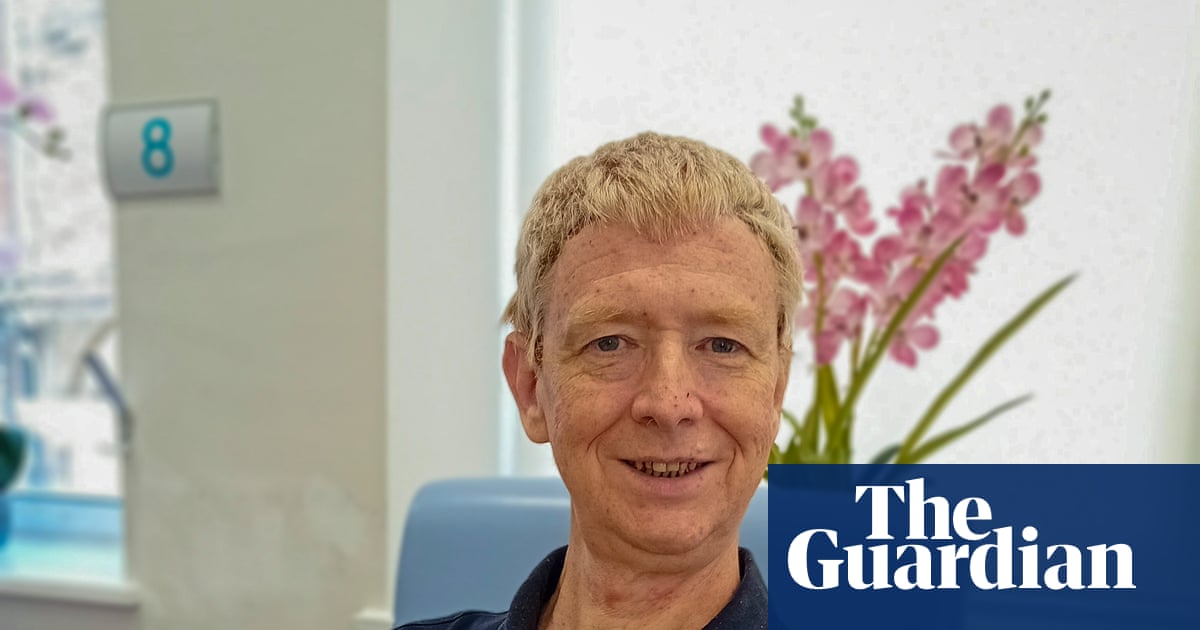
Carl Walsh, a 56-year-old from Birmingham, was down to eating soup, ravioli, and omelettes—anything soft enough to swallow as his tongue cancer swelled and burned—until a single jab began reversing his decline. Just two treatment cycles in, his diet improved; by six months, he was savoring his first steak in years. His speech, once slurred and strained, is now clear enough to use headsets at work daily. His transformation wasn’t magic—it was amivantamab, a groundbreaking cancer injection delivering what doctors are calling “unprecedented” results in patients with few options left.
For people like Walsh, whose head and neck cancer resisted both chemotherapy and immunotherapy, the prognosis was once grim. But in an international trial spanning 11 countries and involving 102 patients, amivantamab—a “triple-action” drug developed by Johnson & Johnson—shrank or eliminated tumors in 43 individuals. Most remarkably, in 15 patients, the tumors vanished entirely. These are the kinds of responses oncologists rarely see in cancers that have stopped responding to standard treatments. As Professor Kevin Harrington of the Institute of Cancer Research (ICR) and the Royal Marsden NHS Foundation Trust put it: “This is a group of patients for whom treatment options are extremely limited, so seeing this level of benefit is very striking.”
Unlike traditional intravenous infusions, amivantamab is administered as a small subcutaneous injection—quick, outpatient, and far less disruptive to daily life. Given just once every three weeks, the treatment showed manageable side effects, with fewer than 1 in 10 patients needing to discontinue therapy. The drug works by simultaneously blocking two key cancer growth pathways—EGFR and MET—while also rallying the immune system to attack the tumor. This triple mechanism may explain its potency, especially in HPV-negative head and neck cancers, which are notoriously harder to treat. The trial specifically focused on this high-need group, making the results even more significant.
Patients lived a median of 12.5 months after starting treatment—a meaningful extension given the aggressive nature of their disease once standard therapies fail. Encouraging data has also emerged in lung cancer, with amivantamab now being evaluated in around 60 clinical trials across colorectal, brain, and gastric cancers. The results will be unveiled at the American Society of Clinical Oncology (ASCO) annual meeting in Chicago, the world’s largest cancer conference.
For Walsh, the numbers translate into mornings without pain, meals with flavor, and conversations without effort. His journey—from nutritional drinks to steak dinners—mirrors a broader hope: that a single jab might one day redefine what’s possible for thousands facing resistant cancers. As Professor Kristian Helin, CEO of the ICR, noted, “Achieving this level of tumour response and encouraging survival outcomes in such a challenging-to-treat group represents a significant step forward.” The jab isn’t a cure-all—yet—but for some, it’s already a second chance.