Cancer cells have long deployed a clever escape tactic: strip away the proteins that help the immune system spot them, and you vanish into the crowd. But researchers at Baylor College of Medicine and the University of Michigan have discovered that this very trick—the loss of MHC class I proteins—may be cancer's fatal misstep.
The finding, published in Nature Immunology, challenges decades of immunological doctrine and reveals that tumors attempting to evade one branch of the immune system inadvertently expose themselves to another. For the first time, scientists have shown that when cancer cells lose MHC class I expression, they become vulnerable to a different kind of immune attack: one carried out by CD4+ T cells, or "helper" T cells, triggering a form of cell death called ferroptosis.
Led by Dr. Pavan Reddy, director of the Dan L Duncan Comprehensive Cancer Center at Baylor College of Medicine, the research team collaborated with Dr. Arul Chinnaiyan and Dr. Marcin Cieslik at the University of Michigan Rogel Cancer Center to map this unexpected immune pathway. The story begins with a principle so entrenched in modern immunology that it has shaped cancer research for decades: MHC class I molecules communicate with CD8+ T cells, the legendary "killer" cells, while MHC class II molecules activate CD4+ helper T cells. These pathways were thought to operate in separate lanes, never crossing.
The new study reveals the relationship is far more intricate. Using advanced transcriptomic analyses in mouse models and human samples, the team traced what happens when cancer cells ditch their MHC class I proteins—a strategy many tumors employ to slip past CD8+ T cell surveillance. The payoff for cancer cells is supposed to be invisibility. Instead, the researchers found something unexpected: tumors without MHC class I become sitting ducks for CD4+ T cell attack.
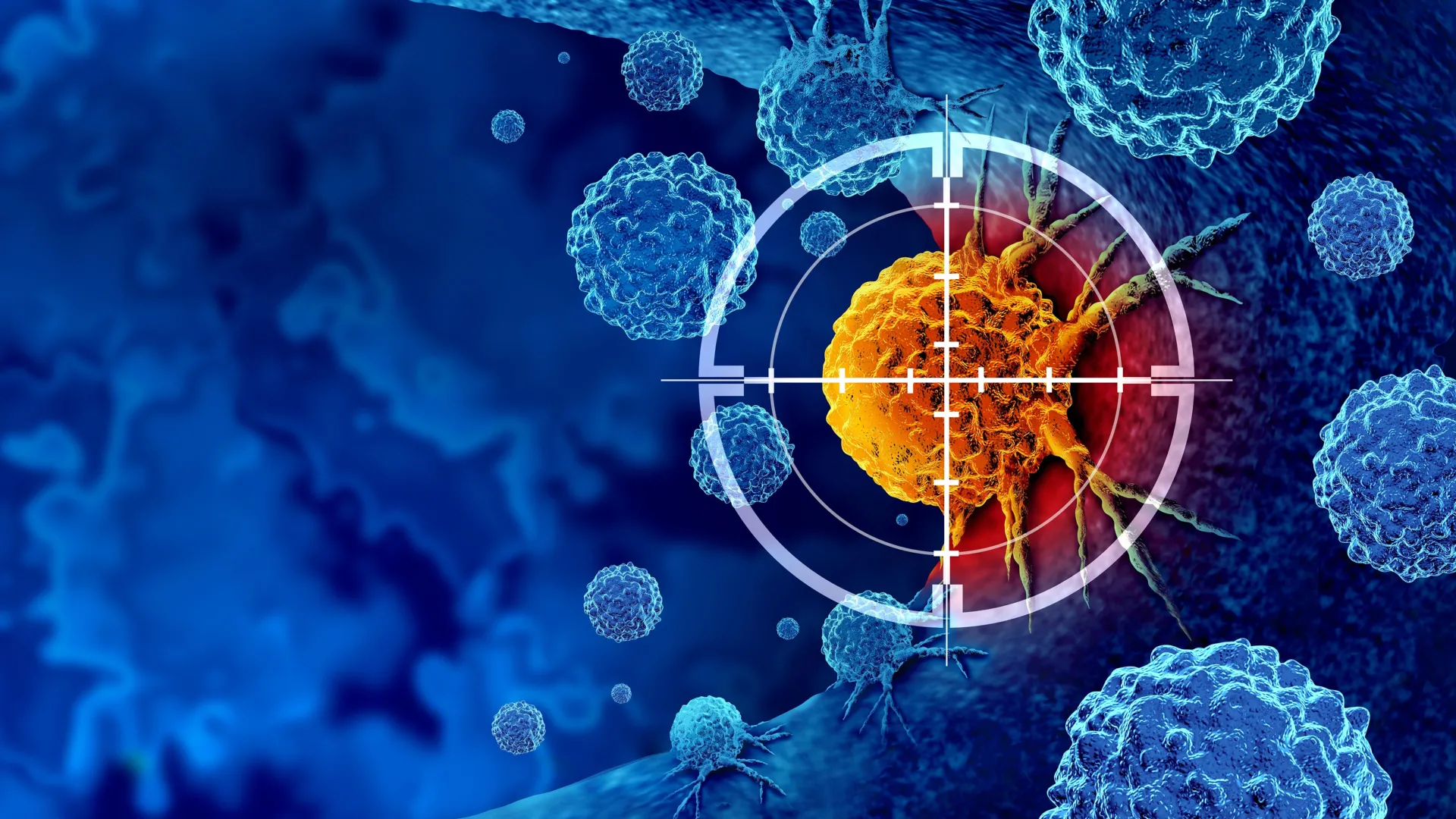
When these helper T cells encountered MHC I-deficient cancer cells, they triggered ferroptosis, a distinctive form of cell death powered by iron-dependent oxidative stress. In essence, cancer cells that successfully hide from one immune mechanism stumble straight into the crosshairs of another.
The implications extend beyond solid tumors. The same mechanism showed up in models of graft-versus-host disease, the serious complication that sometimes follows bone marrow transplantation—a finding that could reshape how clinicians approach both conditions. To ground their findings in clinical reality, Chinnaiyan's team analyzed large transcriptomic and clinical datasets from patients receiving checkpoint inhibitor therapies. The data showed correlations between this newly identified immune pathway and real-world patient outcomes.
"Our work, if further validated, will have implications for T cell-mediated immune responses beyond cancer and transplant immunology," Reddy said. The research opens doors to novel therapies that could harness CD4+ T cells against tumors that have learned to evade traditional immune attacks, while also offering potential tools to manage unwanted immune responses in transplant settings.
Graduate students Emma Lauder and Meng-Chih Wu from Baylor, alongside Mahnoor Gondal from Michigan, spearheaded the years-long collaboration that produced these insights. The work was supported by multiple NIH grants and funding from the Cancer Prevention and Research Institute of Texas. For patients with cancers that have mastered the art of disappearing from immune detection, this discovery suggests that nowhere is truly safe.