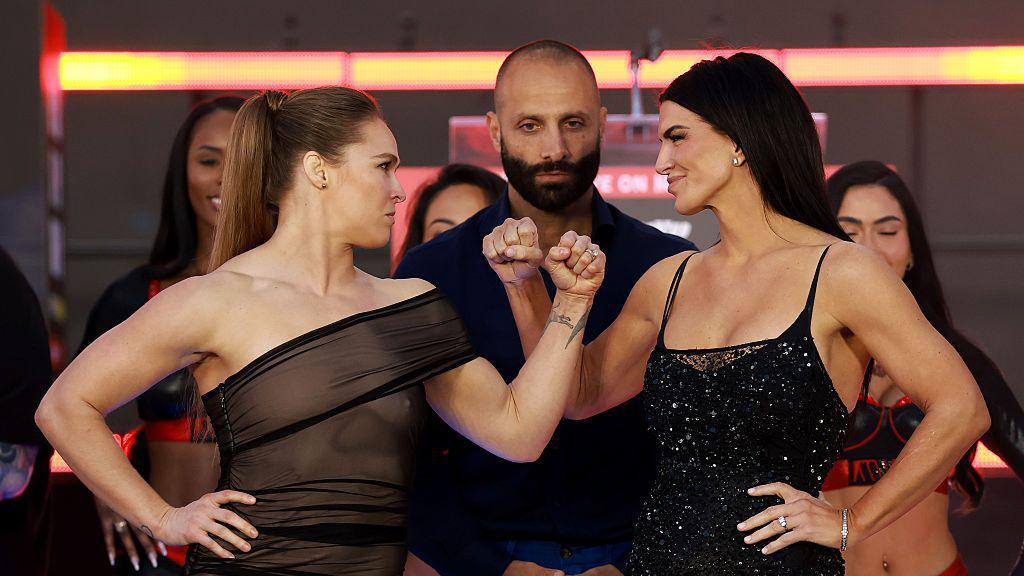
Ronda Rousey stepped to the microphone in Las Vegas not as a fighter chasing redemption, but as a woman reclaiming her power—and she's bringing the whole sport with her. After a decade away from competition, Rousey is headlining a Netflix MMA card backed by Most Valuable Promotions that promises to shatter the women's combat sports pay record, with both she and opponent Gina Carano earning purses that dwarf what the UFC has historically offered. It's a moment that cuts to the heart of how combat sports compensates women, and one that couldn't happen without the partnership Rousey now champions over the promotion that once built its empire on her name.
The numbers tell the story of an industry catching up to itself. Rousey's last reported UFC purse, in 2016 before her loss to Amanda Nunes, was $3 million. Amanda Serrano and Katie Taylor, boxing's heavyweight champions, earned roughly $5 million each for their trilogy bout last year. What Rousey and Carano will earn on Netflix this week surpasses both—a record built not on UFC's dime, but on a new competitor willing to bet that these women's names could carry a global broadcast. The card itself draws some of the biggest names to ever leave the UFC, including former heavyweight champion Francis Ngannou and fan favorite Nate Diaz, yet the attention at this week's media event belonged almost entirely to Rousey and Carano.
Rousey has spent a decade outside the spotlight, raising two children after her 2016 defeat. When she approached the UFC about a comeback, the conversation didn't happen—at least not on terms she could accept. She recalled the moment with sharp clarity: "When I first sat down in that office and I was lactating, they didn't think I was to be taken seriously." Instead, she chose to launch MVP's debut MMA event as both fighter and promoter, positioning herself not merely as a competitor but as a potential architect of the sport's future. "I could become the face of MVP and MMA and the most powerful figure in the sport since Dana," she said at the news conference, her confidence unshaken by a decade away.
What makes this moment distinctive isn't just Rousey's return—it's the unlikely partnership with her opponent. Carano, 44, became the first woman to headline a major MMA promotion in 2009, alongside Cris Cyborg, only to retire shortly after. The intervening years were turbulent. After being fired from The Mandalorian in 2021, Carano struggled with her mental health and weight gain. She credits Rousey with providing the push to rebuild. "Having Ronda as the goal got me out of bed every morning," Carano said, her voice steady with the weight of genuine comeback. "As sick as I was a year and a half ago, I feel this is already a victory."
What emerges from this story isn't rivalry but mutual respect, rooted in a shared experience of being underestimated by an industry that profited from them. Rousey praised Carano without hesitation, saying she would be happy to be part of "the greatest comeback story of all time" if Carano wins. Both women are betting that success here won't just change their lives—it will give "bargaining power back to the fighters" and prove to the market that women's MMA, properly promoted and properly paid, can command the world's attention. Netflix will broadcast the event to millions globally, and the UFC watches from the sidelines.