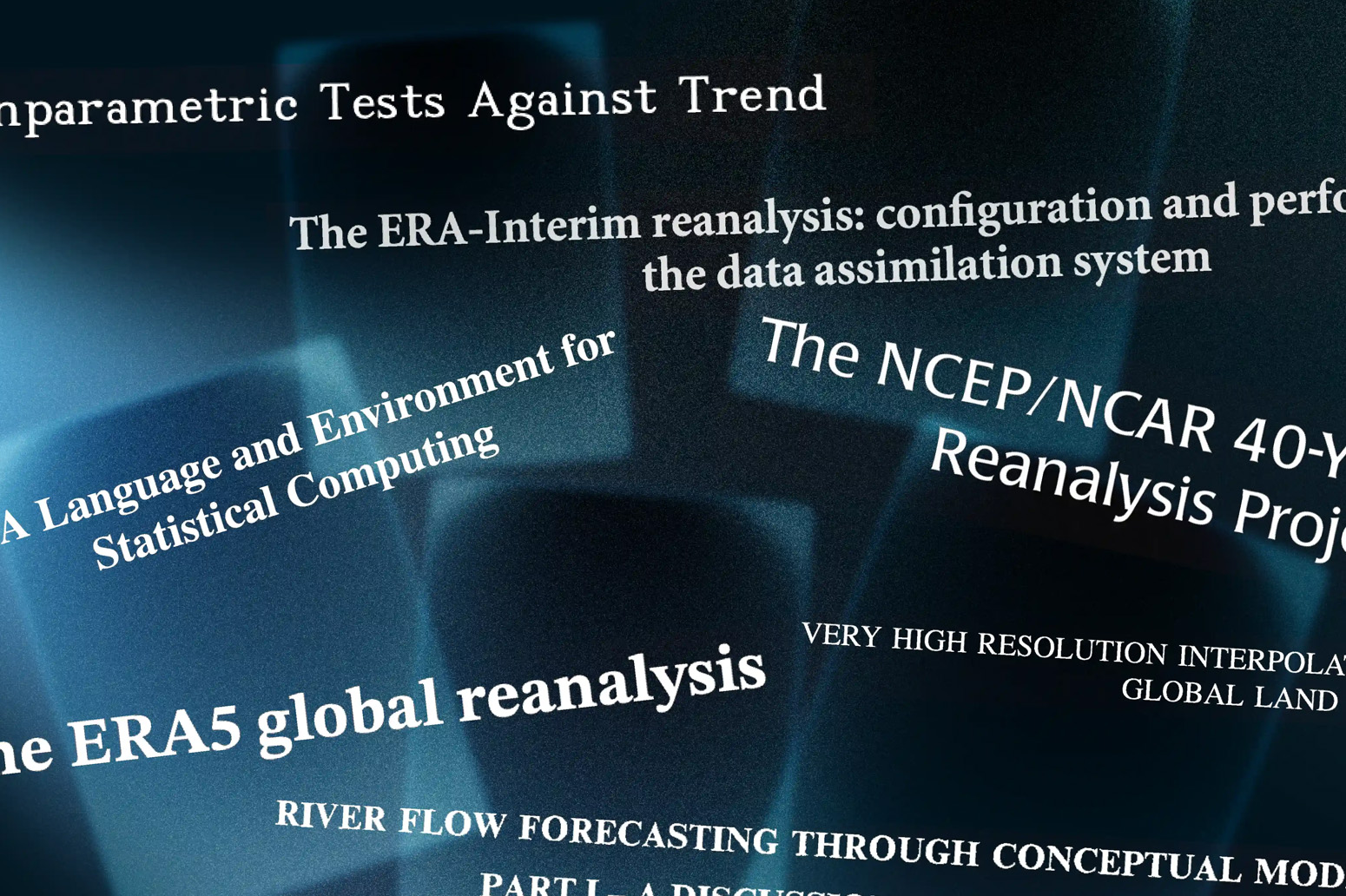
When Dr Robert Gentleman and Dr Ross Ihaka quietly unveiled R in 1993, they didn’t set out to revolutionize climate science—just to build a better tool for statistical computing. Today, their open-source programming language sits at the heart of thousands of climate studies, earning its documentation the top spot in Carbon Brief’s Cosmos 500 ranking with a staggering 24,696 citations. More than a research paper, the R reference manual is a 4,000-page digital ecosystem of functions and packages, cited not for its narrative but for the transformative power of the language it describes. From tracking coral reef health with satellite data to modeling 17,000 years of global flooding patterns, R has become the silent engine behind modern climate analysis. Its strength lies not only in its sophisticated statistical tools but in its accessibility—free to use, adaptable to any platform, and maintained by a global community known as the R Core Team. As Prof Roger Peng of the University of Texas at Austin notes, R runs on everything from supercomputers to smartphones, making high-level data science available to researchers regardless of budget or geography.
This ranking, drawn from Carbon Brief’s Cosmos database of 1.8 million publications, doesn’t spotlight headline-grabbing discoveries but the foundational tools that make such discoveries possible. In second place is the NCEP/NCAR 40-year reanalysis project, cited 19,049 times, which stitched together decades of weather observations with model simulations to create a continuous, reliable record of Earth’s atmospheric history. Such reanalysis datasets allow scientists to study long-term climate trends even in regions with sparse historical data, filling critical gaps in our understanding. The presence of three reanalysis projects in the top 10 underscores how essential these comprehensive datasets are to climate modeling, policy assessments, and extreme weather research.
The dominance of technical tools over traditional research papers in the Cosmos 500 reveals a quiet truth: behind every major climate breakthrough lies a network of software, data, and shared infrastructure. These are the unsung scaffolds of scientific progress—cited not for flash, but for function. As climate challenges grow more complex, so too does the need for robust, open, and collaborative tools. R, now over three decades old, continues to evolve, its latest applications helping map urban heat islands and survey climate beliefs among American farmers. What began as a niche statistical project in New Zealand has become a global standard, proving that sometimes, the most powerful climate solutions aren’t found in a eureka moment—but in a line of code.