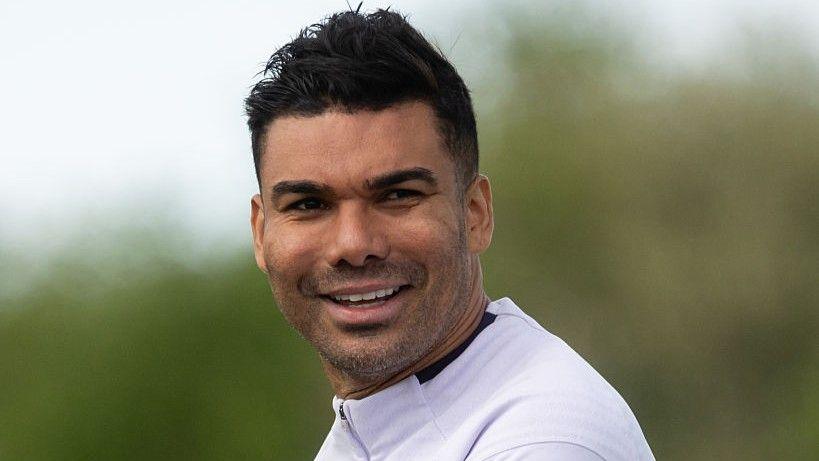
When Casemiro arrives at Old Trafford on Sunday to face Nottingham Forest, Manchester United's supporters will sing what has become their anthem for the Brazilian midfielder over the second half of the season: "One more year, one more year, Casemiro." They know it won't happen, but the song has never rung louder or felt more earned.
What makes this farewell so remarkable is that just four months ago, Casemiro was facing something closer to fury than affection from those same fans. On 30 December 2024, the day Joshua Zirkzee was substituted in the 33rd minute during a humiliating defeat to Newcastle, the unspoken reality hung heavy: had the 34-year-old Brazilian's number been called instead, the reaction would have been even worse. He was replaced after 64 minutes that day and wouldn't start another match for nearly seven weeks, as manager Ruben Amorim questioned whether he possessed the physical capabilities required for the Premier League.
The dismissal followed months of mounting criticism, including Jamie Carragher's pointed observation after a 4-0 loss at Crystal Palace in May 2024 that Casemiro should "leave the football before the football leaves you"—words the midfielder branded "disrespectful" in a recent interview on Rio Ferdinand's podcast. Yet the turnaround that followed suggests something more enduring than sentiment or legacy protection.
On 6 March 2025, Amorim handed Casemiro a start in the Europa League's last-16 first leg against Real Sociedad. He retained his place for the subsequent match against Arsenal and has since started every major game United have played. Three months of his characteristic work ethic—the same mentality that earned him five Champions League titles at Real Madrid—had quietly convinced his skeptical manager.
"Football changes. Life changes," Casemiro explained in his interview with Ferdinand. "For me, [with] the best players in the world, it's about the mentality. I might not play good—I'm not a robot and I know. But the next [game], I give everything on the pitch. The mentality is next, next, next."
The impact has been felt far beyond statistics. Among Michael Carrick's squad, it is widely accepted that Casemiro's absence in February—after the transfer deadline had closed—would have been the hardest to cover in Manchester United's ultimately successful quest for Champions League qualification. His influence has noticeably increased this season, and interim manager Carrick says in his programme notes that Casemiro "has been an absolute pleasure to work with" and "will always have a special connection with Manchester United."
But perhaps most fitting is Casemiro's effect on Kobbie Mainoo. When the Brazilian arrived from Real Madrid in 2022 in a £70 million deal, the then-17-year-old Mainoo anticipated learning from one of the game's most decorated midfielders. Instead, Amorim's initial decisions forced them into competition for the same position. Under Carrick, that rivalry has transformed into partnership—they have played together in 13 of his 15 matches in charge, absences only due to minor injuries.
"Kobbie is my friend," Casemiro said of Mainoo in an interview with United We Stand fanzine. "He is a complete player, the present and the future of Manchester." In explaining what the younger midfielder needs to develop—more possession, better decision-making through experience—Casemiro demonstrates how his presence at Old Trafford extends far beyond his final match. The mentorship that couldn't flourish under previous circumstances is blooming now, a reminder that sometimes redemption arrives not with triumph, but with quiet influence passed to the next generation.