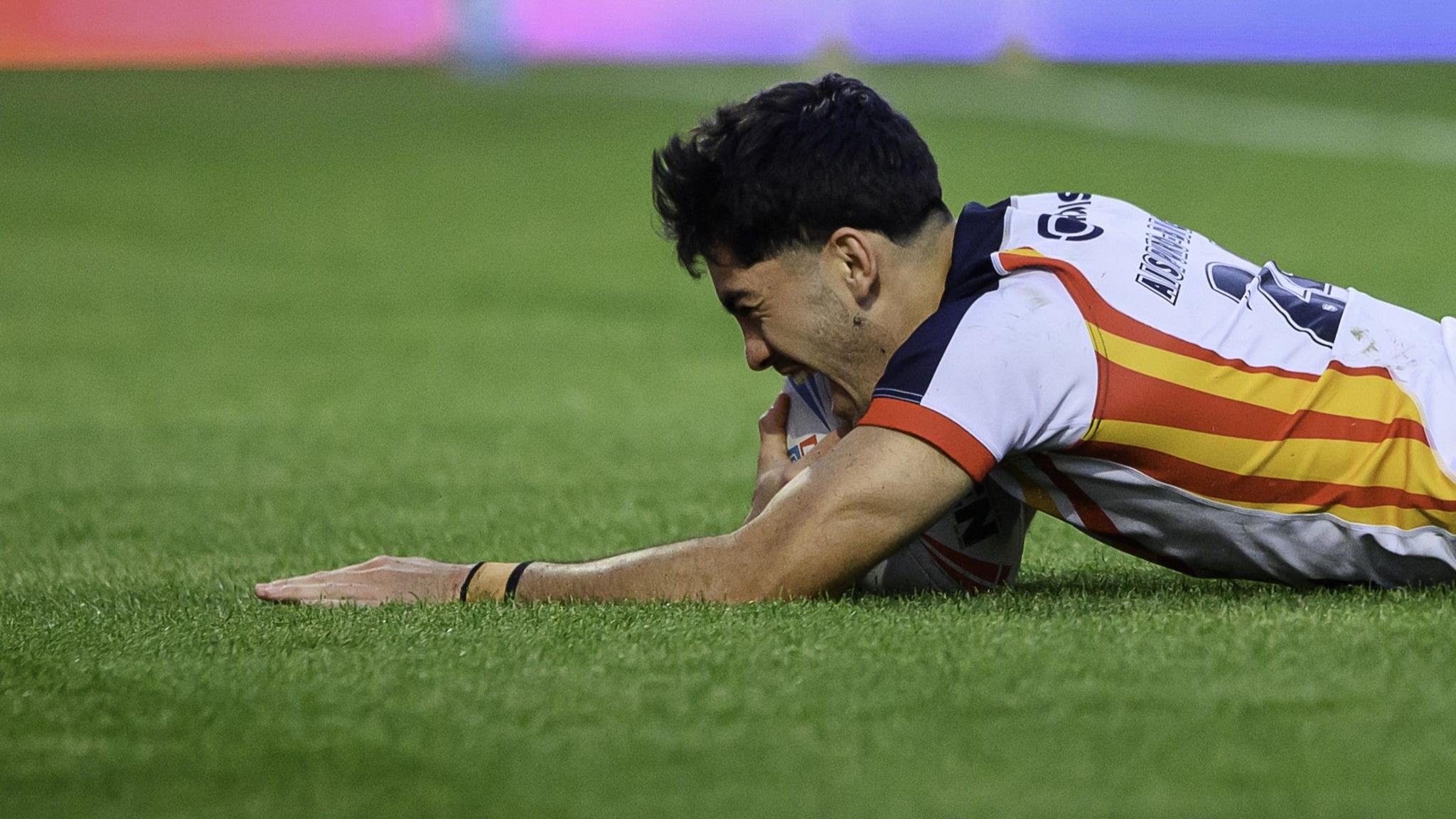
In just seven days, the Catalans Dragons went from being dismantled 58-10 at Wakefield to producing a dominant display that sent them home from York with a 36-22 victory and six tries to their name. For interim coach Ryan Sheridan and his squad, the bounce-back felt essential—a reminder that despite the crushing loss, there was fight and quality still to be found.
The Dragons' performance at the KP Stadium in York came at a pivotal moment. Sheridan's temporary tenure has brought a delicate balance: navigating the turbulent waters of a struggling season while maintaining player belief in the face of demoralising results. This win, built on a relentless attacking display, offered exactly the kind of statement needed to steady the ship heading into an exciting period ahead, with new head coach John Cartwright on the horizon.
York began with genuine promise. Under head coach Mark Applegarth, the Knights executed their systems well in the first half, moving the ball with purpose and discipline. Yet intent alone doesn't win rugby league matches—execution in the final third does. Applegarth was candid about the gap between his team's defensive shape and attacking precision. "I thought that in the first half we were doing everything right and just lacked a little bit composure when we got to that final third," he told Sky Sports, acknowledging the cruel margins that separate effort from results in modern Super League rugby.
The second half told a different story entirely. Two rapid tries in quick succession shifted the game's momentum decisively toward the Dragons, exposing defensive frailties that Applegarth took full responsibility for addressing. "That's on me—I'll look at the messages I give and we'll go from there," he reflected, speaking to the coaching introspection required when plans unravel on the pitch. The frustration was palpable but grounded in clarity: York's struggles are self-inflicted, a harsh truth that demands internal solutions rather than external scapegoating.
For Catalans, the significance of this victory extended beyond the scoreline. Sheridan's squad has battled inconsistency all season—evident in the "nervy towards the back end" moments that persisted even during this dominant win. But nerves born of close competition are infinitely preferable to the humiliation of a 48-point drubbing. The Dragons showed they possess the quality to compete and fight their way through tight moments, even when leading comfortably.
Sheridan's measured optimism reflected a coach thinking strategically about the season ahead. "We look at what we've got coming up and it is really exciting," he said, nodding toward the arrival of Cartwright, whose appointment signals an institution ready to invest in long-term stability. The interim coach's comments about building belief—that the team could fight and deliver quality—suggested a squad beginning to find its footing again.
For York, Applegarth's message to his players was one of grim resolve: stick together, stay tight, and learn from these lessons before they compound into something worse. "We're in that vicious circle at the moment where, until we learn those lessons, it's all on us and we can't blame anyone but ourselves," he said, articulating the reality that faces struggling teams. The path out exists, but only through brutal honesty and flawless execution.
The Dragons' six tries, their dominant second half, and their willingness to respond to adversity all pointed toward a team finding rhythm at the right time. For Sheridan, it was validation that quality exists. For Applegarth, it was a reminder of the distance still to travel.