Wu Kai, chief scientist at CATL, the world's largest battery manufacturer, has set his sights on a technology that could reshape transportation entirely: lithium-air batteries with a theoretical energy density of 12,000 Wh/kg—roughly equal to gasoline itself. Speaking at China's 2026 Powering The Nation forum, Kai outlined CATL's long-term vision, signaling that the company is already thinking beyond the sodium-ion batteries it recently began mass-producing and toward a future where electric vehicles might travel over a thousand miles on a single charge.
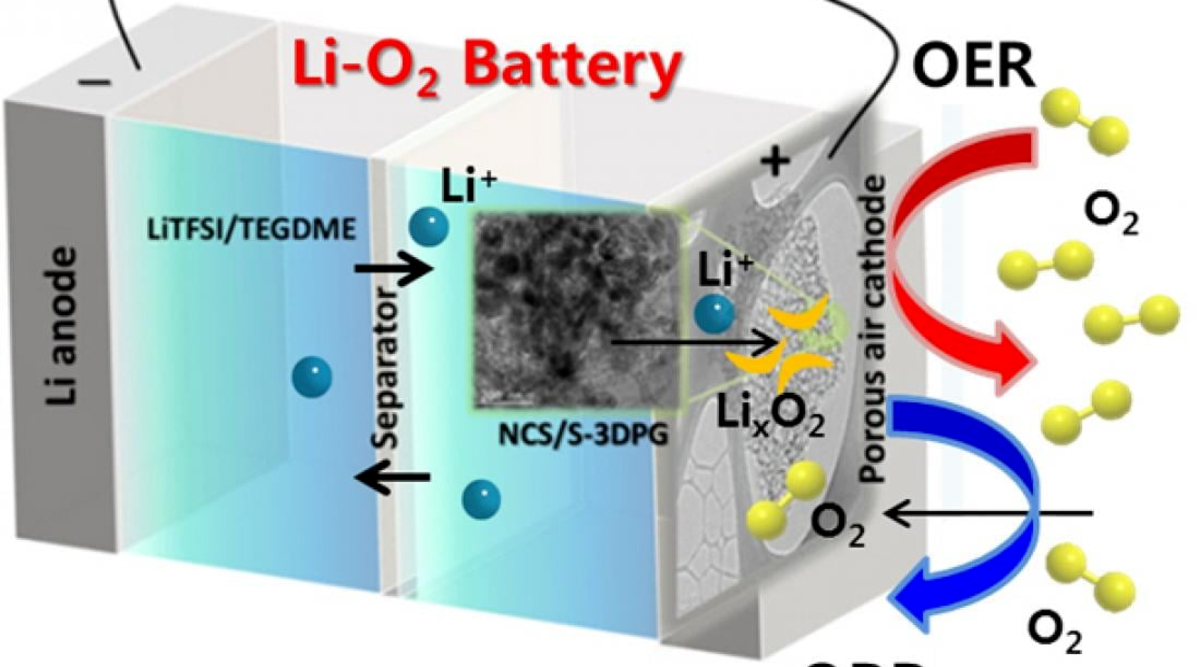
The significance of this milestone cannot be overstated. Today's commercial lithium-ion batteries, which power everything from smartphones to Tesla sedans, store around 250–300 Wh/kg. Solid-state batteries, widely considered the next generation, are expected to reach roughly 500 Wh/kg. But lithium-air batteries—which earned the poetic nickname "breathable batteries"—operate on an entirely different principle. Instead of relying on heavy metal compounds like nickel, cobalt, and manganese, they use lithium metal as the anode and oxygen from the air itself as the cathode reactant. This elegant design dramatically reduces both weight and material complexity.
The progress has been remarkably swift. Current lithium-air prototypes developed by CATL have already achieved energy densities exceeding 1,200 Wh/kg—four times greater than most commercial batteries in use today. In parallel, researchers in the United States have made equally striking breakthroughs. In 2024, a joint team from the University of Illinois Chicago, Argonne National Laboratory, and California State University, Northridge, demonstrated a lithium-air battery capable of surviving over 700 cycles in an air-like environment. Then in 2025, Argonne and the Illinois Institute of Technology pushed further, developing a prototype reaching 1,200 Wh/kg with a cycle lifespan of 1,000 cycles at room temperature.
For decades, lithium-air battery research languished in the theoretical realm, haunted by practical obstacles: vulnerability to moisture and carbon dioxide, catalyst instability, and poor cycle life. The breakthrough came through elegant chemistry. Researchers discovered that by engineering a four-electron reaction pathway at room temperature, they could form and decompose lithium oxide—a process that had previously generated restrictive compounds like lithium super-oxide. Equally crucial was solving the safety problem: the team replaced flammable liquid electrolytes with a solid-state composite matrix made of ceramic-polyethylene oxide polymer infused with lithium-rich nano-particles. This solid barrier isolated reactive processes, prevented leaks, and allowed batteries to endure high-energy cycles without degradation.
The implications are staggering. Batteries matching gasoline's energy density would fundamentally alter the EV industry's trajectory, eliminating range anxiety while cutting the weight of vehicles dramatically. A car powered by such batteries could achieve thousand-mile ranges that rival or exceed gas-powered vehicles, potentially making the transition to electrification not a compromise but an upgrade.
What remains is the path from laboratory success to manufacturing scale and, critically, to affordability. CATL has positioned itself strategically, treating solid-state batteries as a near-term objective and lithium-air as a longer-horizon goal. With both Chinese manufacturers and international research teams advancing rapidly, the race to bring these "breathable batteries" to market is genuinely underway.