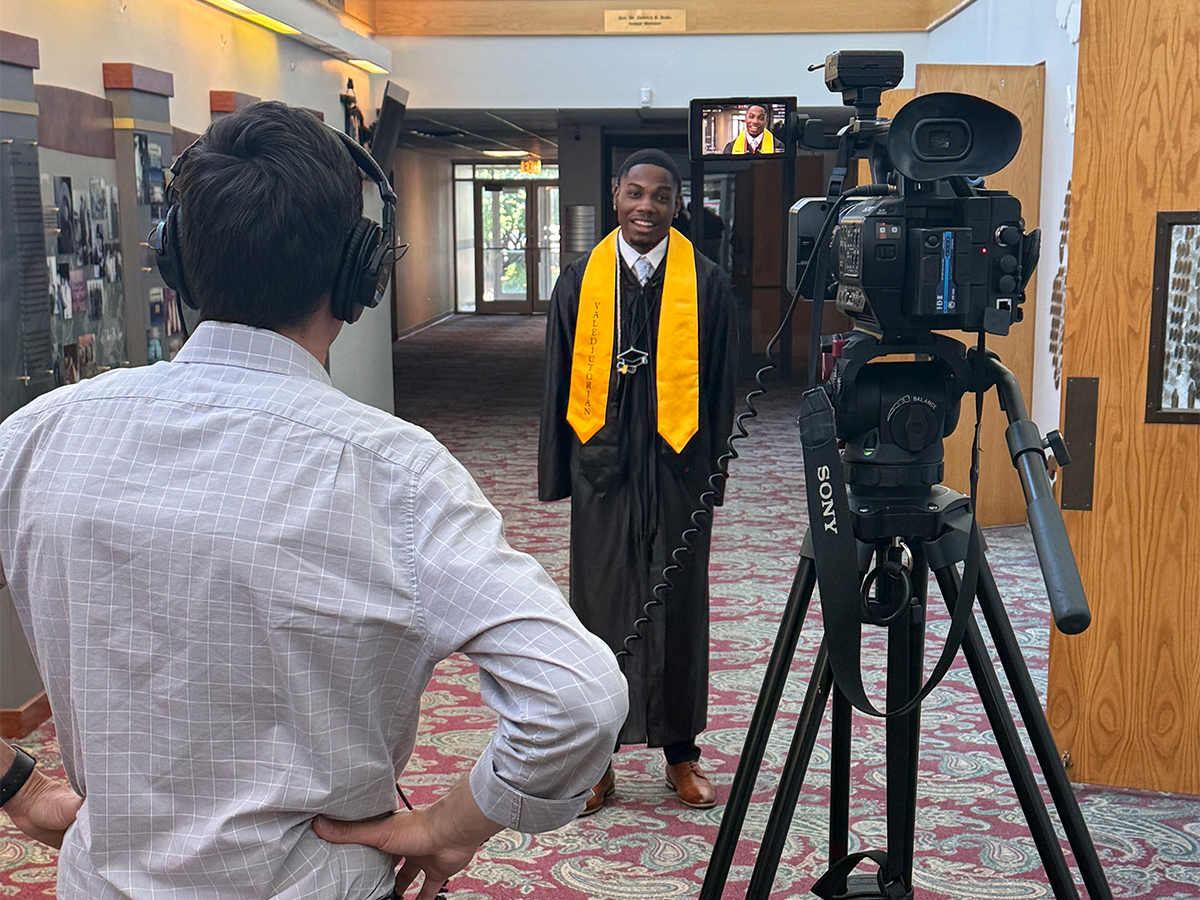
Zachary McCraney walked back into a classroom after nearly two years away, unsure if he could finish what he'd started. Two years later, he stood as valedictorian of Excel Academy of Englewood, diploma in hand, with a cybersecurity degree waiting for him at Illinois State University. His journey—one of 191 students who graduated from Excel Academies of Chicago this year—illustrates what happens when young people get a genuine second chance.
Excel Academies exists precisely for students like Zachary, teenagers and young adults who've fallen behind or stepped away from traditional high school but haven't given up. Across four Chicago campuses since opening in 2012, the network has graduated 2,700 students through tuition-free accelerated programs designed specifically for ages 15–21. The model works differently than conventional schools: students can earn up to 10 credits per year and graduate in as little as 2.5 years, supported by small school environments and dedicated staff who understand their particular challenges.
What makes Excel Academies' approach resonate goes beyond the efficiency of compressed timelines. The CBS Chicago story that recently featured the Class of 2026 highlighted not just numbers, but relationships. One of those relationships centers on Raynard Gillespie, named SESI's 2026 national Staff of the Year behavioral specialist. Gillespie is himself an Excel Academy of Englewood alumnus—he once sat where his students sit now, facing obstacles that felt insurmountable. Now he helps those same students navigate challenges like the ones he conquered, his presence alone a quiet testament that the path forward is real because he walked it.
This is the architecture of Excel Academies' success: personalized academic support paired with emotional support, accelerated learning woven together with caring community. The schools understand that young people don't drop out or fall behind in isolation. They face cumulative weight—family instability, financial pressure, health crises, trauma—and they need more than a curriculum to get back on track. They need people who believe in them, who show up consistently, who know their names and their specific struggles.
Zachary's valedictorian honor and Raynard's role as mentor are not outliers at Excel Academies; they're symptoms of a system working as intended. The Class of 2026 represents 191 individuals who found not just a school, but a community willing to invest in their rewritten futures. Each of those graduates can now choose paths that were closing when they first walked through an Excel Academy door—college, career training, stability, dignity.
The ripple effects extend beyond each individual graduate. When Raynard Gillespie mentors the next student facing the same despair he once felt, he's not just solving an immediate problem. He's demonstrating that recovery is possible, that setbacks don't define outcomes, that a supportive environment genuinely changes trajectories. CBS Chicago recognized something vital in telling these stories: that in a city full of challenges, there are institutions quietly and consistently giving young people the space, time, and human connection they need to succeed.