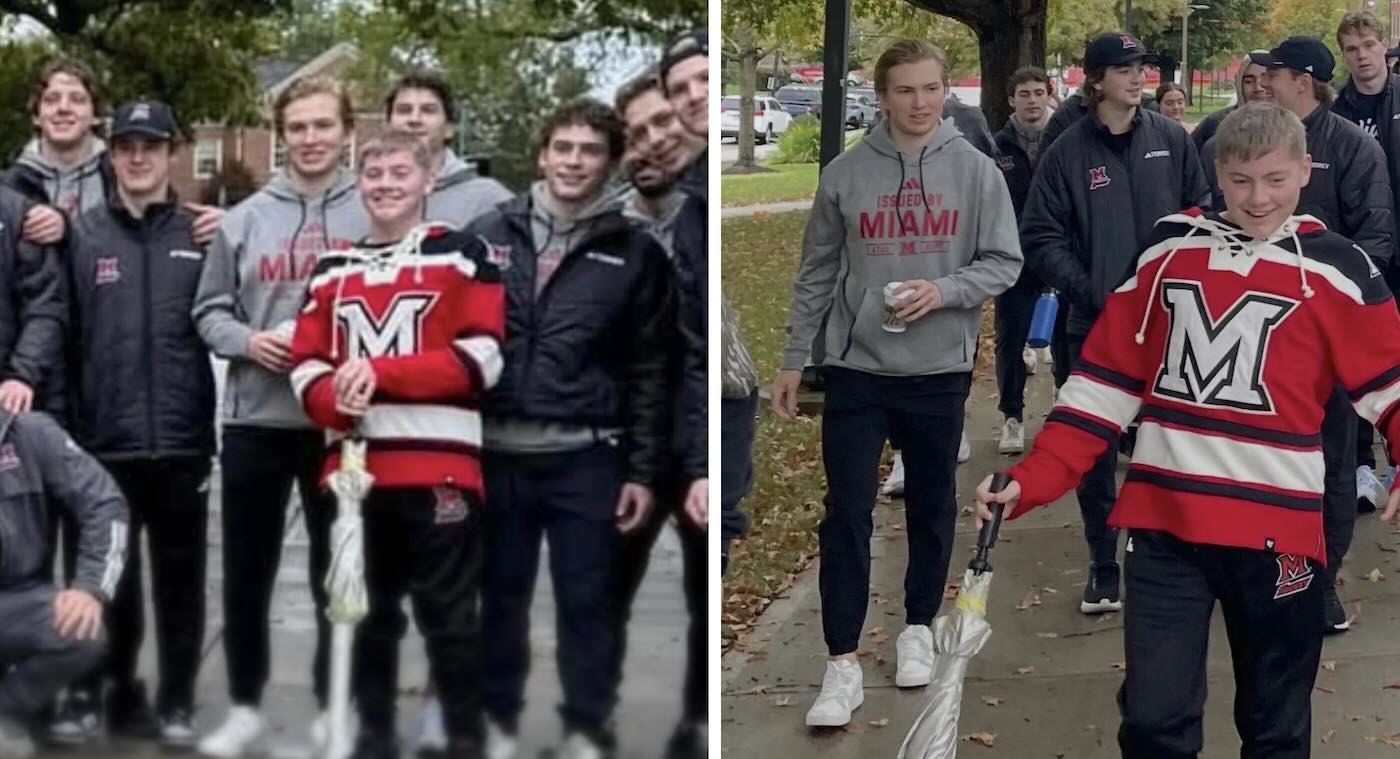
Blake Mesenberg, a hockey player at Miami University in Ohio, didn't know that showing up to practice one day would change a 16-year-old's life forever. Liam, who lives with a rare genetic disorder causing muscle weakness and developmental delays, walked into that locker room and found something he'd never had before: a group of friends who saw him first and his disability second.
For fifteen years, Team IMPACT—a Boston-based nonprofit—has been orchestrating these kinds of transformative connections. Since 2011, the organization has matched more than 4,500 children facing serious illness and disability with college athletic teams across all 50 U.S. states. What began with a single pairing between a child and a college hockey team in Massachusetts has grown into a network spanning more than 850 colleges and universities, engaging over 112,500 student-athletes in a movement that rewrites what belonging looks like.
The model is elegantly simple but profoundly effective. Children become official members of college teams—not honorary guests, but real teammates who attend practices, games, team dinners, and campus events. They build meaningful friendships and support systems that extend far beyond the playing field. For Liam, that meant Blake wasn't just an athlete he admired from afar; Blake became someone he could call anytime, someone who checked in on his medical journey, celebrated his victories, and showed genuine interest in how he was feeling day to day.
When Liam's 16th birthday arrived, his mother Melissa faced what had always been an obstacle: Liam had never had a group of friends, making birthday celebrations feel isolating and hollow. Blake changed that. He made sure Liam's birthday was unforgettable—a night so meaningful that months later, Liam still talks about it. It's the kind of memory that seems small to an outsider but represents everything: acceptance, friendship, and the simple human need to feel celebrated.
CEO Krissie Kelleher frames Team IMPACT's mission in language that cuts to the heart of the matter: "Fifteen years ago, we set out with a simple but powerful belief that no child should ever be sidelined by illness or disability." The work flows in both directions. While disabled and ill youth discover the power of belonging, student-athletes gain something equally valuable—lessons in empathy, leadership, and perspective that shape them long after graduation. Blake isn't just giving to Liam; he's gaining a depth of character that no classroom can teach.
As Team IMPACT marks its 15th anniversary, the organization is rolling out a series of national and local activations throughout 2026 to highlight the growing movement behind redefining what inclusion in sports can look like. The message is clear: sports aren't just for the able-bodied. Belonging isn't a privilege reserved for the healthy. Friendship isn't conditional on fitting a certain mold.
The organization is now calling on supporters, schools, and community partners to help expand its reach so that more children can experience what Liam has found—the transformative power of being truly, unconditionally included. In a time when isolation and disconnection plague young people, Team IMPACT is proving that the antidote isn't complicated: it's simply showing up, making space, and saying, without reservation, that you belong.