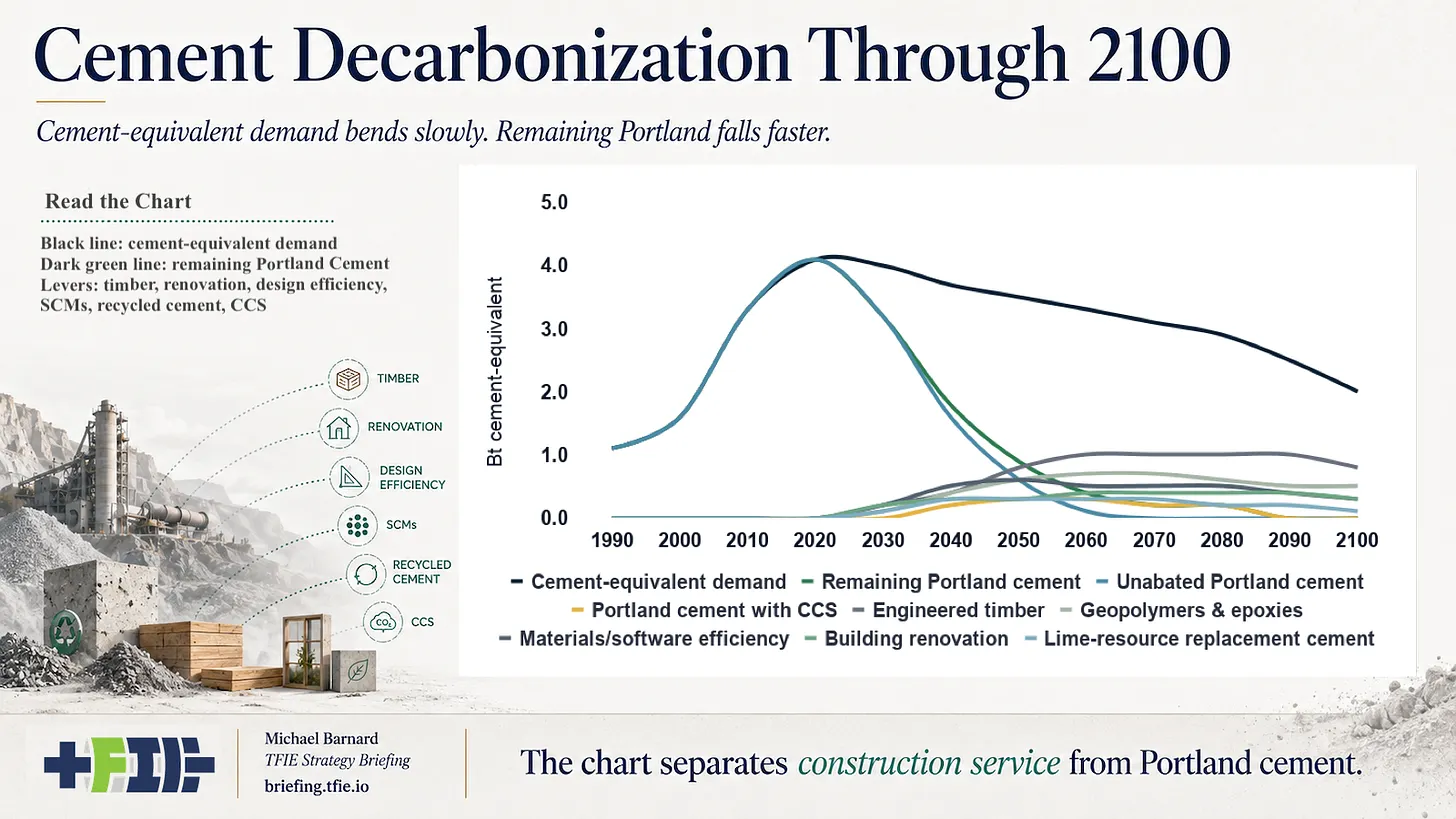
The cement industry will not be saved by a single miracle product. Instead, experts say the path to lower emissions looks more like a toolbox — and that is actually good news.
Cement is one of the most-used materials on Earth. It goes into roads, bridges, buildings, tunnels, dams and ports. It is everywhere. It is also a major source of planet-warming gases. But researchers now say there is no one-size-fits-all solution. Cutting cement's carbon footprint will take many strategies working together, and that diversity makes success more likely, not less.
The problem comes from two places at once. First, cement kilns need enormous heat, which usually comes from burning fossil fuels. Second, the limestone used to make the main ingredient — called clinker — releases carbon dioxide as a natural part of the chemical process. Even if kilns run on clean electricity, that second source of emissions remains.
That is why clinker is the real target. Ordinary Portland cement is not pure clinker — it is a blend. The more other materials replace clinker, the lower the emissions per tonne, as long as the final product stays strong and durable. Materials like fly ash from power plants, blast-furnace slag from steel mills, calcined clays, natural volcanic ash and limestone can all help. This is not a new idea. Builders have used some of these materials for decades. But scaling them up takes time, because construction codes, engineering habits and supply chains change slowly.
Another important shift is happening in China, which built more concrete in the last 30 years than perhaps any country in history. That first wave of massive infrastructure is now past its peak. As nations mature, they tend to spend more on renovating and repairing what they have rather than constantly expanding. That alone reduces how much new cement the world needs.
Some traditional substitutes face their own limits. Fly ash availability is dropping as countries retire coal power plants. Blast-furnace slag, once plentiful, is tied to a type of steelmaking that is itself changing. Newer materials like calcined clays are filling that gap. Calcined clays can work even where fly ash and slag are scarce, making them especially valuable for countries in Africa, South Asia and Latin America that are still building.
Carbon capture technology — where factories trap their carbon dioxide before it enters the air — is part of the picture too. But experts call it the last major lever, not the first. It may be needed for large, older plants that will keep running for decades. But the easier wins come from using less clinker, building more efficiently and choosing smarter materials in the first place.
The bottom line is that a lower-carbon cement future is not waiting on one breakthrough. It is already taking shape, one blend, one building and one road at a time.