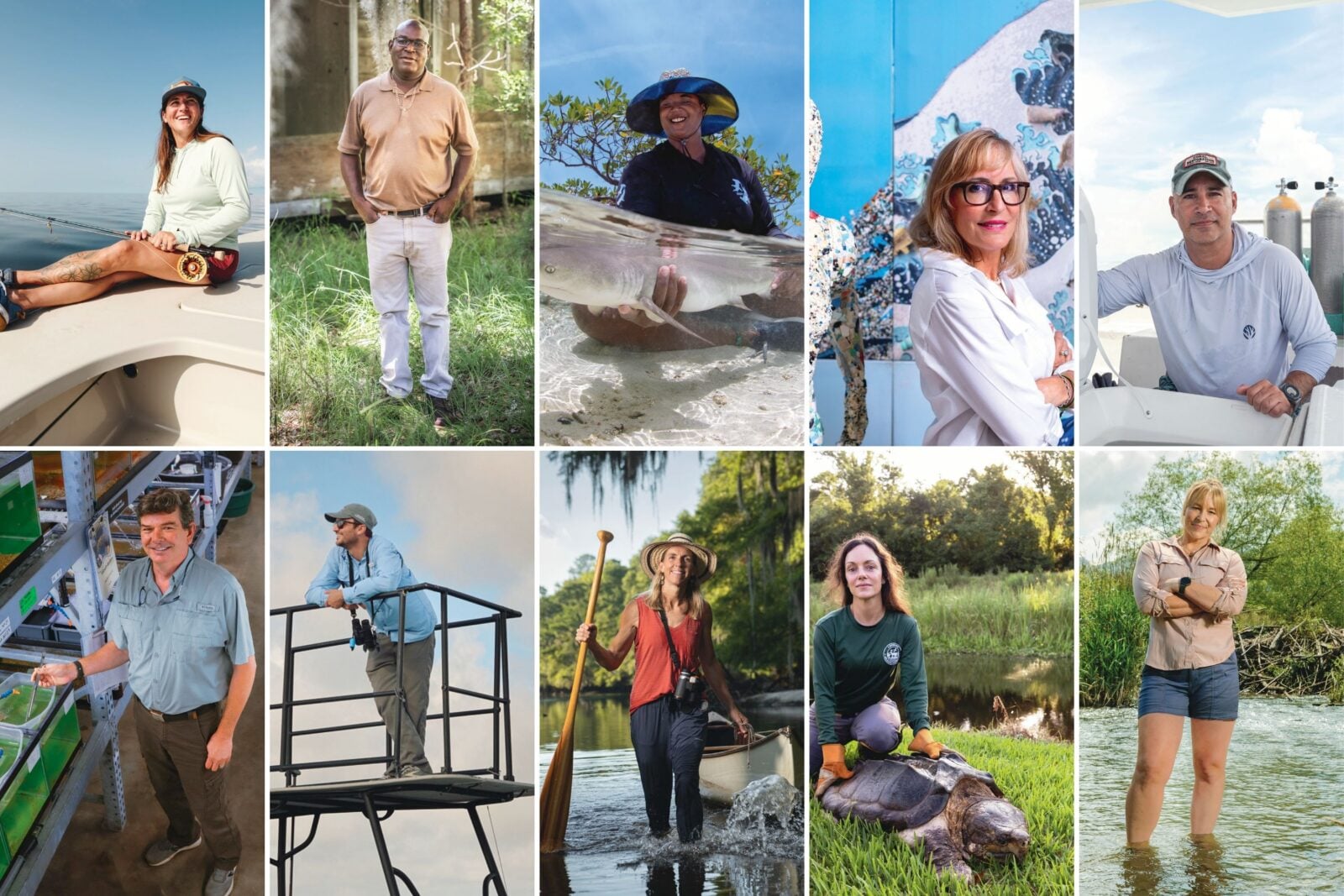
Fishing for tarpon in spring, snook and scallops in summer, and redfish—her favorite—come fall and winter, Jessica Mailliez spends much of her life on the water. But she was never content just to catch fish. She wanted to give something back to the underwater world beneath her boat.
Mailliez, an ecologist with the Florida firm Sea & Shoreline, grows and plants seagrass—blooming underwater meadows that shelter young fish, filter out pollution, and hold shorelines in place against erosion. Her reason is personal: "Seagrass restoration will always have my heart."
It took a while to get there. After teaching school, she returned to study marine biology, guided ecotours at Mote Laboratory, and researched fish growth for the Florida Fish and Wildlife Conservation Commission. But she wanted hands-on work, so she signed on with Sea & Shoreline, a company based in Homosassa that specializes in bringing dying ecosystems back to life.
The work is slow and careful. To start, Mailliez might run a giant vacuum over a fifty-to-one-hundred-acre area to uncover the mineralized, sandy bottom. Then, after growing the right species—often eelgrass, raised in one of the firm's three nurseries—she and her team plant it underwater, one pot at a time. "We take care of it like it's our garden," she says.
The results speak for themselves. After Sea & Shoreline replanted Florida's Crystal and Homosassa Rivers, the water gradually cleared. Manatees, turtles, and pinfish came back to graze. And when hurricanes hit, the restored seagrasses resprouted instead of dying—proof that a healthy system bounces back. Statewide, the group has revived some five hundred acres of seagrass and stabilized shorelines and marshes with native plants.
Mailliez is now working to keep the Rainbow River in Central Florida from collapsing, one of a dozen or so projects Sea & Shoreline has in the works at any given time.
Hundreds of miles north, a different kind of conservation hero works above the water. About forty-five miles south of Savannah, Georgia, sits Hogg Hummock, a community on Sapelo Island built after the Civil War by the formerly enslaved ancestors of JR Grovner. Today it is the country's last intact Gullah Geechee enclave—a living community of people descended from enslaved Africans who kept their own language, food, and traditions.
Grovner, who runs Sapelo Island Tours, ferries visitors from the mainland to see the island's diverse wildlife, fruit trees, and pristine beaches. But his real mission is protection. Sapelo, reachable only by boat, is home to hundreds of species, from trout and loggerhead turtles to manatees. Yet its Black founders' descendants now own just about 3 percent of its 16,500 acres.
Grovner's fight has been long. Eight years ago, residents won a lawsuit against McIntosh County and the State of Georgia over ferry schedules and dock access. A fatal gangway collapse in 2024 sparked another legal battle over an unstable structure that residents say went unfixed for too long. Now Grovner and his neighbors are pushing back against county zoning laws that would allow taller, wider buildings—good news for developers, but a threat to the community's place on the National Register of Historic Places and its fragile ecosystem.
Two Southerners, one underwater, one on land, are quietly fighting to keep the habitats—and the people—that depend on them alive.