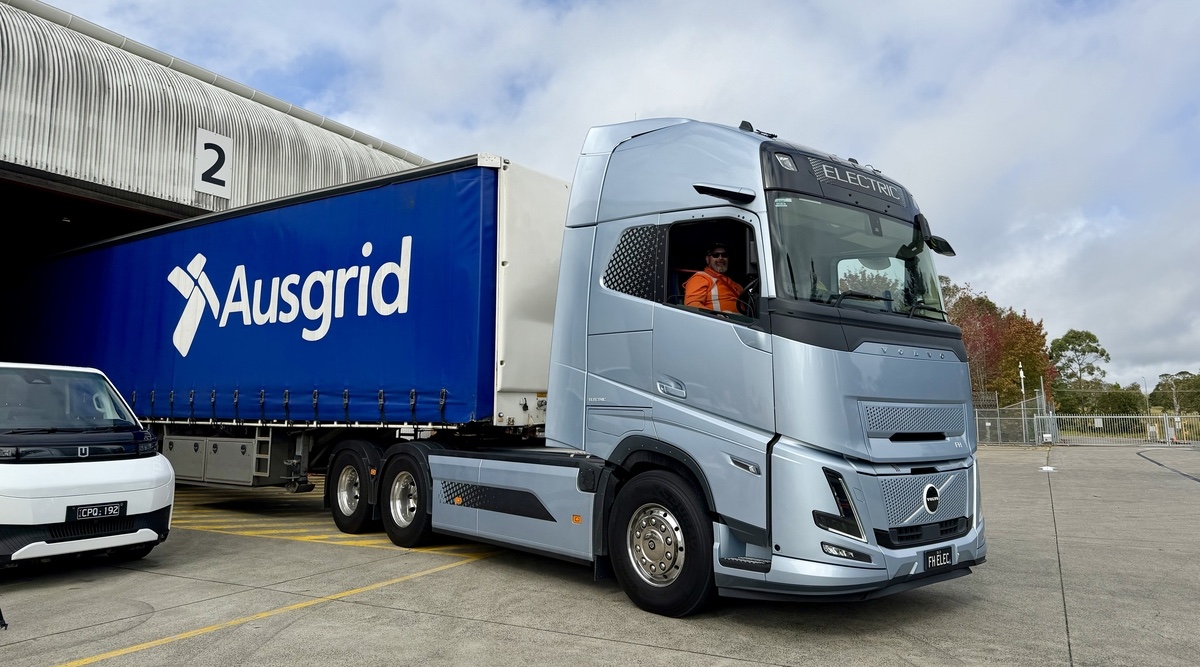
By the end of this year, 12 sleek charging bays humming with 400 kW of renewable-powered energy will rise in Melbourne’s west, marking the first of three shared electric truck charging hubs poised to transform Australia’s freight future. Heavy-duty trucks, long seen as stubborn emitters in the fight against climate change, are finally getting the infrastructure boost they need. With trucks contributing disproportionately to Australia’s transport emissions, the Australian Renewable Energy Agency (ARENA) is stepping in with AU$25.3 million toward a AU$61.82 million project to build these critical hubs across Melbourne—covering the city’s key freight corridors in the west, southeast, and north. The goal is clear: make electric freight not just possible, but practical and profitable.
For small and medium-sized freight operators, the barriers to electrification have been steep—lack of depot space, limited grid capacity, and the high cost and complexity of installing private high-power charging. Newvolt, the company behind the Melbourne hubs, is tackling these head-on with a shared, networked model. These aren’t just charging stations; they’re renewable-powered, strategically located waypoints designed for the realities of long-haul logistics. And because they’ll be powered entirely by clean energy, they promise not only lower emissions but also quieter, cleaner urban freight zones. Two additional sites are expected to come online by mid-next year, forming a backbone that could soon extend beyond Victoria.
The ripple effects are already being felt. Newvolt estimates these hubs will accelerate the adoption of at least 54 additional battery-electric heavy- and medium-duty trucks, each one cutting diesel dependence and air pollution. But the innovation doesn’t stop there. Near Sydney, eLumina is pioneering a different model—its New Energy Transport hub will use 10 skid-mounted DS400 chargers, each paired with integrated batteries that charge slowly from the grid and deliver ultra-fast power when needed. This ‘trickle in, ultra-fast out’ approach avoids costly grid upgrades and allows for flexible, relocatable sites built on gravel pads. Meanwhile, HubZero is proving that range anxiety is outdated: with a 350 kW charger, a truck can gain 250 km of range in just 45 minutes—the same time drivers already take for rest. And with electric prime movers saving operators between AU$50 and AU$200 per day, the business case grows stronger by the mile.
These projects aren’t just about charging trucks—they’re about charging confidence. The data, designs, and operational insights will be shared publicly, paving the way for replication along the Hume, Pacific, and Newell Highways. As one early skeptic turned believer might say: charge in the breaks you’re already paying for. The future of freight isn’t just electric—it’s already on the move.